Quick answer
Solve The Awakened Artifacts by building the museum's architectural frame first, then sorting exhibit pieces by color family and texture before assembling each display. When a section stalls, step back and treat the artwork as a series of smaller exhibit rooms rather than one continuous image.
Why The Awakened Artifacts Stalls Most Builders
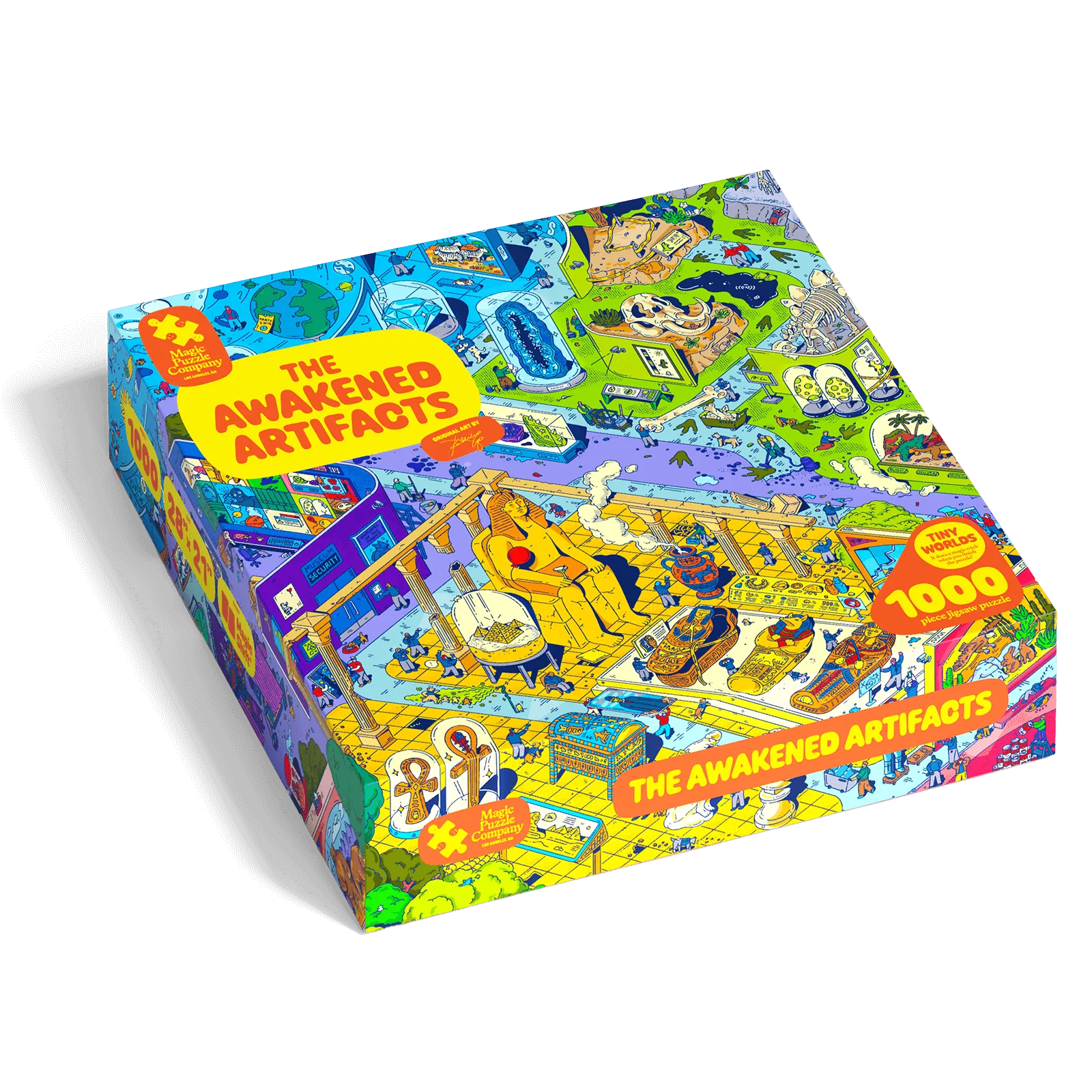
The Awakened Artifacts asks you to reconstruct a museum interior where exhibits, cases, and decorative elements share similar tones. That repetition is the puzzle's charm and its main difficulty. Unlike a landscape with a clear horizon, this artwork gives you many small focal points with no single dominant line to follow. The practical consequence is that random piece-by-piece searching burns time; you need to impose your own order before you start connecting pieces.
Set Up Your Workspace Before You Sort
Clear a surface large enough to hold the finished puzzle plus sorting trays or shallow bowls. Keep the box lid visible so you can reference the artwork without picking it up. Good lighting matters more here than on high-contrast puzzles because the exhibit details are subtle. If your table is small, plan to build in sections and slide completed clusters aside rather than forcing the whole puzzle to grow from one point.
What to Look For in the Artwork
Study the box image before touching a single piece. Identify the museum's structural lines: walls, floor edges, display cases, and doorways. These are your anchors. Then note the distinct exhibit objects and any areas where the palette shifts warmer or cooler. The artist's style rewards close looking, so spend a few minutes mapping the image in your head. This upfront scan is what separates a smooth build from hours of trial and error.
Step-by-Step: Solving The Awakened Artifacts
- 1. Sort by edge, color family, and texture: Separate edge pieces first, then group interior pieces into broad color families: warm golds, cool shadows, neutral stone, and bright exhibit highlights. Within each family, set aside pieces with visible texture or pattern. Common mistake: sorting only by color and ignoring texture, which leaves you with large ambiguous piles. Checkpoint: you should have five to seven distinct groups, not one giant miscellaneous pile.
- 2. Build the museum frame: Assemble the border and any clear architectural lines such as wall edges, floor boundaries, and large display cases. These give you fixed reference points. Common mistake: forcing border pieces that almost fit. Checkpoint: the frame should hold together loosely without gaps before you move inward.
- 3. Anchor the exhibit focal points: Pick out the most visually distinct objects in the artwork and build small clusters around them. Work on one exhibit at a time rather than jumping between areas. Common mistake: scattering partially built clusters across the table, which makes it hard to see progress. Checkpoint: each cluster should have a recognizable shape before you connect it to anything else.
- 4. Connect clusters through the background: Once you have several exhibit clusters, use the background walls and floor to link them. This is where the puzzle opens up. Common mistake: trying to connect clusters directly to each other before the background between them is built. Checkpoint: if two clusters will not join, look for the missing background pieces that belong between them.
- 5. Push through the repetitive middle section: The center of the museum interior often has the least variation. Switch to a systematic scan: pick one piece, identify its most unusual feature, and search only the area where that feature could appear. Common mistake: picking up and putting down the same pieces repeatedly. Checkpoint: if you have not placed a piece in several minutes, change your sorting criteria or take a short break.
- 6. Finish with the final gaps: By the end, you should have a small number of pieces left. Match them by shape first, then confirm with color and pattern. Common mistake: rushing the last few pieces and forcing a wrong fit. Checkpoint: every piece should slide in without resistance. If it does not, it belongs somewhere else.
About This Puzzle
- The Awakened Artifacts: The Awakened Artifacts is part of Series 4 and features original art. The catalog price is USD 16.99, compared to a catalog comparison price of USD 24.99. At this price, it is an accessible entry point into Series 4 if you want to try the museum theme before committing to the full series.
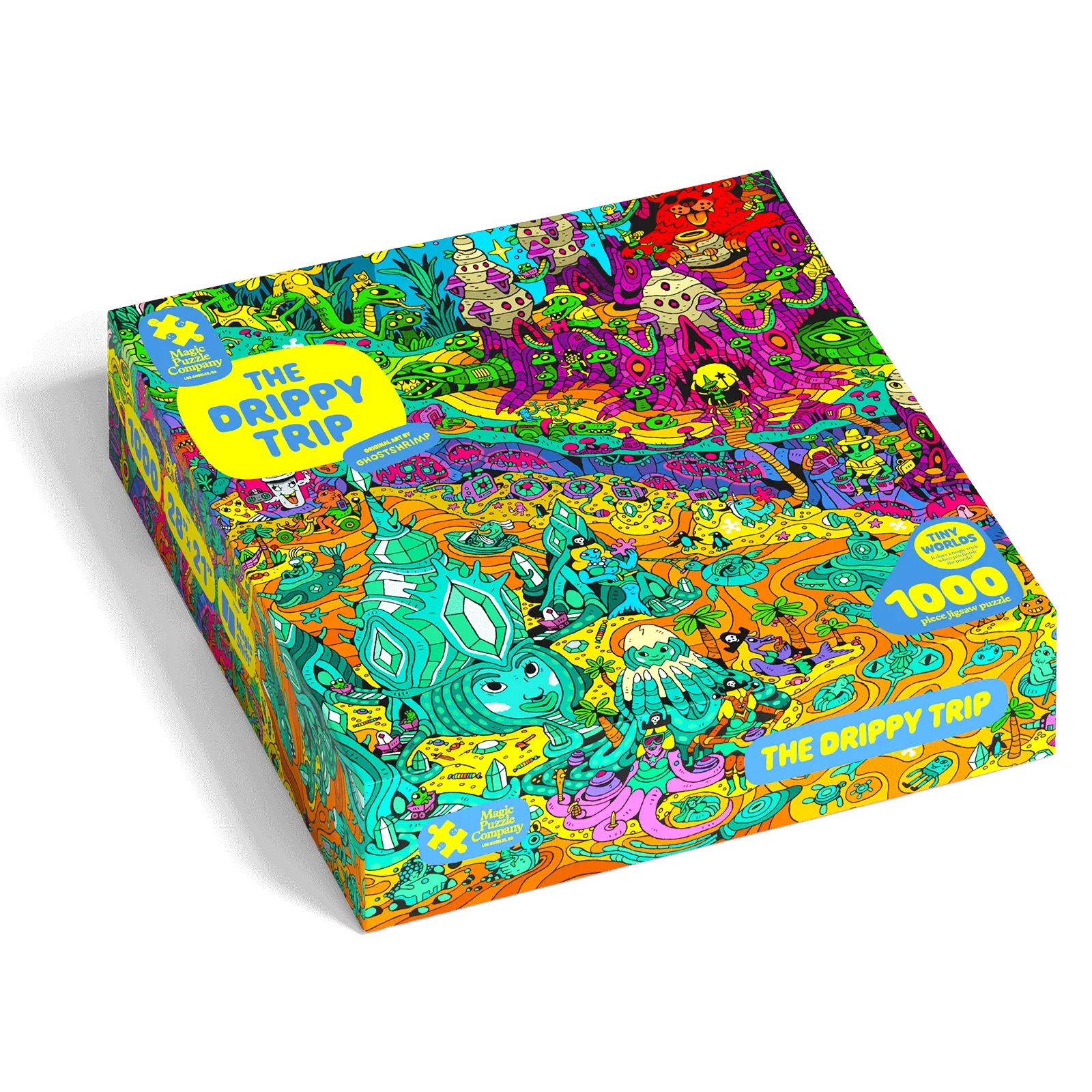
- The Drippy Trip: The Drippy Trip is a Series 5 puzzle with original art by Ghostshrimp, a Vermont-based visual artist known for world building on Adventure Time and The Midnight Gospel. If you enjoy the detailed, illustration-heavy style of The Awakened Artifacts, Ghostshrimp's kaleidoscopic dream world offers a similar artist-driven experience with a very different visual challenge.