Quick answer
Start by sorting pieces by color and shape, then build the border before tackling the dark, detailed center of the Castlevania 1000-piece puzzle.
Why the Castlevania puzzle is a unique challenge
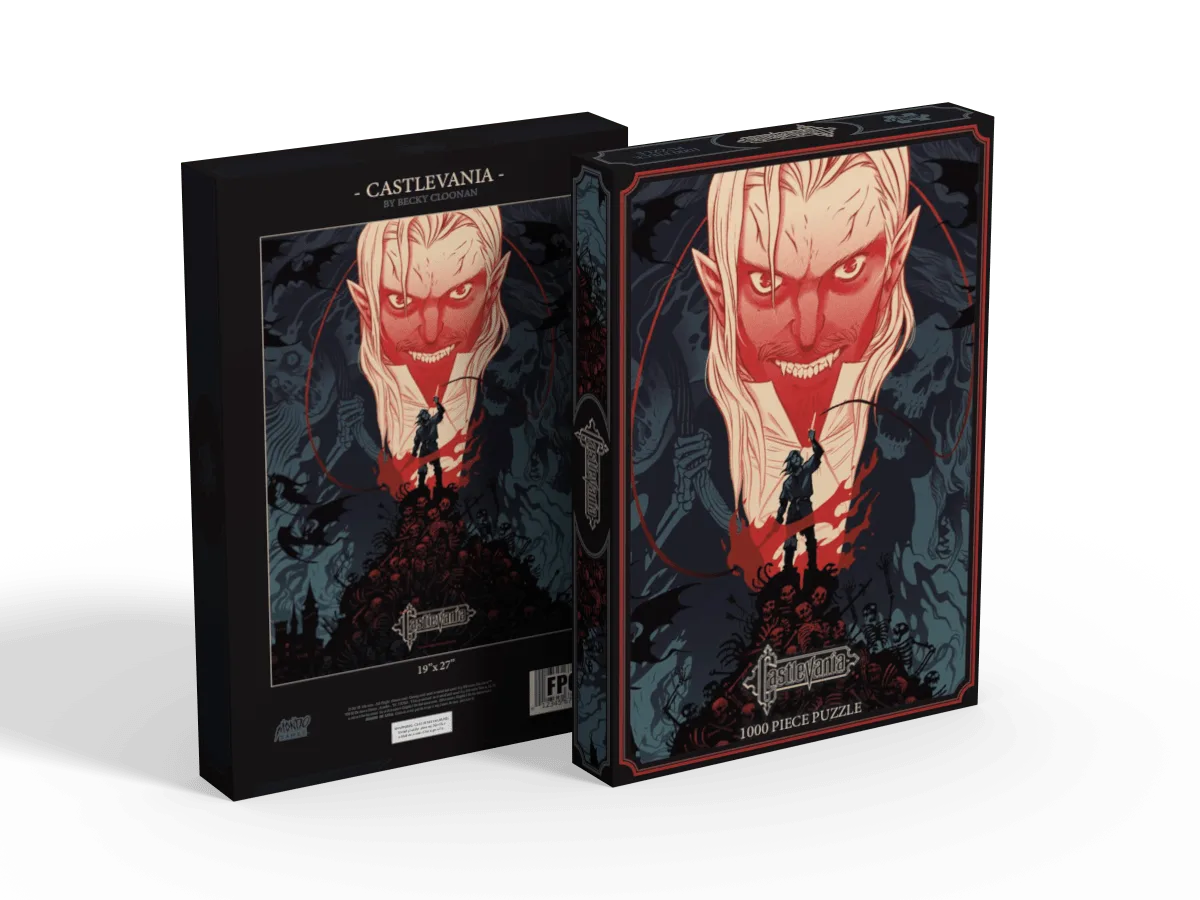
The Castlevania 1000-piece puzzle features artwork by Becky Cloonan from her 2016 Mondo poster release. The image is dominated by deep blacks, dark blues, and intricate linework, making traditional color sorting less effective. You'll rely more on shape recognition and pattern matching than you might with a brighter puzzle.
Trade-offs: speed vs. accuracy
Because the puzzle has large dark areas, rushing the sort phase will cost you time later. Spending an extra 15 minutes organizing pieces by shape (knobs vs. holes) pays off when you're hunting for that one piece in a sea of black. The trade-off is patience now for speed later.
Step-by-step strategy for the Castlevania puzzle
- Sort by shape and color zones: Turn all pieces face-up. Separate the border pieces (those with one or two flat edges) into one pile. Then sort the remaining pieces into three color groups: dark blacks/blues, mid-tone grays/purples, and any lighter highlights (whites, reds, golds). Within each color group, further sort by knob/hole pattern (two knobs, two holes, one of each). Common mistake: skipping the shape sort within color groups. You'll end up trying every piece in a dark section.
- Build the border first: Assemble the border using your flat-edge pile. The border gives you a defined working area and a frame of reference for the image. The Castlevania border has distinct architectural details (stonework, pillars) that help confirm piece placement.
- Work the lightest areas next: Identify the brightest parts of the image — usually the moon, the castle windows, or character details like the Belmont whip or Dracula's face. Assemble these sections first because they have the most contrast and are easiest to match. Use the box art as a reference; place completed sections inside the border. Checkpoint: if you get stuck on a light section, switch to a different area. Forcing pieces can lead to errors.
- Tackle the dark sections with a shape-first approach: For the large black and dark blue areas, ignore color and focus on piece shape. Lay out all dark pieces in rows by knob/hole pattern. Try each candidate piece in the gap — if the shape fits, test the pattern continuity. Dark sections go faster when you trust the fit rather than the image. Common mistake: assuming a piece fits because the shape seems right. Always check that the printed lines or textures align.
- Use the box art and poster reference: Keep the puzzle box or a digital image of the poster handy. The Castlevania art has repeating motifs (bats, chains, stone textures) that look similar. Referencing the full image helps you distinguish which dark section you're working on and avoid placing pieces in the wrong area.
- Finish with the sky and background: Save the largest uninterrupted dark area — usually the sky — for last. By then, you'll have fewer pieces and a smaller search space. Use the same shape-sorting method from step 4. The remaining pieces will have subtle differences in line density or texture that become visible under good lighting. Final checkpoint: once all pieces are placed, gently press down any loose connections. The puzzle should hold together when lifted carefully with a flat surface underneath.
Product facts
-
Castlevania 1000-Piece Puzzle: This 19"x27", 1000-piece Mondo puzzle features stunning art by Becky Cloonan from her 2016 Mondo poster release. The dark, detailed art means you'll need to rely on piece shape and subtle texture differences rather than bright colors to solve it.
Castlevania 1000-Piece Puzzle