Quick answer
Start by flipping every piece face up, then pull out all edge pieces and set them aside. Next, sort the remaining pieces into loose color or pattern groups. Work one group at a time, and don't worry about perfect categories—flexible sorting beats rigid sorting.
Why sorting before you build saves time
Sorting is not busywork—it's the step that turns a pile of hundreds of pieces into a series of small, solvable puzzles. When you sort first, you reduce the time you spend scanning the whole table for one piece. You also spot missing pieces earlier, which matters if you're working on a Magic Puzzle with a surprise ending. The goal isn't to create a perfect taxonomy; it's to make each next piece easier to find.
Set up your sorting space
You need a flat surface at least as large as your finished puzzle, plus a few shallow bowls, trays, or paper plates for sorting. Good lighting matters more than you think—overhead light reduces shadows on glossy pieces. If you're working on a Magic Puzzle from Series 4 or Series 5, keep the box lid nearby for reference. Don't use deep bins; they make pieces hard to see and retrieve.
Step-by-step sorting method
- Flip every piece face up: Dump the pieces onto your table and turn them all face up. Work in small batches to avoid feeling overwhelmed. Checkpoint: every piece should show its image side before you move on.
- Pull out all edge pieces first: Scan for pieces with one or two flat sides. Set them aside in their own tray or area. These form the border and give you a frame to build inside. Common mistake: mixing edge pieces back into the main pile—keep them separate.
- Sort remaining pieces by color or pattern: Create loose groups: sky, ground, characters, text, and so on. Don't force a piece into a group if it doesn't fit—make an 'unsure' pile instead. Checkpoint: aim for 4–6 groups, not 20. Fewer groups keep the task manageable.
- Refine your groups as you build: Once you start assembling, you'll notice sub-patterns. Pull those out into smaller piles. Sorting is ongoing, not a one-time event. Next step: begin with the edge pieces, then move to your largest color group.
Magic Puzzle products that work well with this method
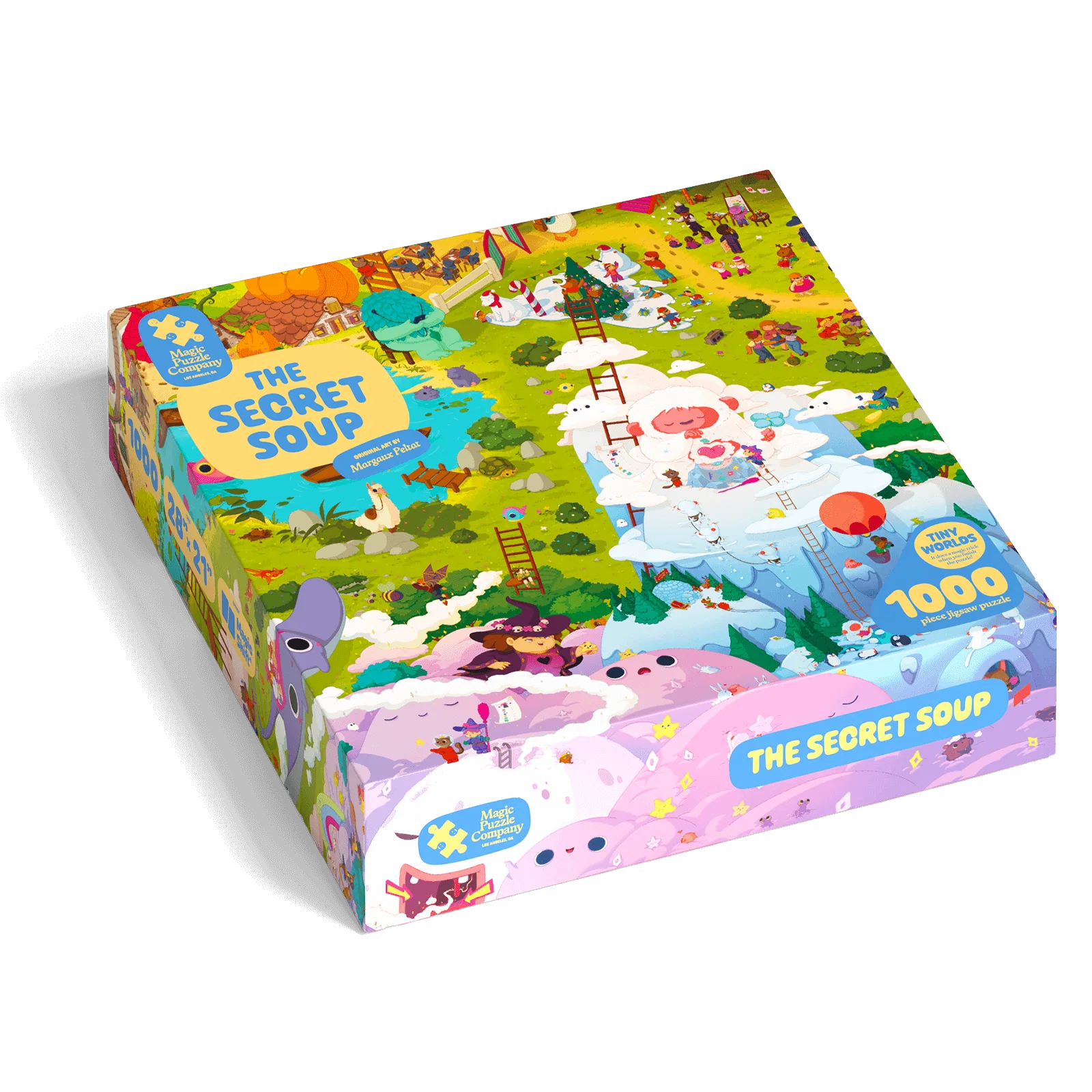
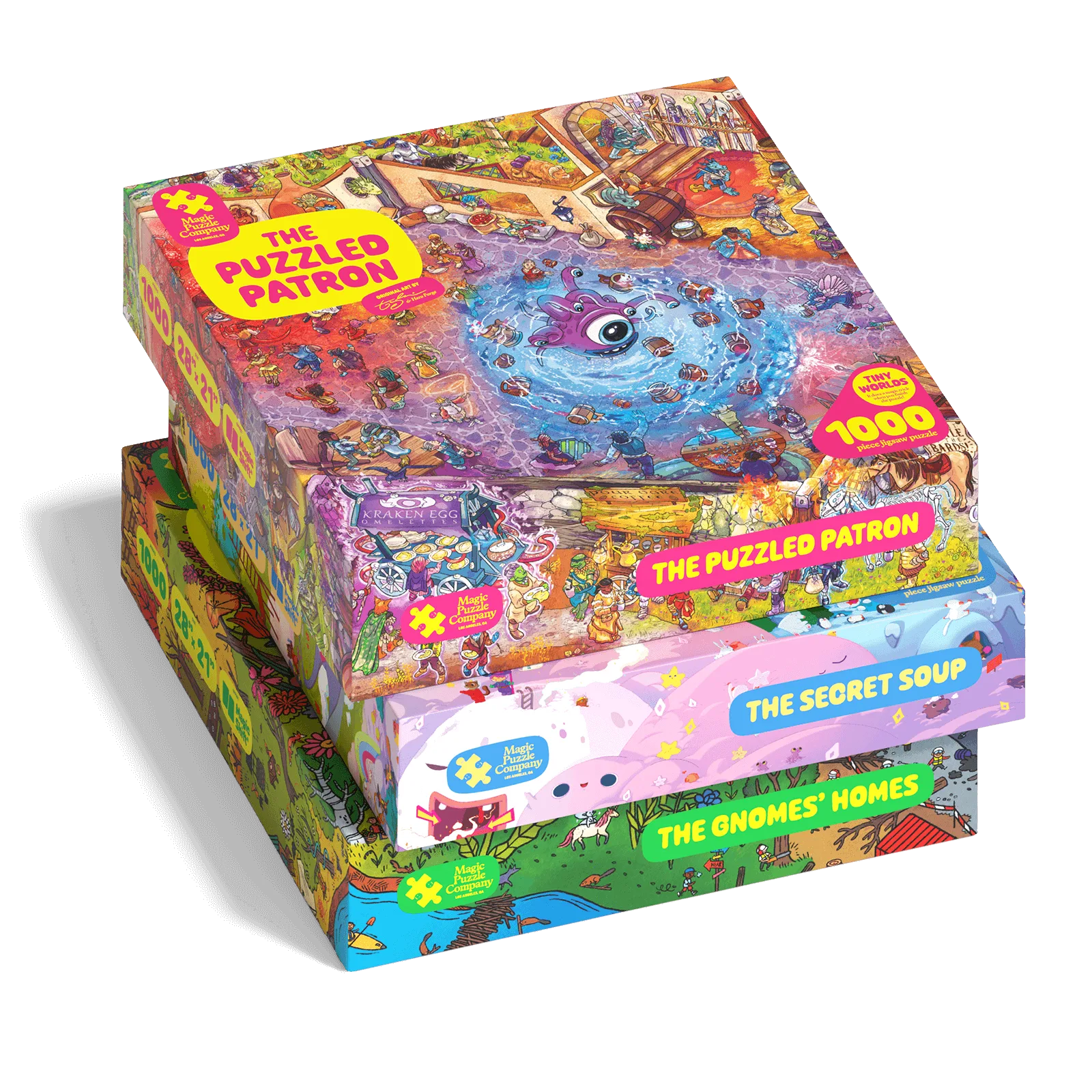
- Series 3 Bundle: Series 3 Bundle includes The Secret Soup, The Puzzled Patron, and The Gnomes' Homes. With three distinct puzzles, you can sort each one separately and avoid mixing pieces between boxes.
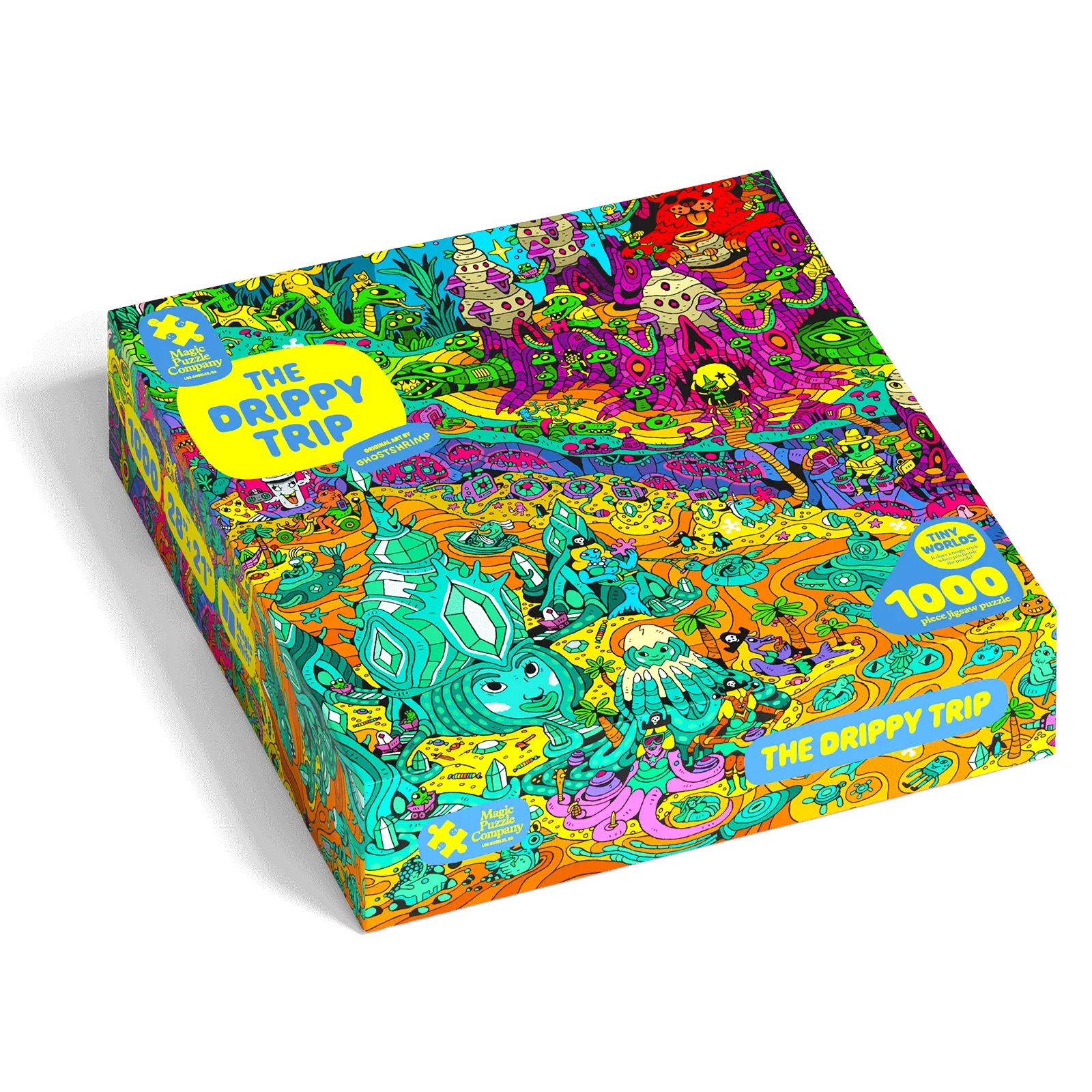
- The Drippy Trip: The Drippy Trip features a kaleidoscopic dream world by artist Ghostshrimp. Its swirling, psychedelic patterns mean color sorting may be less effective—you'll rely more on line and shape sorting.
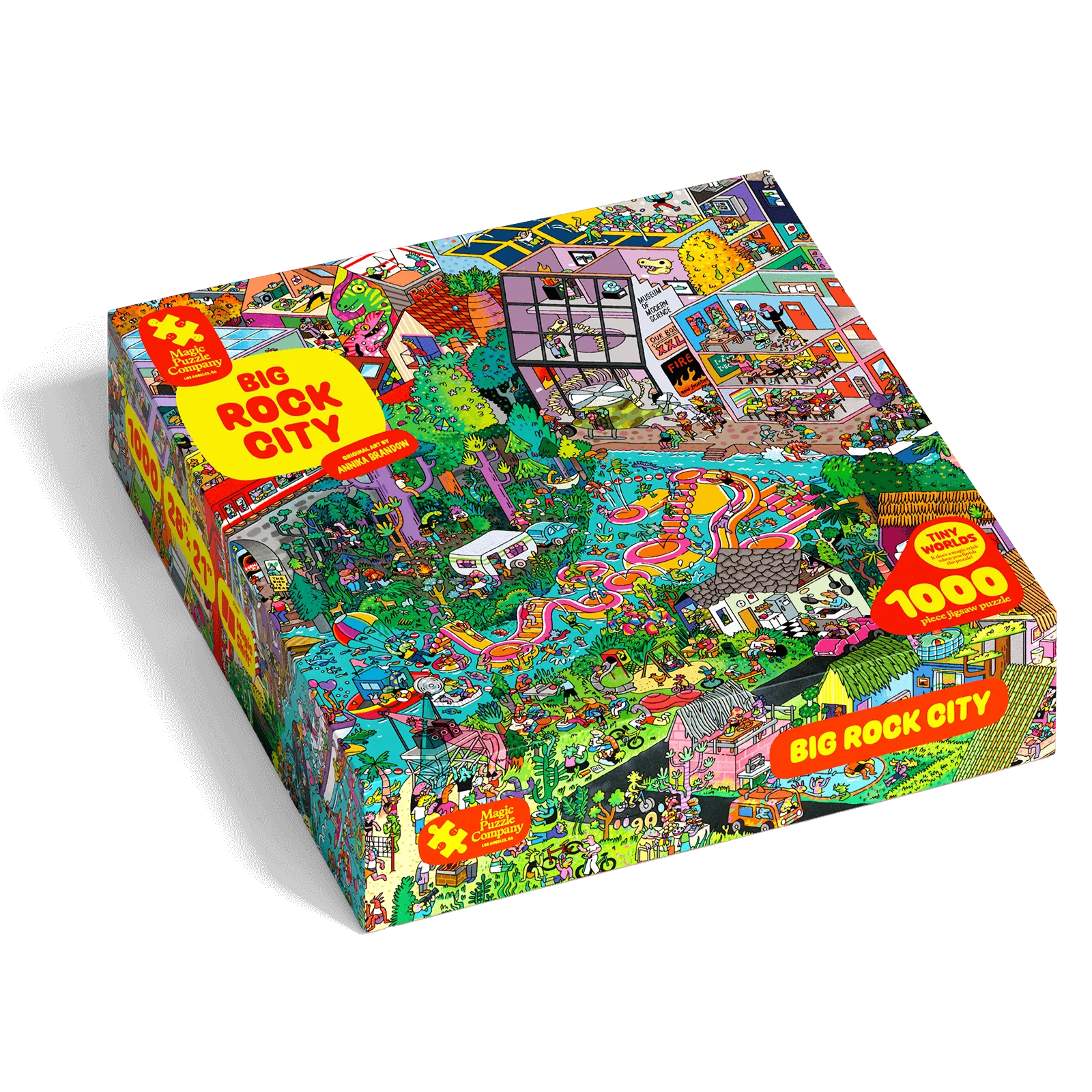
- Big Rock City: Big Rock City is a bustling prehistoric city of dinosaurs illustrated by Annika. The detailed scene gives you clear landmarks—like dinosaurs and buildings—to sort by, making it beginner-friendly.