Quick answer
Spot a fake anime figure by checking three things in order: the box seal and print quality, the paint and seam lines on the figure, and the official licensing marks on the box. If any one of those fails, walk away. Authentic figures from brands like BANDAI and BANPRESTO have crisp box printing, clean paint edges, and a visible copyright line — counterfeits usually miss at least one.
Why counterfeit anime figures are getting harder to spot
Counterfeiters have improved. Early fakes had obvious problems like wrong colors or misspelled names, but many current copies get the silhouette right and fail on small details. That is why a single check is not enough — you need to verify the box, the figure, and the seller together.
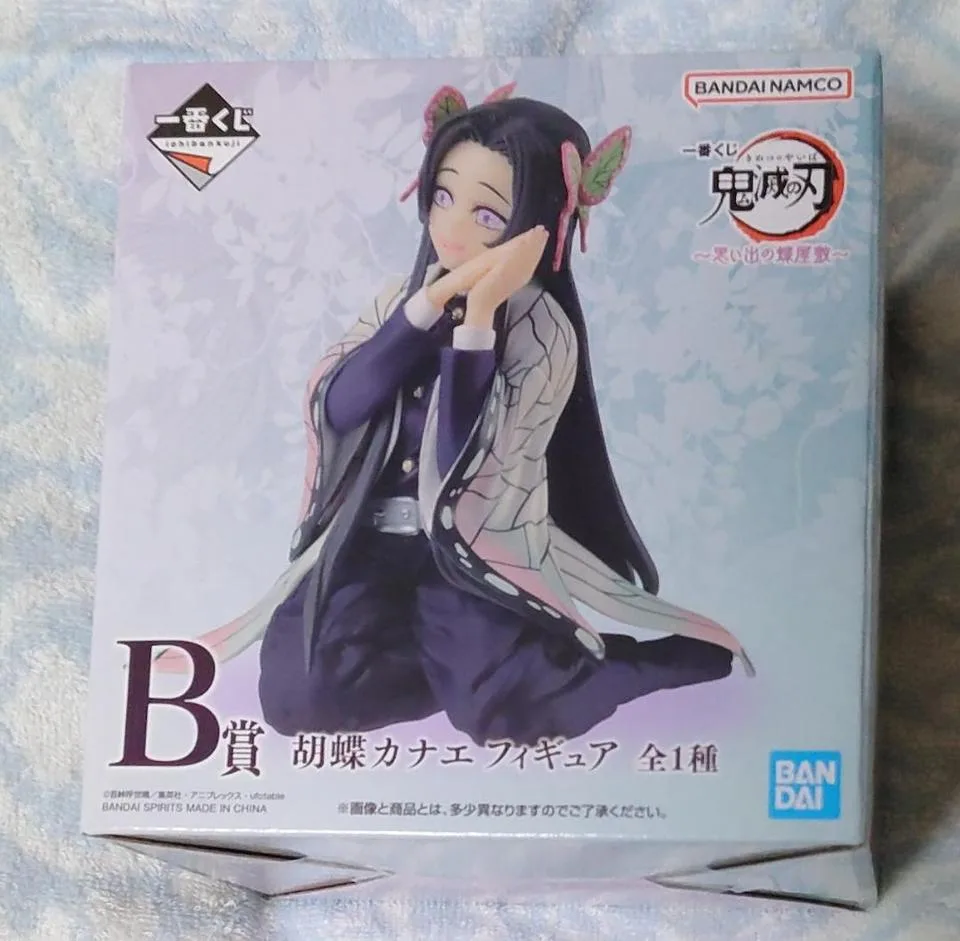
The most reliable approach is to compare what you see against the official product listing. For example, the Ichiban Kuji Demon Slayer B Prize Kanae Kocho Figure is listed as approximately 4.29 inches (110mm) and unopened in box. If a seller shows a figure that looks much larger or smaller without explanation, that is a warning sign worth investigating.
What to inspect on the box before you open it
The box is your first and cheapest checkpoint. Authentic boxes from Japanese brands use sharp, high-resolution printing. Look at the character name, series logo, and copyright text. Fakes often have slightly blurry text, a shifted color registration, or a logo that is the wrong shade.
Check the box seal. On unopened Ichiban Kuji prizes and retail figures, the tape or seal should be intact and consistent with the brand's packaging style. A resealed box with mismatched tape, a missing seal, or a seal that looks manually applied is a red flag. If the listing says 'unopened in box,' the seal should match that claim.
How to check paint, seams, and joints on the figure itself
Once you can see the figure clearly, look at the paint edges. On authentic figures, color boundaries are clean and consistent. On counterfeits, paint often bleeds over a seam, looks thicker in one area, or has a slightly different finish than the official photos.
Check the seams where parts meet — hair, arms, base. Authentic figures usually have tight, even seams. Fakes often show gaps, glue residue, or misaligned parts. For smaller figures like the Ichiban Kuji Hololive Chokonokko Collection 2026 ver. Inugami Korone Chokonokko Figure, which is listed at 1.76 inches (4.5 cm), the paint detail is compressed, so any sloppiness is easier to spot up close.
Licensing marks, brand names, and what they tell you
Authentic Japanese figures carry a copyright line and often a manufacturer mark on the box or base. Look for the brand name — BANDAI, BANDAI SPIRITS, BANPRESTO — and check that the spelling and logo match the official release. A missing or altered copyright line is one of the most common counterfeit tells.
If the product page does not show the licensing text clearly, ask the seller for a photo of the box side or bottom. A legitimate seller should be able to provide it. If they refuse or send a low-resolution image, treat that as a decision limitation and consider another listing.
Seller checks that catch fakes before they ship
Where the figure ships from matters. A seller who dispatches directly from Japan and provides tracking is easier to verify than an unknown drop-shipper. Look for clear shipping terms and a return policy. If the price is far below the catalog comparison price across multiple listings, that is not a bargain — it is a warning.
For example, the Ichiban Kuji Demon Slayer B Prize Kanae Kocho Figure has a catalog price of USD 52.93 against a comparison price of USD 79.00. A listing that undercuts that by a wide margin without explanation is worth a second look. Authentic figures have a floor price because the supply is limited.
Your 6-step anime figure authenticity check
- Step 1: Verify the box seal and print quality: Look for sharp text, correct logo colors, and an intact seal. On unopened items, the seal should match the brand's packaging style. Common mistake: accepting a blurry box photo as proof. Ask for a close-up of the seal and the copyright line. Checkpoint: if the seal is missing, resealed, or the print is soft, stop here.
- Step 2: Check the copyright and licensing marks: Find the copyright line and manufacturer mark on the box or base. Confirm the brand name matches the official release — BANDAI, BANDAI SPIRITS, or BANPRESTO. Common mistake: trusting a seller's text description without seeing the actual mark. Checkpoint: a missing or misspelled copyright line is a hard fail.
- Step 3: Compare the figure's size and scale to the official spec: Use the listed height as a ruler. The Kanae Kocho figure is approx. 4.29 inches (110mm); the Hololive Chokonokko figures are 1.76 inches (4.5 cm). Common mistake: assuming a larger figure is a better value — it is often a different product or a fake. Checkpoint: if the size is not stated and the seller will not confirm it, treat it as unverified.
- Step 4: Inspect paint edges and seam lines: Zoom in on hair, eyes, and color boundaries. Authentic figures have clean edges and tight seams. Common mistake: judging from a single low-resolution photo. Ask for multiple angles in natural light. Checkpoint: paint bleed, glue residue, or uneven seams are strong counterfeit signs.
- Step 5: Confirm the seller ships from Japan with tracking: Authentic Japanese figures are usually dispatched from Japan with a tracking number. Check the shipping terms and return policy. Common mistake: choosing the cheapest listing with no tracking and no return option. Checkpoint: no tracking and no return policy means no recourse if the figure is fake.
- Step 6: Sanity-check the price against the catalog comparison price: Compare the asking price to the catalog comparison price. A price far below the comparison price across many listings is a warning, not a deal. Common mistake: assuming a discount proves authenticity. Checkpoint: if the price is too low to be real, assume it is not authentic until proven otherwise.
Authentic figure examples to compare against
- Ichiban Kuji Demon Slayer B Prize Kanae Kocho Figure: Brand: BANDAI SPIRITS, Series: Ichiban Kuji Demon Slayer Butterfly Mansion of Memories, Character: Kanae Kocho (B Prize), Condition: UNOPENED in BOX, Size: Approx. 4.29 inches (110mm). Use the stated size and unopened condition as a baseline. If a seller's photos show a different scale or a resealed box, the listing does not match the official product.
- Ichiban Kuji Hololive Chokonokko Collection 2026 ver. Inugami Korone Chokonokko Figure: Brand: BANDAI, Series: Ichiban Kuji Hololive Chokonokko Collection 2026 ver., Character: Inugami Korone, Height: 1.76 inches (4.5 cm). Small chokonokko figures are frequently counterfeited because they are cheap to copy. The exact 4.5 cm height is a quick check — a noticeably larger or smaller figure is not the official release.
- Ichiban Kuji Hololive Chokonokko Collection 2026 ver. Tsunomaki Watame Chokonokko Figure: Brand: BANDAI, Series: Ichiban Kuji Hololive Chokonokko Collection 2026 ver., Character: Tsunomaki Watame, Height: 1.76 inches (4.5 cm). Same series, same height. When two figures in one series share a specification, a fake that gets one right and the other wrong is easier to catch.