Quick answer
Real fading looks like washed-out color or a yellow-brown tint that stays after cleaning, while normal acrylic shine shifts with the viewing angle. If the print still looks clear from the side but dull only under direct light, it is probably glare, not damage. Move the piece out of direct sun, clean it with a soft dry cloth, and store spares flat in a dark box. If the color is already uneven across the surface, replacement is the practical choice.
How to tell fading from glare, dust, and scratches
Start with a clean, dry microfiber cloth and wipe the surface once. Dust and fingerprints scatter light and can look like fading from a distance. Then tilt the acrylic under a neutral lamp. If the color returns as the angle changes, you are seeing surface reflection, not lost pigment. If a pale patch stays in the same place no matter how you tilt it, the print layer is likely fading.
Scratches add a second layer of confusion. Fine scratches read as white haze in bright light, but they disappear when you view the piece straight on. Fading does the opposite: it is most obvious straight on and less visible at an angle. Check the edges first. UV damage usually starts at the side closest to the window and creeps inward, so an uneven band along one edge is a strong sign of sun exposure.
What actually causes acrylic print fading
The main cause is ultraviolet light from direct sun and, over long periods, from some fluorescent and LED fixtures. Acrylic itself is fairly stable, but the printed ink layer underneath is what changes color. Heat is a secondary factor: a shelf above a radiator or inside a hot car speeds up the same process. Humidity matters less for the print, but trapped moisture between stacked pieces can cloud the surface and make fading look worse than it is.
This is why a piece near a window can fade in one season while an identical piece across the room stays sharp for years. The difference is not the product batch; it is the light dose. If you rotate displays, you spread that dose across more items instead of wearing out one favorite.
Corrective action: what you can still fix
If the damage is only surface-level, cleaning helps. Use a dry microfiber cloth for dust, and for smudges breathe lightly on the acrylic and wipe once in one direction. Avoid paper towels, glass cleaner with ammonia, and alcohol wipes, which can haze the surface. For a piece that is starting to fade, move it immediately to a spot with no direct sun and no heat source. You cannot restore lost ink, but you can stop the change from getting worse.
For pieces you are not displaying, store them flat, not leaning. Stack with a sheet of acid-free paper or a soft cloth between each acrylic so faces do not rub. Keep the box in a cool, dark closet. If you use a display case, choose one with UV-filtering glass or acrylic; it slows fading but does not stop it, so the location still matters more than the case.
When to stop trying and replace instead
Stop cleaning and start shopping when the fade is uneven across the artwork, when white areas have turned cream, or when a formerly dark color reads gray. Those changes are in the ink layer and no cloth will bring them back. Also replace if the acrylic itself has yellowed, because that tint sits in the material and affects every future display. At that point, a new piece plus a better location is cheaper than repeated cleaning attempts.
If you are replacing a small keychain or desk item, the cost of a fresh piece is often lower than the time spent trying to revive it. For larger or limited pieces, consider a professional UV-filtering frame before you put the replacement back on the same shelf.
Diagnosis: symptom, cause, action, stop point
- Symptom: color looks pale only at an angle: Cause: surface glare or light dust, not ink damage. Action: wipe once with a dry microfiber cloth and recheck under a neutral lamp. If the color returns when you tilt the piece, stop here; no repair is needed.
- Symptom: uneven pale band along one edge: Cause: UV exposure from a window or nearby lamp. Action: move the piece out of direct sun, rotate displays, and store spares flat in a dark box. If the band stops growing after two weeks in the new spot, the location fix worked.
- Symptom: white areas turned cream or dark colors read gray: Cause: ink-layer fading that cleaning cannot reverse. Action: replace the piece and use a UV-filtering frame or case for the new one. Stop cleaning and replace; further wiping risks scratching the acrylic.
Products where these habits matter
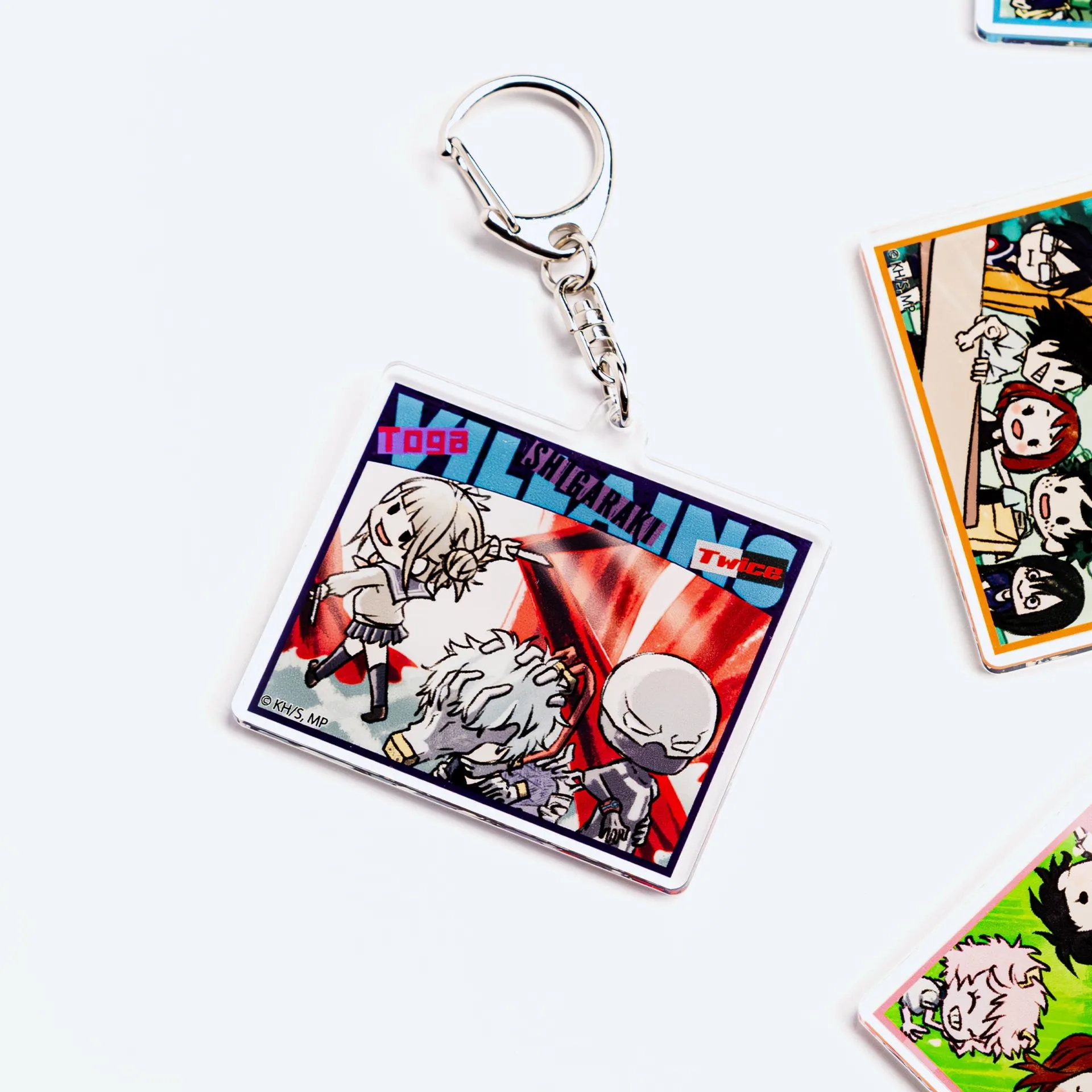
- My Hero Academia GraffArt Deku Uraraka Asui Acrylic Keychain: My Hero Academia GraffArt Deku Uraraka Asui Acrylic Keychain, 2.56 by 2.56 inches, acrylic, with a playful group illustration. A bag or keyring keychain gets constant light and friction, so check it for edge fading and scratches before the whole image dulls.
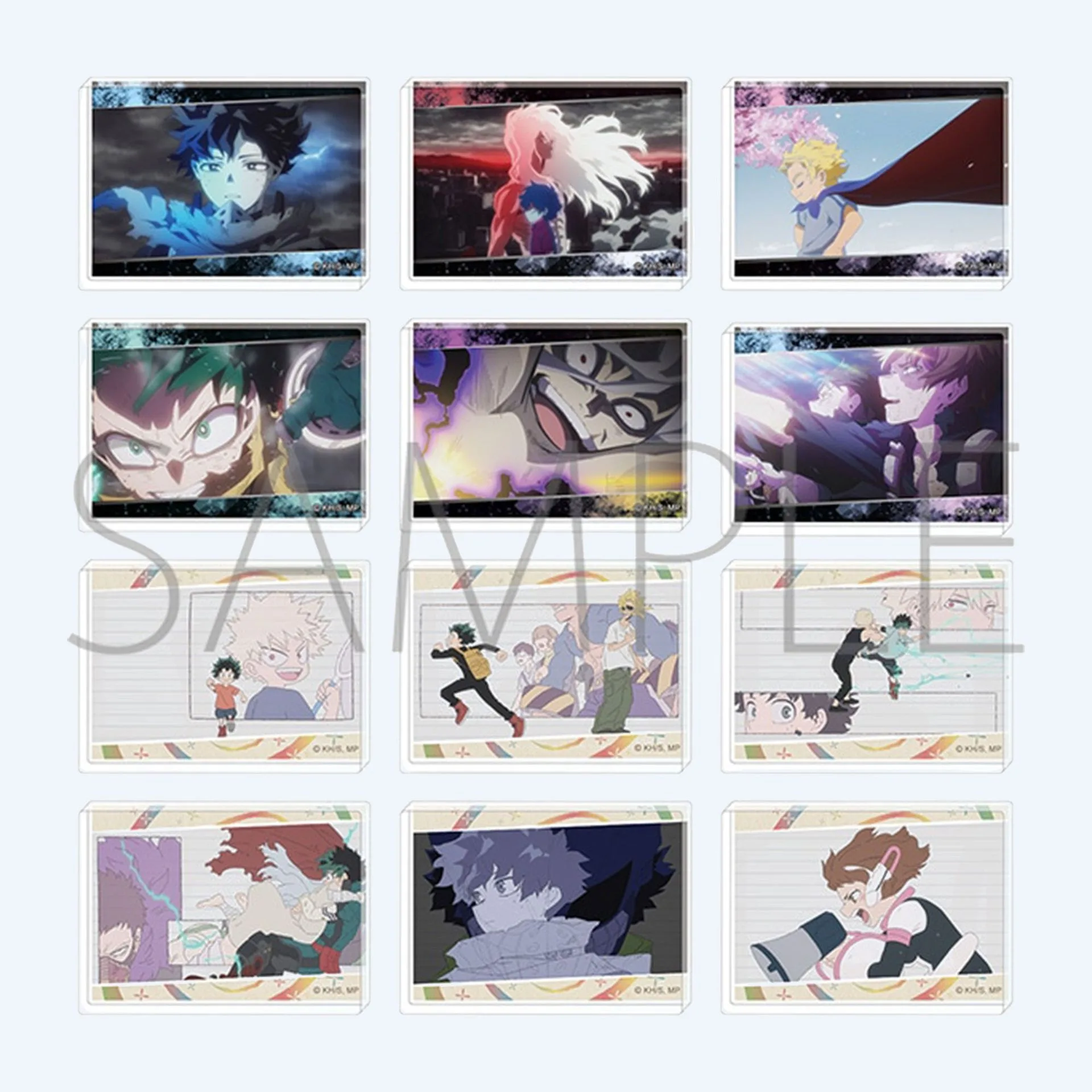
- My Hero Academia FINAL SEASON OP/ED Acrylic Block Collection [12 Types Total] Blind Box: My Hero Academia FINAL SEASON OP/ED Acrylic Block Collection, 12 designs total, blind box, with layered depth and clarity. Blind-box duplicates are ideal to keep one on display and store the spare flat in a dark box, which is the simplest way to compare fading over time.
- Jujutsu Kaisen Aurora Pastel Pop Gojo Acrylic Stand: Jujutsu Kaisen Aurora Pastel Pop Gojo Acrylic Stand, approximately 3.94 by 3.94 inches, acrylic with full-color printing. Aurora and pastel finishes show surface haze and color shift quickly, so keep this stand out of direct sun and clean it only with a dry cloth.