Quick answer
Conversation cards designed for families can help you start low-pressure, engaging talks with your teen, easing the awkwardness and building connection over time.
Why teens shut down and how cards help
Teens often feel put on the spot by direct questions like 'How was school?' A card game or prompt turns the focus away from interrogation and toward a shared activity. The playful, curiosity-driven tone of a conversation card set can lower defenses and invite genuine sharing without pressure.
Diagnosis: When conversation feels stuck
- Symptom: Your teen gives one-word answers or avoids talking altogether, especially about their day or feelings.
- Likely cause: They feel interrogated or judged. Direct questions can feel like a test, not a conversation.
- Corrective action: Introduce conversation cards in a low-stakes setting (like during a car ride or after dinner). Let your teen pick a card and answer first yourself to model openness. Start with just 2–3 cards per session to keep it light.
- When to stop or choose another option: If your teen consistently refuses or seems more stressed, pause and try again later. Some teens prefer written prompts or one-on-one time without any props. Respect their no. Forcing it can damage trust. Try again in a week or two.
Product spotlight
-
Family Conversation Packs Bundle: The Family Conversation Packs Bundle includes a Kids Conversation Pack and a Family Conversation Pack, with prompts that inspire creativity, confidence, and curiosity. The Family Pack is especially suited for teens, offering mealtime and road-trip prompts that feel natural rather than forced, helping you connect without awkwardness.
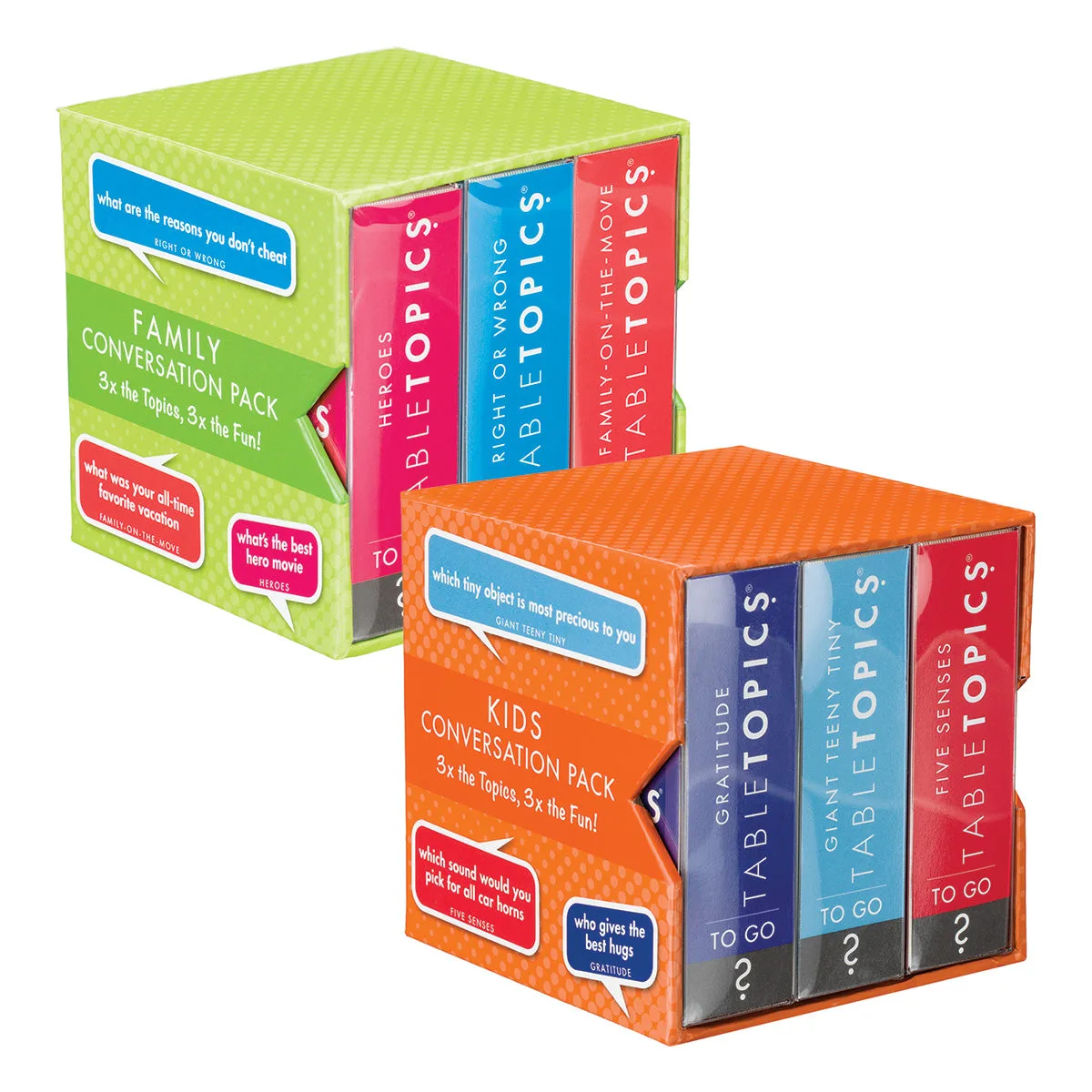
Family Conversation Packs Bundle