Quick answer
Pick a regular time, keep the deck handy, let your child choose a card, and listen without judgment. The Family Talk Bundle makes this easy with ready-to-use prompts.
Why a routine matters more than the cards
A routine turns occasional conversations into a habit. Without one, even the best conversation starter cards end up in a drawer. The real value comes from consistency—a predictable time when everyone knows they will talk and listen. This builds trust and makes deeper topics feel safer over time.
Choosing the right deck for your family's age range
Not all conversation cards are the same. Some are better for young kids, others for teens. The Family Talk Bundle includes a variety of prompts that work across ages, so you don't have to switch decks as your children grow. This saves you the hassle of buying separate sets later.
How to build your family talk routine in 5 steps
- Pick a consistent time and place: Choose a moment when everyone is already together, like during dinner, the car ride home from school, or before bed. Stick to the same time for at least two weeks to form the habit. If you miss a day, don't skip twice in a row—resume the next day.
- Let your child pick the card: Hand the deck to your child and let them choose a card. This gives them ownership of the conversation and makes them more willing to participate. Avoid re-picking or vetoing their choice. If they pick the same card repeatedly, that's fine—it means the topic matters to them.
- Ask the question and listen first: Read the card aloud and then be quiet. Let your child answer without interruption. Your job is to listen, not to correct or teach. After they finish, you can share your own answer. A common mistake is jumping in with advice. Resist the urge—the goal is connection, not instruction.
- Keep it short and positive: Aim for 5–10 minutes per session. If the conversation flows longer, great, but don't force it. End on a light note or a laugh so your child looks forward to the next time. If your child gives a one-word answer, don't push. Model a longer response next time and they may follow.
- Rotate who asks and who answers: After a few sessions, let your child ask the question and you answer first. This flips the dynamic and keeps the routine fresh. You can also let siblings take turns being the 'card picker.' When everyone takes turns, no one feels put on the spot every time.
Product facts
-
Family Talk Bundle: The Family Talk Bundle from Talking Point Cards is designed to help families spark fun, meaningful parent-child conversations that actually last. It provides a ready-made set of prompts so you can start your talk routine immediately without brainstorming questions.
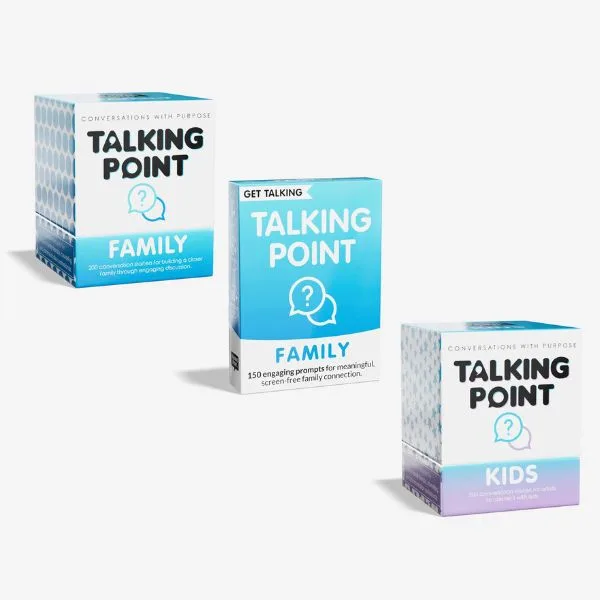
Family Talk Bundle