Quick Answer
Hang the veil or robe on a padded hanger and steam it from 6 to 10 inches away, letting the steam do the work instead of pressing the fabric. For a de-wrinkled tulle veil, steam in short passes and let it hang to dry and relax. For a lace robe, steam the lace from the inside and use low heat on silk, because direct high heat can flatten the lace and damage the silk.
A wrinkled veil or robe on the morning of a wedding is a common problem, and it is usually fixable at home without a steamer full of tricks. The main risk is not the wrinkle, it is the heat and moisture you use to remove it, because tulle and lace react differently to steam and direct contact.
This guide separates the symptom from the cause so you can choose the right fix. It covers how to steam a veil, how to de wrinkle tulle veil fabric, and how to remove wrinkles from a lace robe, with clear stopping points where you should not push further.
Why Tulle and Lace Wrinkle Differently
Tulle is a stiff, open-weave netting, so it holds folds easily and releases them just as easily with gentle steam. Lace is usually a patterned fabric on a finer ground, often with silk or delicate fibers, so it wrinkles in smaller creases and can be permanently marked by direct heat or heavy pressure.
That difference matters because the same method does not suit both pieces. Tulle can handle more steam and a little more movement, while lace needs lower heat, less contact, and more patience. Treating them the same is how people scorch a hem or flatten a lace motif.
- Steam tulle from a distance and let it hang; do not press it flat.
- Steam lace from the inside so the steam reaches the fabric without crushing the pattern.
- Never let a hot iron touch tulle or lace directly.
How to Steam a Tulle Veil Without Damaging It
Hang the veil by its comb on a padded hanger or hook so the tulle hangs freely and the blusher is not folded back on itself. Fill a handheld or standing steamer and let it run for a few seconds until the steam is steady, not sputtering. Hold the steamer 6 to 10 inches away and move it in slow downward passes, letting the steam pass through the netting rather than pushing the fabric.
Work in sections from the top down, and let the veil hang between passes so the weight of the tulle pulls the wrinkles out. If a fold near the comb is stubborn, steam that area a little longer, then smooth it with your hand once it has cooled. Do not touch the tulle while it is hot, and do not wring or stretch it.
- Keep the steamer moving; holding it in one spot can over-wet the tulle.
- Let the veil hang for 15 to 30 minutes after steaming so it dries fully.
- If the veil has a lace trim, steam the lace section from the back side.
How to Remove Wrinkles From a Lace Robe
Turn the robe inside out and hang it so the lace faces away from the steamer. Steam the silk lining or the inside of the robe first, then turn to the lace and steam it from a slightly greater distance. If the robe has a satin belt or tie, steam it separately and hang it straight so it does not curl.
For a silk and lace robe, keep the steamer on a low setting and avoid letting condensation drip onto the fabric. If the robe is heavily creased, steam it in two passes with a few minutes of hanging in between instead of holding the steamer in one place. Once the robe is dry, store it on a padded hanger rather than folding it, which is what created the creases in the first place.
- Do not iron lace directly, even on low heat.
- Steam the lining first, then the lace, so the outer layer stays crisp.
- Hang the robe to dry completely before packing it for the wedding day.
When to Stop and Choose Another Option
Stop steaming if the fabric starts to feel damp and heavy, if the lace pattern looks flattened, or if you see any shine on the silk. Those are signs you have used too much heat or moisture, and more steaming will make it worse. Let the piece dry completely and reassess before doing anything else.
If the crease is a hard fold that has been set for weeks, or if the veil has a structured shape you are afraid to distort, professional steaming is the safer choice. For a veil with hand-cut lace or a drop veil design, a bridal shop or dry cleaner who handles formal wear can press it correctly. Do not experiment with an iron on a piece you cannot replace.
- Stop if the fabric feels wet, shiny, or limp.
- Choose professional steaming for set folds or structured veils.
- Never use direct iron contact on tulle or lace.
Symptom, Cause, and Fix
- Veil has soft folds from storage: Tulle relaxes with gentle steam, so hang the veil by its comb and steam from 6 to 10 inches away in slow downward passes. Let it hang 15 to 30 minutes; the fold should fall out on its own.
- Veil has a hard crease near the comb: This usually comes from the veil being folded at the comb for a long time. Steam that section a little longer, then smooth it with your hand once it has cooled. If the crease remains after two passes, stop and take it to a professional steamer.
- Lace robe looks flattened or shiny: Too much direct heat or moisture has pressed the lace pattern down. Stop steaming immediately and let the robe dry completely. Do not iron it to fix the shine; choose professional pressing instead.
- Silk lining still wrinkled after steaming: Silk needs a low setting and a little more distance. Steam the lining from the inside in two passes with hanging time in between. If it is still creased, store it on a padded hanger rather than folding it again.
Catalog Details That Affect Steaming
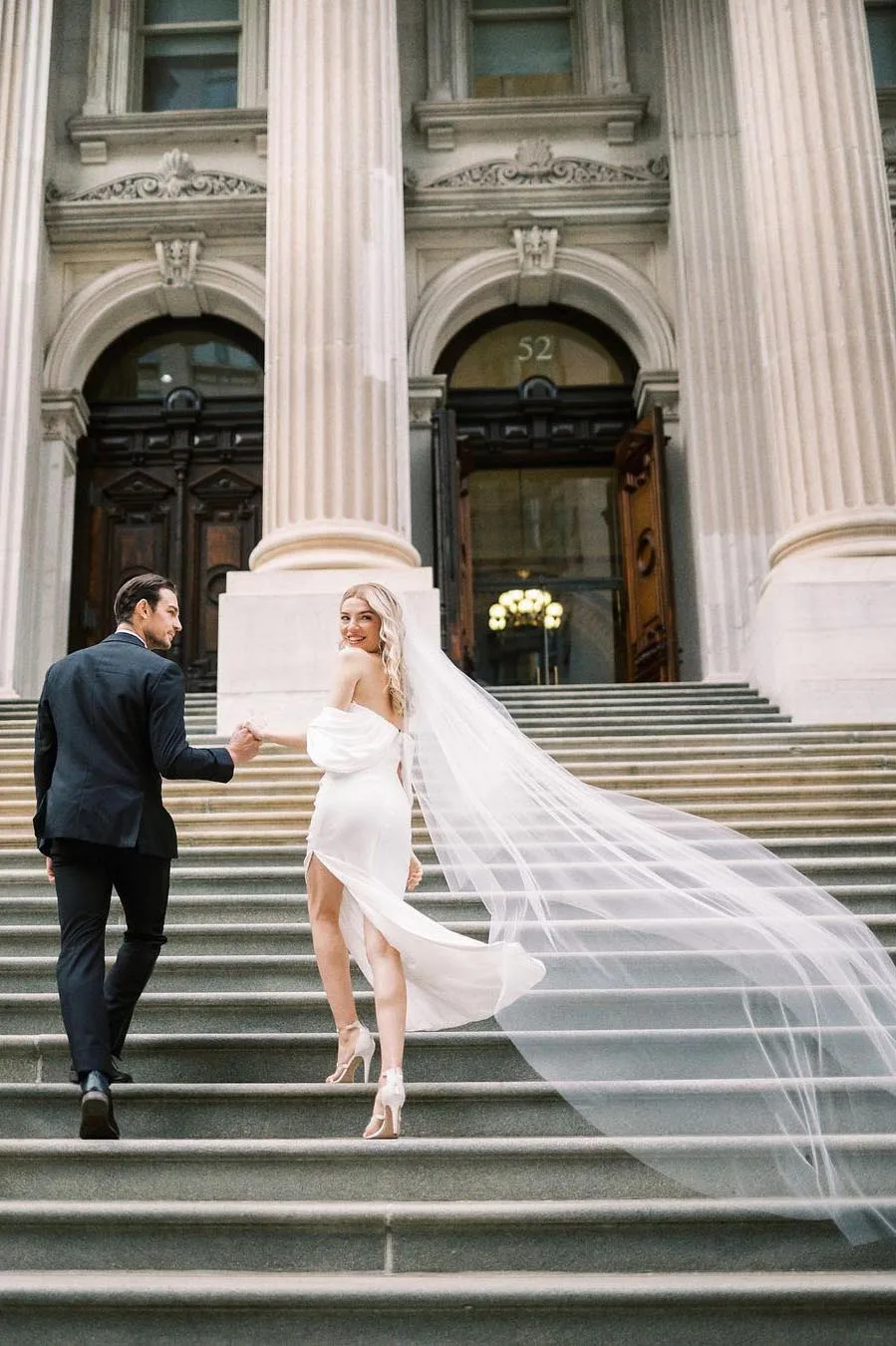
- Aura blusher Illusion tulle veil in Ivory: Made of illusion tulle with a romantic longer blusher and floor-sweeping tulle, cut with clean rounded edges and subtle volume at the comb. The blusher and long tulle mean more surface area to steam, so hang it fully extended and steam the blusher separately from the main drop.
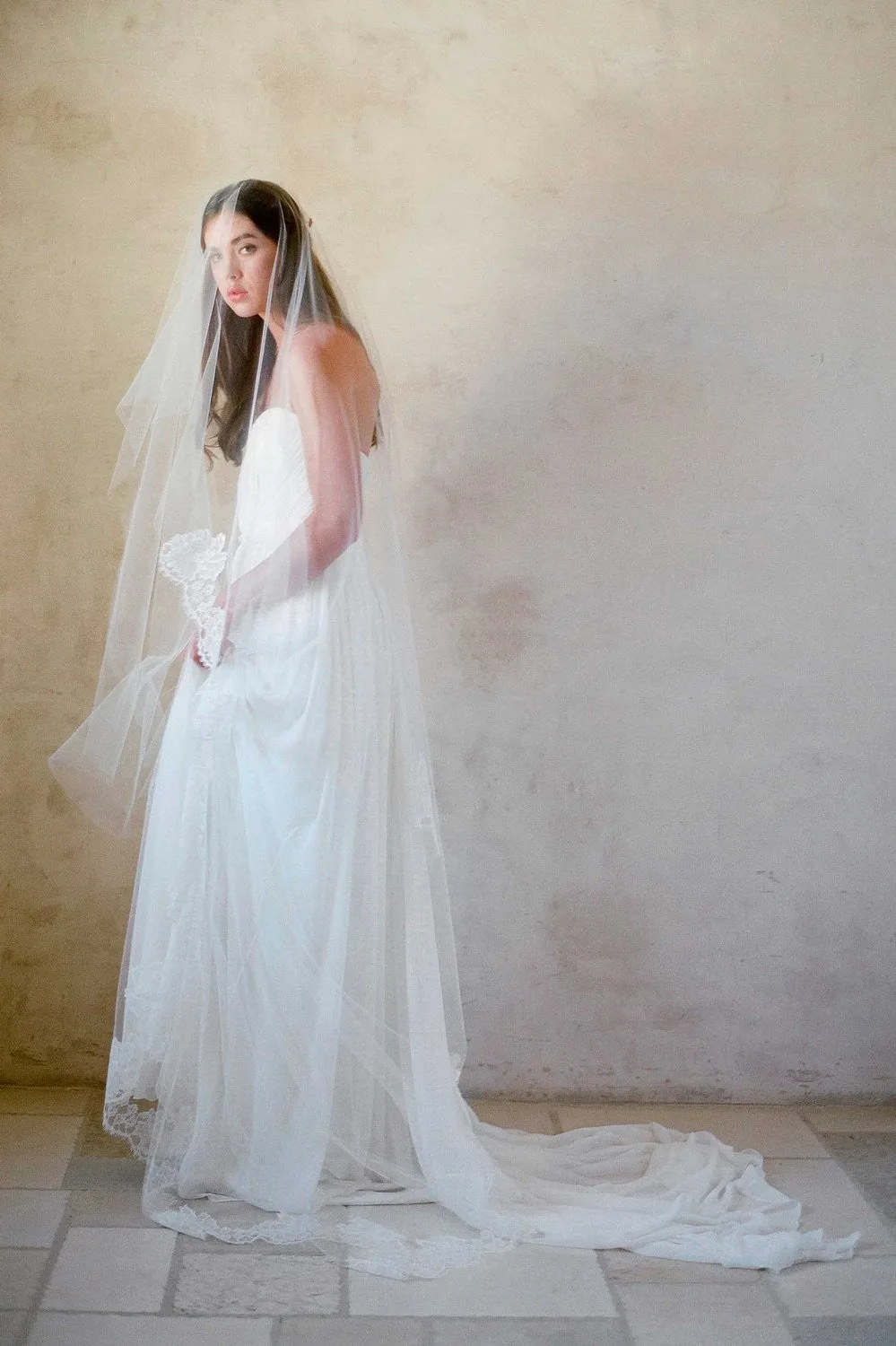
- Roseline French Lace Blusher Cathedral Veil in Ivory or Off-white - style V70: Made of fine illusion tulle with hand-cut floral French lace sewn along the rounded edge, designed as a drop veil with a blusher and a silver plated comb. The hand-cut lace edge is the most delicate part, so steam the lace trim from the back side and avoid pulling on the comb.
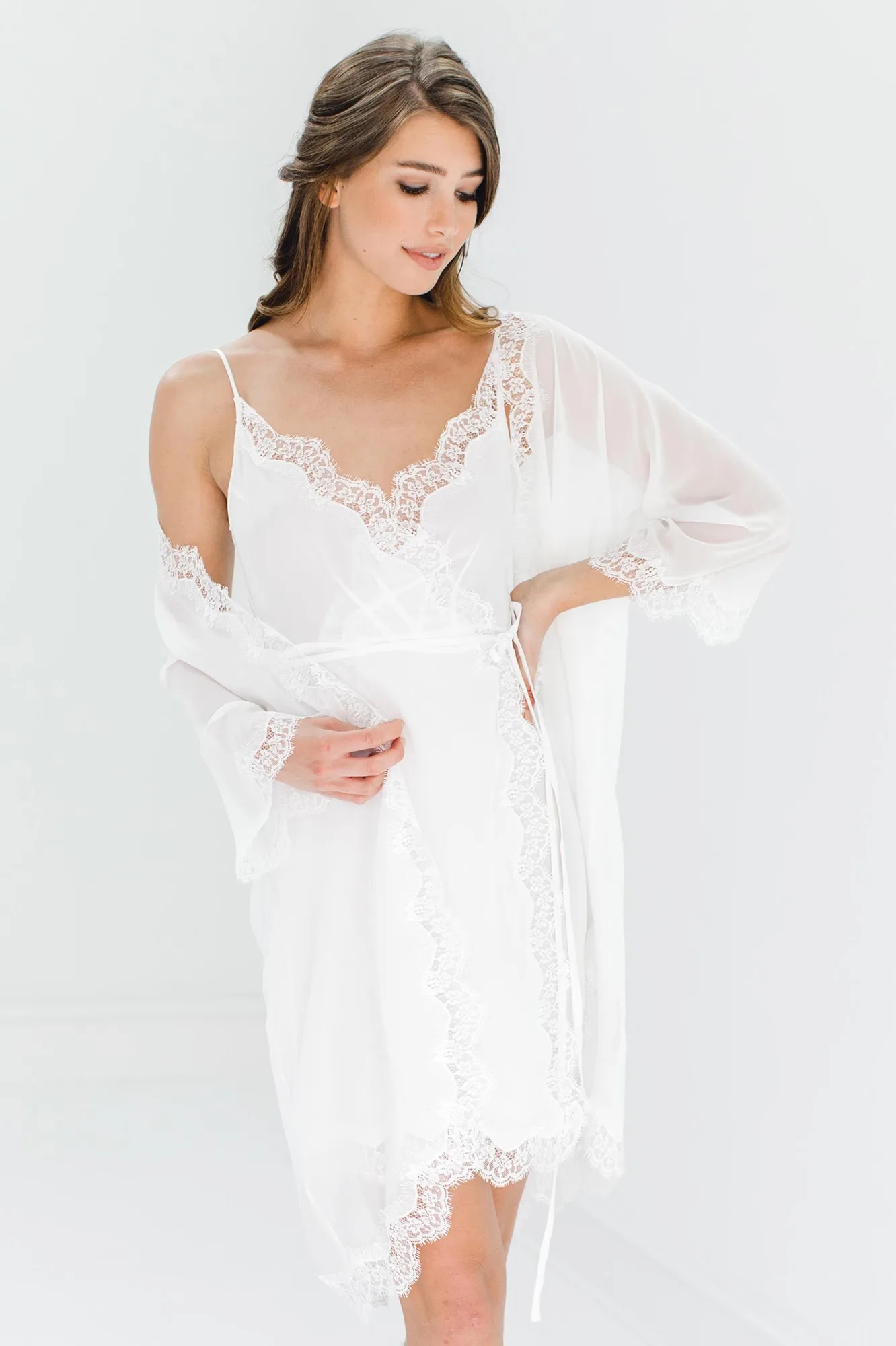
- Swan Queen silk and lace robe kimono ivory + blush pink - style 104SH: Handmade in French Chantilly lace with a fully lined bodice in 100% silk, sheer lace sleeves, French seams, and a soft satin belt. The silk lining and lace need different steam distances, so steam the lining first and keep the steamer farther from the lace sleeves.
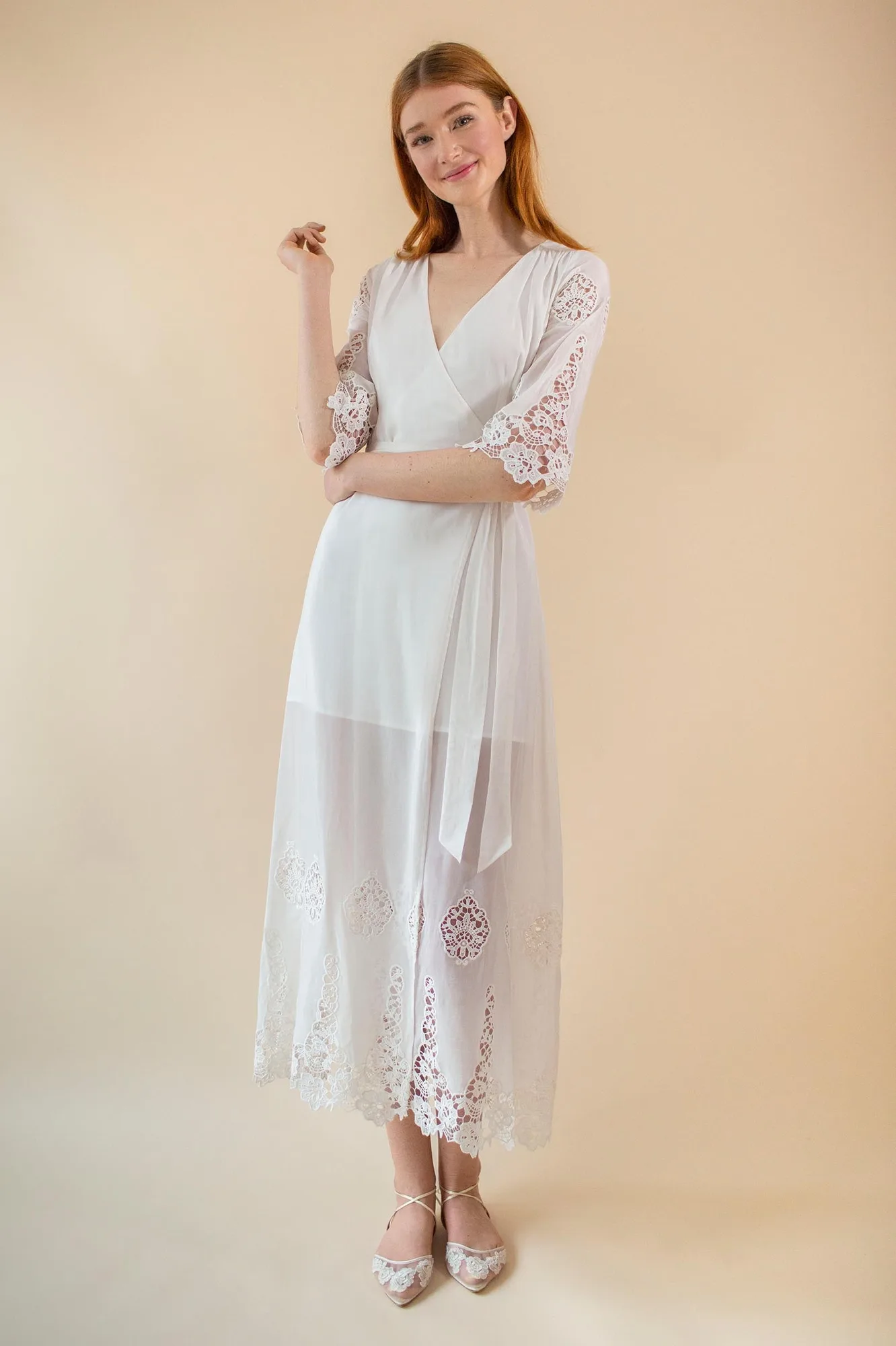
- Azalea Broderie Anglaise crochet wrap maxi robe dress: Designed in 100% embroidered silk cotton with a wrap silhouette, long maxi length, and elbow flared sleeves. Silk cotton holds a crease longer than pure silk, so steam the wrap front and sleeves in two passes and let it hang between them.
Steaming a veil or lace robe is mostly about restraint: keep the heat low, keep the steamer moving, and let the fabric hang and dry between passes. When a crease will not release or the fabric starts to look changed, stop and hand it to a professional rather than risk the piece.