Quick answer
Mould on bamboo straws is almost always a drying problem, not a bamboo problem. Rinse them straight after use, shake out the water, stand them upright so air moves through the hollow centre, and store them only once they are completely dry. If you already see black speckles or smell mustiness, treat that set as unsafe for drinks and replace it.
Why bamboo straws mould so easily
Bamboo is a natural grass with a porous surface and a hollow core. Both hold moisture longer than glass or stainless steel, especially in humid kitchens or a closed drawer. Mould needs three things: moisture, warmth and darkness. A damp straw left in a sealed container gives it all three.
The inside of the straw is the usual starting point because it is the hardest part to dry and the easiest to forget. A quick rinse under the tap pushes water into the bore, and if the straw then goes straight into a bag or jar, that water sits there.
The drying routine that actually works
Rinse each straw with warm water immediately after drinking, before residue dries inside. Use a straw cleaning brush with a few drops of mild washing-up liquid, push it through from both ends, then rinse again.
Shake each straw hard, like a thermometer, to throw water out of the bore. Stand the straws upright in a cup or rack with both ends open to the air, not lying flat on a draining board where the underside stays wet. Leave them at room temperature until the inside feels dry to the touch, which can take several hours in a humid room.
Never dry bamboo straws in an oven, microwave or dishwasher. High heat can crack or warp the bamboo, and the damage creates tiny splits where moisture and mould collect.
How to store bamboo straws between uses
Store straws only when they are bone dry. A fabric pouch or hessian carry case is a good everyday option because it breathes, unlike a sealed plastic tub or a zip-lock bag that traps any remaining dampness.
Keep the storage spot cool and airy rather than above a kettle, beside a hob or in a steamy bathroom. If you live somewhere very humid, store straws loose in an open jar in a cupboard and only put them in a carry case when you are heading out.
For travel, let straws air-dry fully at your destination before packing them back into the case. A wet straw wrapped in fabric is the fastest route to a mouldy set.
What to do if your straws are already mouldy
Small surface discolouration on the outside can sometimes be scrubbed away with a brush and hot soapy water, then dried thoroughly. But mould that has grown inside the hollow core, or any black, green or fuzzy patches, cannot be reliably cleaned out of a porous material.
If the straw smells musty even after washing and drying, or if you can see spots inside the bore, retire it. Mould spores can cause allergic reactions and digestive upset, and no amount of scrubbing makes a contaminated bamboo straw safe for repeated drinking.
Choosing straws and tools that dry faster
If mould keeps coming back, the practical fix is often a second set so one can dry fully while the other is in use. A set of twelve gives you that rotation without running short.
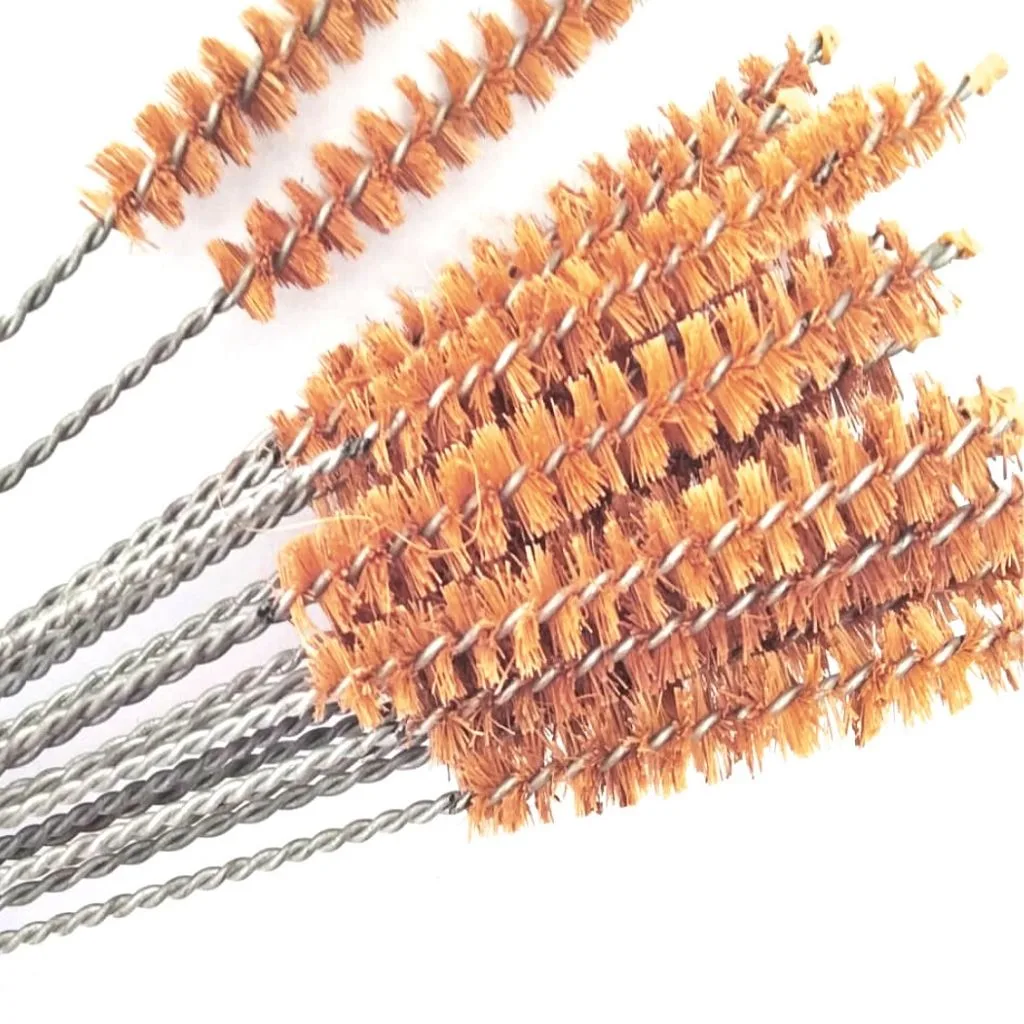
A dedicated cleaning brush matters more than most people expect. Nylon bristles scrub residue out of the bore, while coconut fibre and grass fibre options offer a plant-based alternative. Whichever you choose, the brush reaches places a rinse cannot.
Diagnose your bamboo straw problem
- Symptom: faint musty smell, no visible spots: The straw was likely stored before it was fully dry. Wash it with hot soapy water, scrub the bore with a cleaning brush, shake out the water, and stand it upright to air-dry for a full day. If the smell is gone after one thorough wash and dry, the straw is fine to keep using with better drying habits.
- Symptom: black or green speckles inside the hollow centre: Mould has colonised the porous core, where a brush cannot reach reliably. Surface scrubbing will not make it safe. Retire that straw. Replace it and switch to a rotation so each straw dries completely between uses.
- Symptom: mould returns within days of every wash: The storage environment is the problem, not your cleaning. Move straws out of sealed containers and humid spots into an open jar or a breathable hessian case in a cool cupboard. If mould still returns after changing storage and drying, choose glass or stainless steel straws, which do not absorb moisture.
Products that support a dry-straw routine
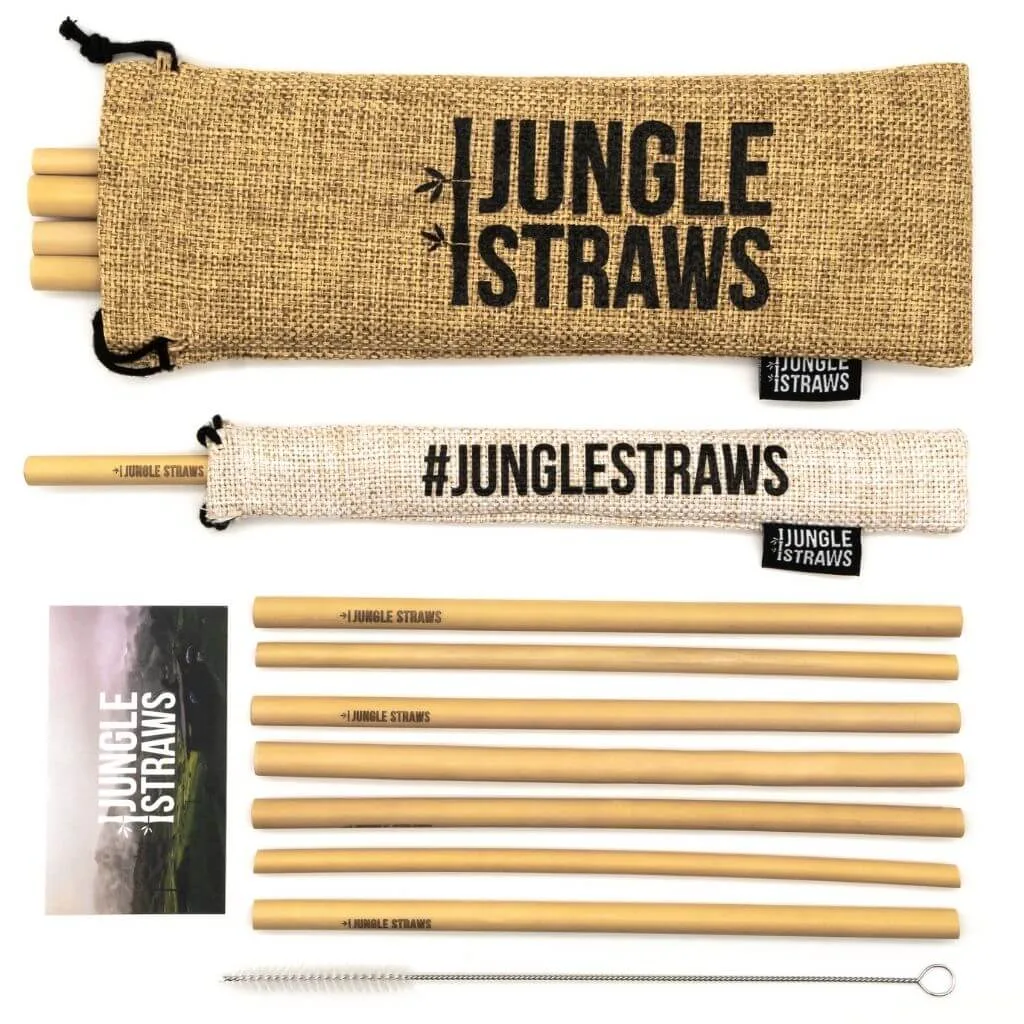
- Jungle Straws: Reusable Bamboo Drinking Straws with Natural Hessian Carry Case (Set of 12): Jungle Straws are individually hand crafted and harvested by local artisans at a small, family-run farm in rural Vietnam, and the set of 12 comes with a natural hessian carry case. Twelve straws let you rotate sets so each one dries completely before its next use, and the hessian case breathes rather than trapping damp like a sealed plastic box.
- Reusable Straws Cleaning Brushes for Bamboo or Stainless Steel Straws: Reusable Straws Cleaning Brushes are available with nylon, coconut fibre or grass fibre bristles, in a choice of quantities. A brush that fits the bore removes the residue a rinse leaves behind, which is the food source mould needs; the plant-fibre options suit a zero-waste kitchen.
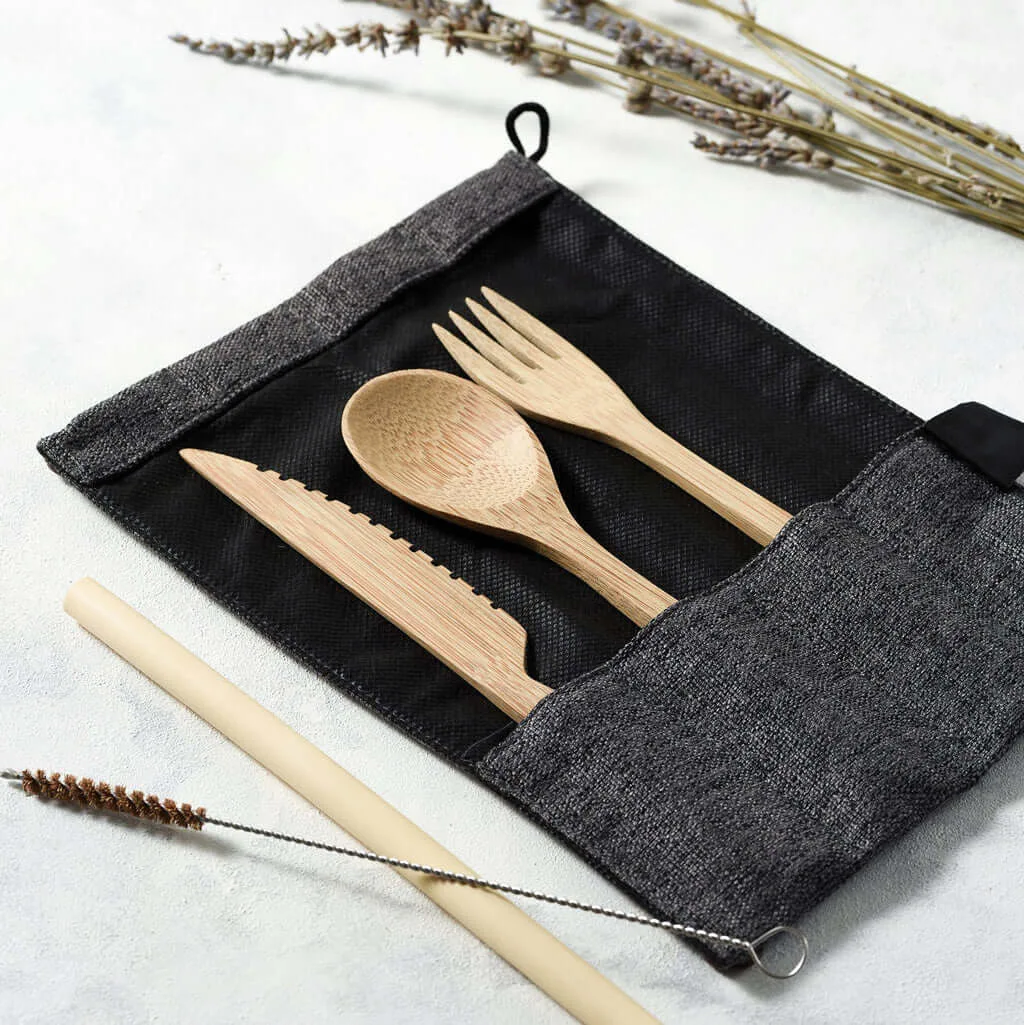
- Bamboo Cutlery Set (Dark grey bag): The Bamboo Cutlery Set (Dark grey bag) includes a serrated bamboo knife, fork, tablespoon, a bamboo straw and a coconut fibre straw cleaning brush. A set that pairs cutlery with a straw and its own brush makes it easier to clean and dry the straw immediately after a meal out, rather than leaving it damp in a bag.