Quick answer
A bra band rides up your back because it is too loose to anchor itself, or because the cups are too small and the band is being pulled upward to compensate. Fasten the band on a tighter hook and shorten the straps first. If the band still climbs, go down a band size and up a cup size, or switch to a bra designed for a fuller bust.
Symptom, cause, or both? Read the band before you tighten anything
A band that climbs is doing one of two jobs badly: it is either too loose to grip your ribcage, or it is being dragged upward by cups that cannot contain your bust. The tell is where the band sits when you raise your arms. If it rides up only during movement and settles back down, the band is probably just loose. If it sits high all day and the underwire presses into the breast tissue, the cup is the likely culprit.
Check the band level in a mirror from the side. A well-fitted band should sit level all the way around, roughly parallel to the floor, with the back lower than the front rather than higher.
Fix it in order: band tension first, straps second
Start with the band on the loosest hook when the bra is new, then move inward as the elastic relaxes over time. If you are already on the tightest hook and the band still rides up, tightening further will not help — it will just dig in and distort the wires.
Straps are the second adjustment, not the first. Over-tightening straps pulls the back of the band upward, which is the exact problem you are trying to solve. Loosen the straps until they sit flat without digging, then re-check the band level.
- Fasten on the loosest hook for a new bra; move to tighter hooks as the band stretches.
- If you are on the tightest hook and the band still climbs, the band size is wrong, not the hook setting.
- Loosen straps before tightening them — tight straps lift the back of the band.
- Scoop your bust into the cups after fastening so the wires sit on your ribcage, not on breast tissue.
When the band is not the problem: cup size and shape
If the band sits level but the centre of the bra lifts away from your chest, or the wires press into the sides of your bust, the cup is too small. A too-small cup pushes the band forward and up, which reads as a riding-up band even when the band measurement is technically correct.
In that case, go down one band size and up one cup size — for example, from a 14G to a 12H — rather than simply tightening the band. Plunge styles with a carved-out neckline can also help if your bust is fuller at the centre, because the lower front reduces the upward pull on the band.
If nothing changes, change the bra, not your body
Some bands ride up because the style itself is not built for a fuller bust. A bra sized for D+ cups usually has a wider band, stronger underband elastic, and more supportive side panels than a standard fashion bra, which is what stops the band from migrating upward.
If you have adjusted hooks, straps, and cup size and the band still climbs, stop tightening. A band that has to be forced into place will not stay there, and the pressure will cause discomfort under the bust and at the sides.
Band diagnosis: match the symptom to the fix
- Band rides up only when you move: The band is slightly loose rather than structurally wrong. Fasten one hook tighter and re-check the level from the side. If it stays level after one hook, no size change is needed.
- Band sits high all day, wires press into breast tissue: The cup is too small and is pushing the band upward. Go down one band size and up one cup size instead of tightening the band. If the centre of the bra still lifts away after resizing, the cup shape is wrong for your bust.
- Band rides up even on the tightest hook with correct cup size: The bra is not built for a fuller bust. Look for a D+ designed style with a wider band and stronger underband support. Stop tightening here — more tension will only cause digging and distortion.
Products built for a fuller bust
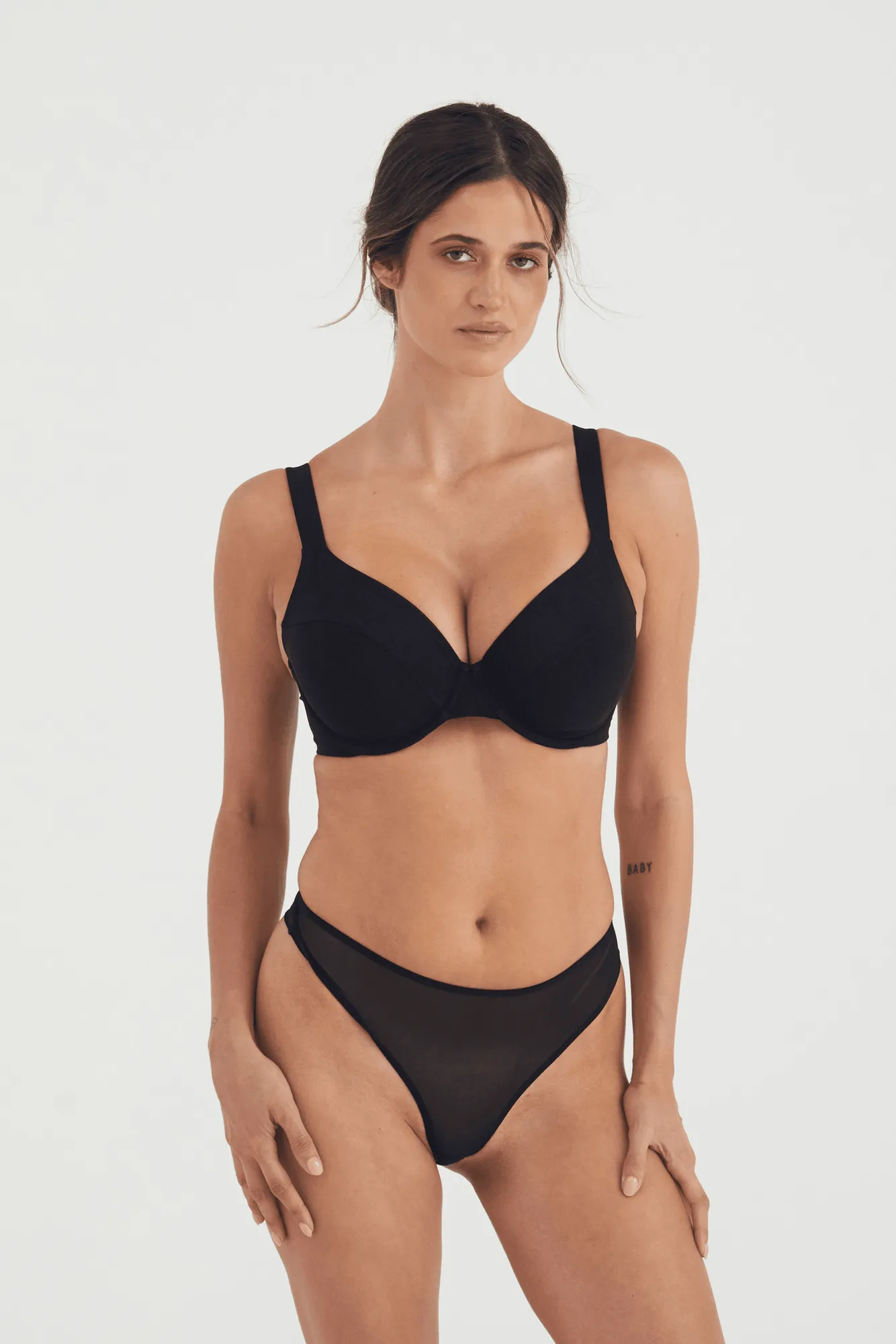
- Busty Basics Plunge Bra - Black: The Busty Basics Plunge Bra in Black is an everyday plunge bra designed for women with bigger busts, with a carved-out neckline and a plunge front. The lower plunge front reduces upward pull on the band, which helps if your band rides up because your bust is fuller at the centre.
- Busty Basics Plunge Bra - Latte: The Busty Basics Plunge Bra in Latte shares the same everyday plunge design for bigger busts, with the same carved-out neckline and plunge front. Same fit solution in a lighter neutral, useful if you want the same band behaviour in a colour that disappears under lighter clothing.
- Busty Basics G-String: The Busty Basics G-String is made from a super stretchy fabric designed to feel like wearing air, with no cutting in, and is available in AU sizes and colours. If your band problems come from a matching set that pulls or digs, a low-pressure brief removes one source of discomfort without changing your bra fit.