Quick answer
No, you don't automatically need a different bra size in a sports bra. You need the same band and cup starting point as your everyday bra, then a fit check for the job the bra is doing. Size up only when a specific problem shows up: cups that compress or spill, a band that rides up, or straps that dig in without holding anything. A snug band is not the same as a too-small band.
Why the "always size up" advice spreads
The advice usually comes from one real experience: someone bought a sports bra in their usual size, couldn't breathe, and sized up. That fix worked for them, so it gets repeated as a rule. But the cause was often a band that was too loose to begin with, not a cup that was too small. If your everyday band is already riding up or sitting on the loosest hooks, a sports bra in that same size will feel worse, and sizing up just moves the problem around.
There's also a coverage issue. Many sports bras are cut higher and tighter across the chest than a plunge or balconette everyday bra. That extra compression can read as "too small" when the real issue is the shape of the neckline, not the size on the label.
What actually changes between a sports bra and an everyday bra
The size number doesn't change. The construction does. Sports bras typically use firmer band elastic, wider straps, and less stretch through the cup to limit bounce. That means the same labeled size can feel tighter in a sports bra even when the measurements match your everyday bra.
So the honest answer to "do sports bras fit differently" is yes, they feel different, but that doesn't mean you need a different size. It means you need to judge the fit by different criteria: does the band stay put when you move, do the cups hold without flattening, and can you take a full breath.
When you should size up, and when you shouldn't
Size up if the cups compress your bust into a uniboob, if tissue spills over the top or out the side, or if the band leaves deep marks that last long after you take it off. Those are signs the bra is genuinely too small, not just firm.
Don't size up if the band rides up your back, if you can pull the band more than a couple of centimetres away from your body, or if the straps fall off your shoulders. Those are signs of a band that's too loose, and going up a size makes it worse. In that case, go down a band size and up a cup size, or look for a bra with a firmer band in your current size.
How to test a sports bra before you commit
Put the bra on and fasten it on the loosest hook. Reach both arms overhead, then twist your torso side to side. The band should stay level with your ribcage, not climb. If it climbs, the band is too loose, regardless of what the cup does.
Next, take five slow deep breaths. You should feel firm support, not restriction. If you can't fill your lungs, the band or cup is too small. Finally, check the neckline. If you're spilling over the top edge even when standing still, the cup isn't covering you, and no amount of strap tightening will fix that.
Verdicts on common sports bra sizing claims
- Claim: You always need to size up in a sports bra: Not true as a blanket rule. Size up only if the cups compress, spill, or the band leaves lasting marks. If the band rides up or the straps fall, you likely need a smaller band, not a bigger one. Verdict: size up only for cup or compression problems, not by default.
- Claim: A tight band means the bra is too small: A firm band is normal in a sports bra because it's built to limit movement. The test is whether it stays level when you move and whether you can breathe fully. If it rides up, it's too loose, not too tight. Verdict: judge the band by position and breath, not by how tight it feels when you first put it on.
- Claim: Sports bra sizing for D cups and up is completely different: The starting size is the same as your everyday bra. What changes is the cut and the firmness. A plunge everyday bra like the Busty Basics Plunge Bra sits lower than a sports bra, so the same size will feel different without being wrong. Verdict: start with your everyday size, then adjust for the specific problem you find.
What this looks like in practice
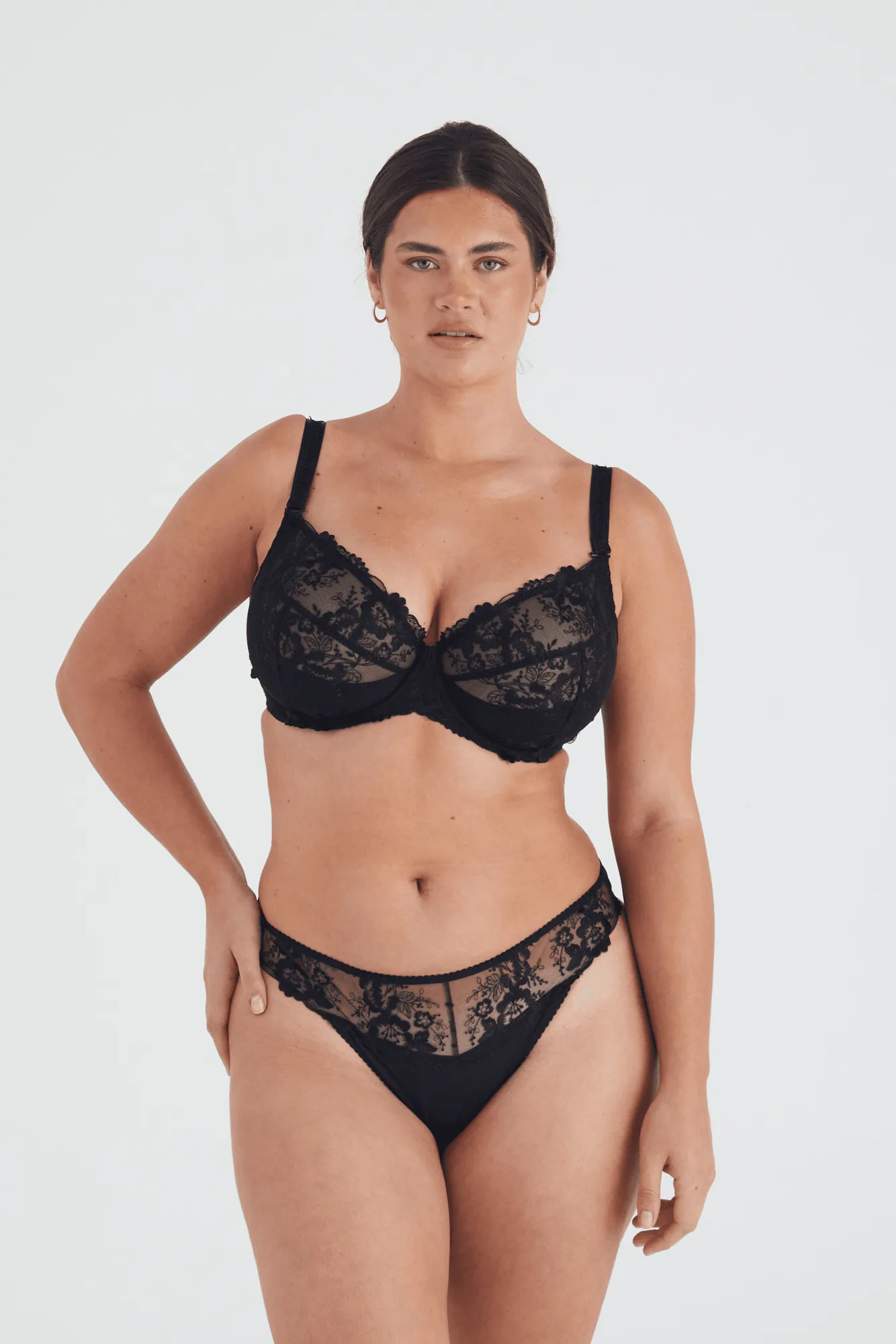
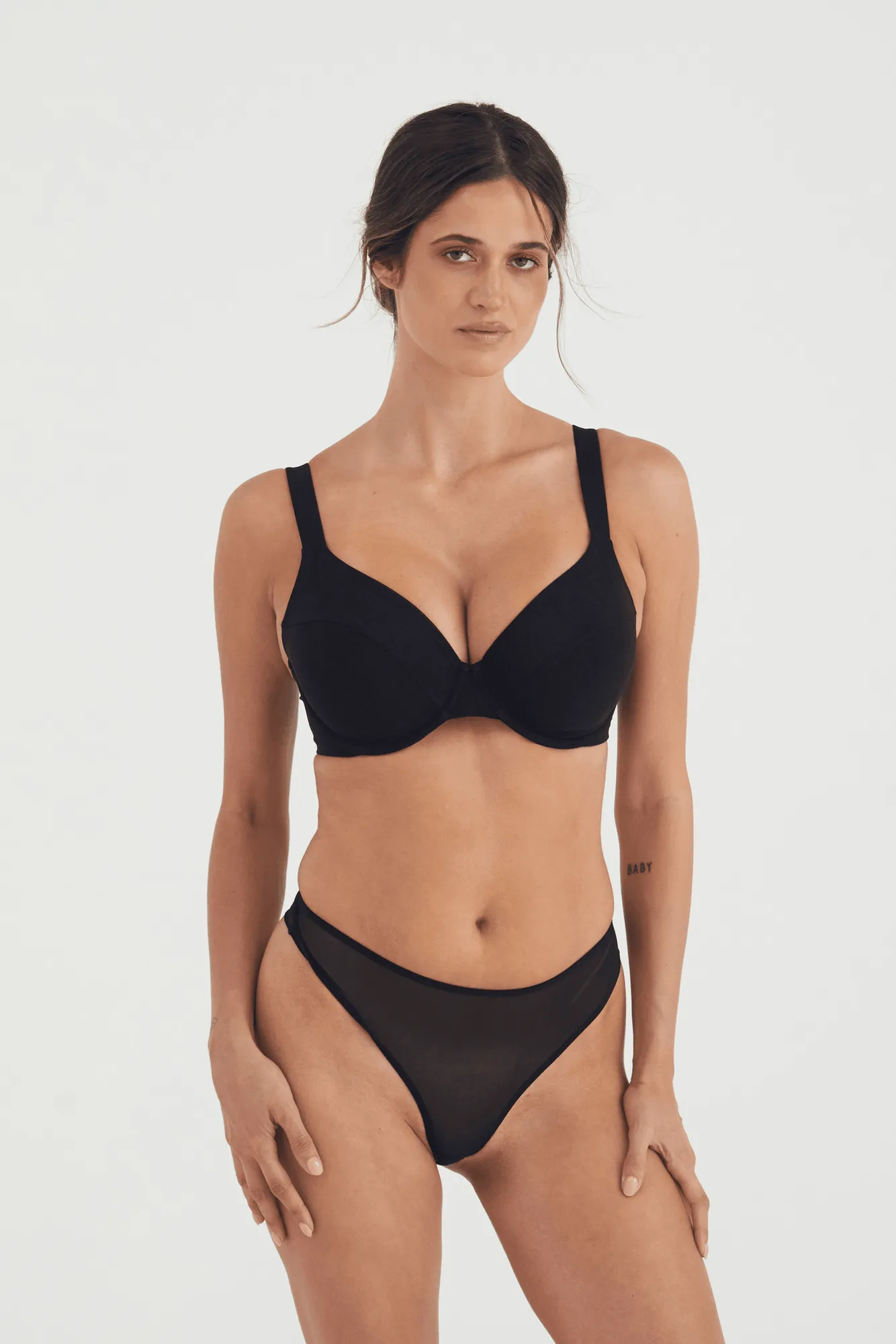
- Busty Basics Plunge Bra - Black: The Busty Basics Plunge Bra is designed as an everyday bra for bigger busts, with a carved-out neckline and a plunge front the brand describes as one you won't fall out of. If you're comparing a sports bra to your everyday bra, this is the kind of neckline that makes the size difference feel larger than it is. The plunge cut sits lower than most sports bras, so a sports bra in the same size will feel higher and tighter across the chest without actually being smaller.
- Busty Basics G-String: The Busty Basics G-String is made from a super stretchy fabric the brand describes as feeling like you're wearing air, with no cutting in. A useful reminder that stretch and support are separate questions. A stretchy brief can feel weightless, but a bra band still needs to be firm to hold. Don't judge bra band tightness by how soft your underwear feels.