Quick answer
Stop destructive chewing by managing the environment first, then teaching your dog what to chew instead. Confine or supervise your dog, remove tempting items, rotate a small set of appropriate chew toys, and reward every correct choice. Punishment after the fact does not work because dogs cannot connect a correction to something they chewed hours earlier.
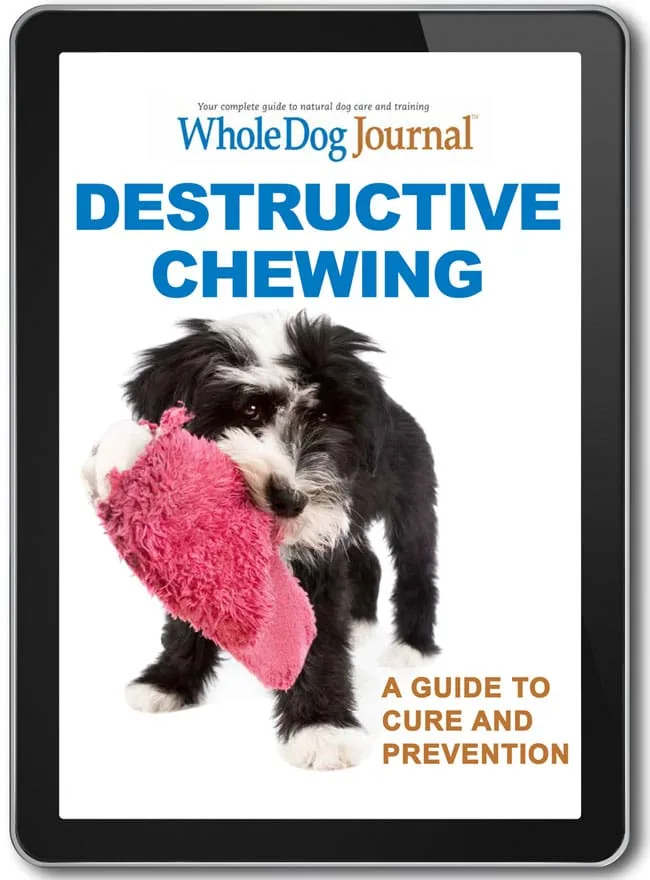
destructive chewing
Why dogs chew and what actually changes the behavior
Chewing is normal dog behavior. Puppies explore with their mouths and work through teething discomfort. Adult dogs chew to relieve boredom, burn nervous energy, or self-soothe when left alone. That means the fix is rarely about discipline. It is about giving the dog an acceptable outlet and removing access to the wrong ones.
The two levers that change chewing fastest are management and enrichment. Management means the dog cannot rehearse the behavior when you are not watching. Enrichment means the dog has something legal to do with its mouth. If either lever is missing, most dogs will keep chewing furniture, shoes, or baseboards no matter how many times they are told no.
Timing matters too. A correction delivered even a minute after the fact lands on whatever the dog is doing at that moment, not on the chewed cushion. That is why after-the-fact punishment creates confusion, not learning.
How to set up a chew-proof zone
Before training starts, reduce the dog's freedom to the size of its current reliability. A puppy or a newly adopted dog that has not yet earned house privileges should be in a crate, pen, or dog-proofed room whenever you cannot watch it directly. This is temporary, not permanent, and it expands as the dog's habits improve.
Walk your home at dog eye level and remove or block the usual targets: remote controls, socks, trash cans, charging cables, houseplants, and children's toys. Bitter sprays can help on furniture legs, but they are a deterrent, not a solution. If the dog can still reach the couch cushion, the setup is not finished.
A common mistake is giving a dog full run of the house on day one because it seems calm. Calm dogs still chew when bored or anxious, and one successful session on a couch cushion makes the next attempt more likely.
Choose chew toys that match your dog's style
Not every dog chews the same way. Some dogs want to dissect and shred, some want to gnaw and hold, and some want to chase and squeak. Buy one or two toys in each category and watch which ones hold your dog's attention for more than a few minutes. Those are the toys worth buying more of.
Match toughness to your dog's size and jaw strength, and check toys regularly for cracks, loose pieces, or swallowed fragments. A toy that is too hard can damage teeth, and a toy that comes apart easily can become a choking or obstruction risk.
Rotate toys instead of leaving all of them out at once. A toy that disappears for a few days and then reappears feels new again. Keep three to five toys available and store the rest.
Redirect chewing in the moment
When you catch your dog chewing something inappropriate, stay neutral. Say nothing dramatic, take the item away, and immediately offer an appropriate chew toy. When the dog takes it, mark and reward. You are teaching a swap, not a punishment.
If your dog guards chews or snaps when you reach for an item, do not grab. Trade for a high-value treat or contact a qualified trainer or veterinary behaviorist. Resource guarding is a separate issue from ordinary chewing and needs its own plan.
A common mistake is turning the redirect into a chase game. If you grab and run, the dog learns that stealing items produces exciting attention. Keep the exchange calm and boring.
Prevent chewing when you leave the house
Most separation chewing happens in the first thirty minutes after you leave. Give your dog a frozen stuffed toy or a long-lasting chew right before you go, and keep departures low-key. A dog that is working on a chew is not working on your door frame.
If the chewing is paired with barking, pacing, drooling, or attempts to escape, that is likely separation-related distress rather than simple boredom. In that case, confinement can make things worse, and you should get help from a veterinarian or behavior professional rather than pushing through.
For ordinary alone-time chewing, build up your absences gradually. Start with short trips and return before the dog gets anxious, then extend the time as the dog stays relaxed.
Track progress and know when to get help
Keep a simple log for two weeks: what was chewed, where the dog was, how long it had been alone, and what toys were available. Patterns usually show up fast. If damage only happens after a long day without exercise or only when you are gone, the plan needs to target that gap.
If your dog is chewing to the point of injury, swallowing non-food items, or showing aggression around chews, stop the DIY approach and involve a veterinarian or certified behavior consultant. Chewing that causes harm is a medical and safety issue, not a training inconvenience.
Expect progress in weeks, not days. Puppies may chew heavily until their adult teeth settle, and adolescent dogs often regress. Consistency with management and enrichment is what shortens the timeline.
Your step-by-step chewing prevention plan
- Step 1: Shrink your dog's space: Use a crate, pen, or dog-proofed room whenever you cannot supervise directly. This prevents rehearsal of the behavior while you work on the rest of the plan. Checkpoint: your dog should not have access to any item you would be upset to lose.
- Step 2: Remove and block the usual targets: Pick up shoes, cords, trash, and remotes. Block furniture legs and cushions if needed. Bitter sprays can help, but they are not a substitute for access control. Checkpoint: walk the room at knee height and ask whether a determined dog could reach anything unsafe.
- Step 3: Offer legal chews and rotate them: Provide a mix of dissecting, gnawing, and interactive toys, and keep only a few out at a time. Match toughness to your dog's size and chewing style. Checkpoint: if a toy is destroyed in minutes or shows cracks, replace it with a different type.
- Step 4: Redirect every wrong chew to a right one: Interrupt calmly, take the item, hand over an appropriate chew, and reward the dog for taking it. Do not chase, yell, or punish after the fact. Checkpoint: the dog should start choosing the toy on its own within a few weeks.
- Step 5: Pre-empt alone-time chewing: Give a frozen stuffed toy or long-lasting chew right before you leave, and keep departures quiet. Build absence time gradually. Checkpoint: if chewing comes with panic or escape attempts, treat it as a distress issue and seek professional help.
- Step 6: Log progress and adjust: Track what was chewed, when, and what was available. Use the pattern to add exercise, enrichment, or tighter management where it is missing. Checkpoint: two weeks of logs should show whether the plan is working or needs a behavior professional.
Helpful training resources
- Zak George’s Dog Training Revolution: Zak George's Dog Training Revolution is a complete guide to raising and training a dog with practical tips, tricks, and games. Useful if you want a broader positive-reinforcement framework to pair with a chewing plan, especially for puppy chewing prevention.
- Stop Jumping!: Stop Jumping! is a Whole Dog Journal ebook that teaches polite greetings and calm behavior in situations that include unwanted barking and jumping on guests. A good companion resource when the same excitable energy that drives jumping also drives mouthy, attention-seeking chewing.
- Fight!: Fight! is a practical manual on treating dog-dog aggression using behavior modification, covering on-leash manners, resource guarding, and play skills. Relevant if your dog guards chews or shows aggression around other dogs, a situation where redirecting chewing safely requires a structured behavior plan.