Quick answer
A dog chews its leash or collar because the behavior is being reinforced — usually by boredom, teething, or the excitement of a walk starting. Fix the trigger first: add a tug toy to your walk routine, give the dog something legal to carry, and never let the leash become a tug-of-war toy. If the chewing continues after two weeks of consistent redirection, switch to a chew resistant dog leash made from tightly woven rope or coated webbing.
Why does my dog chew its leash?
Leash chewing is rarely about the leash itself. It's about what the leash represents or what the dog is feeling in the moment. Puppies explore with their mouths and often chew the leash simply because it's there and it's textured. Adolescent and adult dogs usually chew for one of three reasons: they're under-stimulated, they're anxious about the walk or the environment, or they've learned that biting the leash gets a reaction from you — even a frustrated one.
Watch when the chewing happens. If it's the moment you pick up the leash, it's excitement. If it's mid-walk when you stop to talk to someone, it's boredom. If it's when you head home or pass a trigger, it's likely stress. The timing tells you which fix to use.
The first fix: give the dog a legal outlet
Before you correct anything, give the dog something appropriate to bite. A tug toy or a sturdy rubber chew carried in your free hand redirects the mouth without punishing the dog. When the dog reaches for the leash, offer the toy instead. Reward the moment the dog takes it. This works because you're replacing one behavior with another that satisfies the same need.
For puppies, frozen carrots or a chilled chew toy before the walk can take the edge off teething discomfort. For adult dogs, a five-minute fetch or tug session before you clip the leash on often eliminates the chewing entirely because the dog's energy has somewhere to go.
Leash chewing training tips that actually stick
Teach a default behavior that makes chewing physically awkward. A dog that's walking in a loose heel position can't easily reach the leash. Practice inside first: reward the dog for staying at your side for three steps, then five, then ten. Build duration before you add distractions.
If the dog grabs the leash, stop moving. Don't yank it out of the mouth — that turns it into a game. Stand still, wait for the dog to release, then mark and reward the release. If the dog won't release, offer the tug toy as a trade. Repeat this every single time. Consistency is what makes it stick; one session where you let the chewing slide undoes a week of work.
For dogs that chew the collar instead of the leash, the issue is often fit or texture. A collar that's too loose can be grabbed and chewed. Check that you can fit two fingers under the collar but not pull it over the dog's head. If the dog chews the collar when it's off the dog, that's a separate problem — put the collar out of reach and treat it like any other household item the dog shouldn't have.
What about bitter spray for dog leash?
Bitter sprays and deterrent coatings can help break a habit, but they're a short-term tool, not a solution. They work best on a specific spot the dog targets repeatedly. The tradeoff is that some dogs ignore the taste entirely, and the spray needs reapplying after every walk or wash. Use it as a backup while you're doing the training work, not as a replacement for it.
Don't spray bitter product on a collar or leash that sits against the dog's skin for hours. It can irritate skin and transfer to your hands. If you use a deterrent, apply it to the leash handle or a specific section, let it dry fully, and wash your hands afterward.
When to switch to chew resistant gear
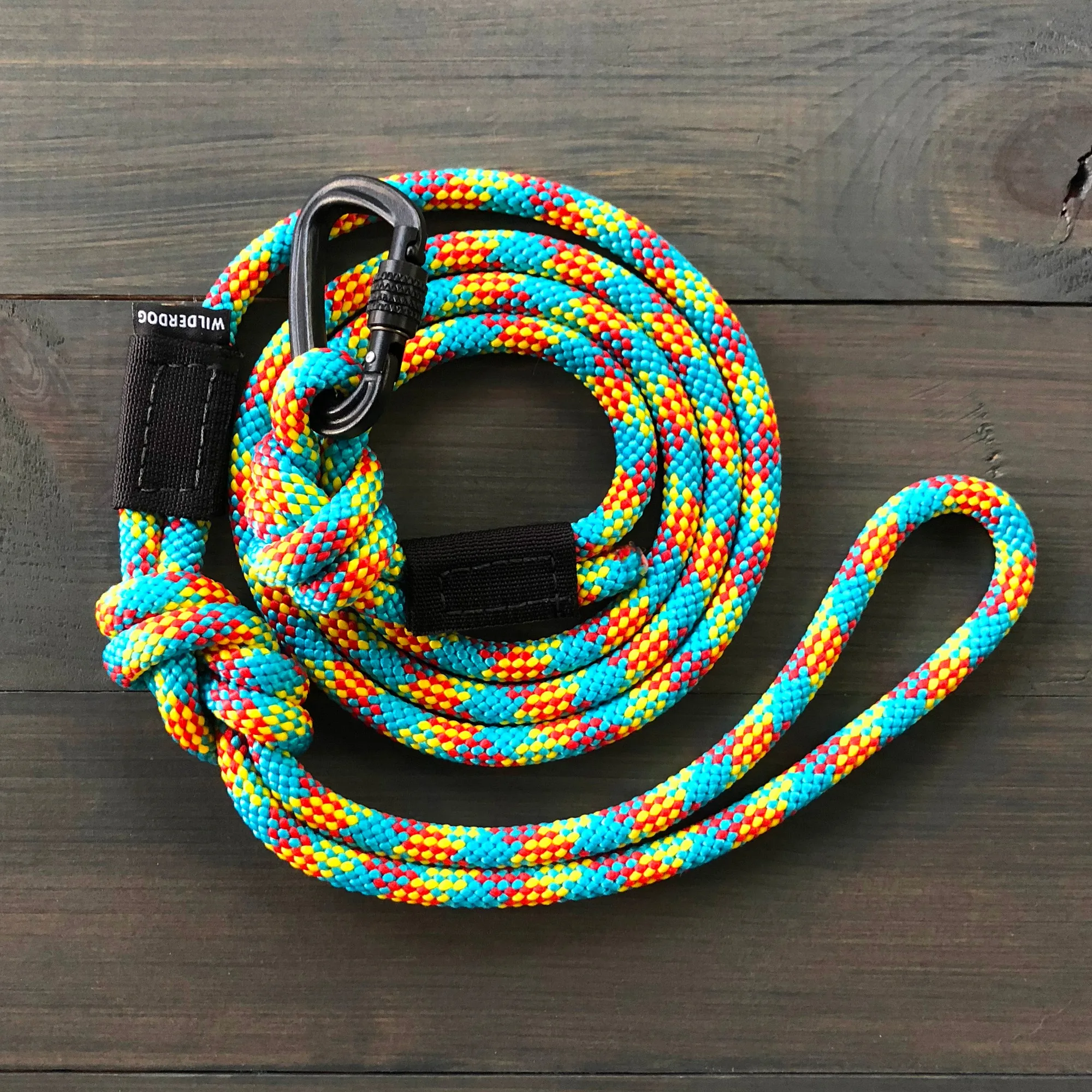
Training takes time, and a determined chewer can destroy a standard leash in one session. If your dog has already chewed through a leash or you're managing a puppy in the middle of teething, choose gear that resists damage while you work on the behavior. Tightly woven rope and PVC-coated webbing hold up far better than flat nylon or thin leather.
This isn't a substitute for training — a dog that's allowed to chew will eventually damage even tough gear. But a chew resistant dog leash buys you the weeks you need to build the habit without replacing equipment every few days.
Diagnose the chewing before you buy anything
- Chews only at the start of the walk: This is excitement or frustration. The dog is anticipating the walk and the leash is the closest thing to bite. Add a tug toy to the routine and ask for a sit before you clip the leash on. If the chewing stops once you're moving, you're dealing with anticipation, not a gear problem.
- Chews mid-walk when you stop: This is boredom. The dog has nothing to do while you're standing still. Carry a chew toy or practice quick sits and downs during pauses to give the brain a job. If the dog only chews when you're not moving, the fix is engagement, not a new leash.
- Chews through gear repeatedly despite training: This is either a deeply ingrained habit or genuine anxiety. If two weeks of consistent redirection hasn't reduced it, talk to a vet or certified trainer. In the meantime, switch to rope or coated-webbing gear to prevent a leash failure mid-walk. Stop training and seek professional help if the dog injures its mouth, shows stress signals like lip licking or yawning when the leash appears, or has chewed through three or more leashes in a month.
Gear that helps while you train
- Pacific Blue Reflective Long Lead - 30ft: Made with tightly spun polypropylene/polyester 5/16 in rope and woven with reflective strands for low-light visibility. Rope construction resists tooth damage better than flat webbing, and the reflective strands keep you visible on evening walks while you work on the chewing habit.
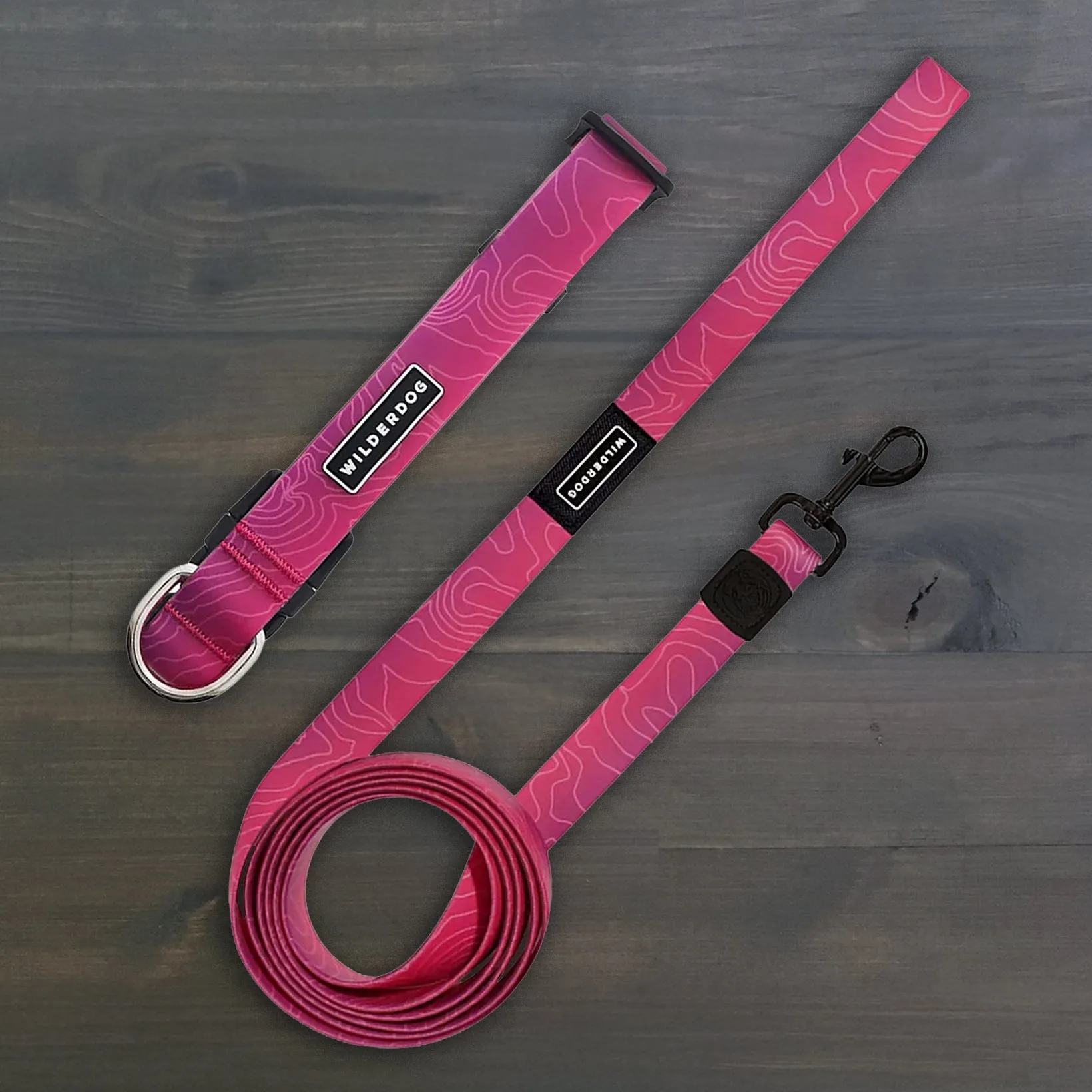
- Tie Dye Waterproof Leash + Collar Bundle: Made of PVC coated polyester webbing; leash is 6 ft long, 1 in wide, rated for 2 kN, with a swiveling e-coated iron bolt snap. The coated webbing repels water and dirt and is harder for a dog to grip and shred than soft nylon, making it a practical choice for a dog in training.
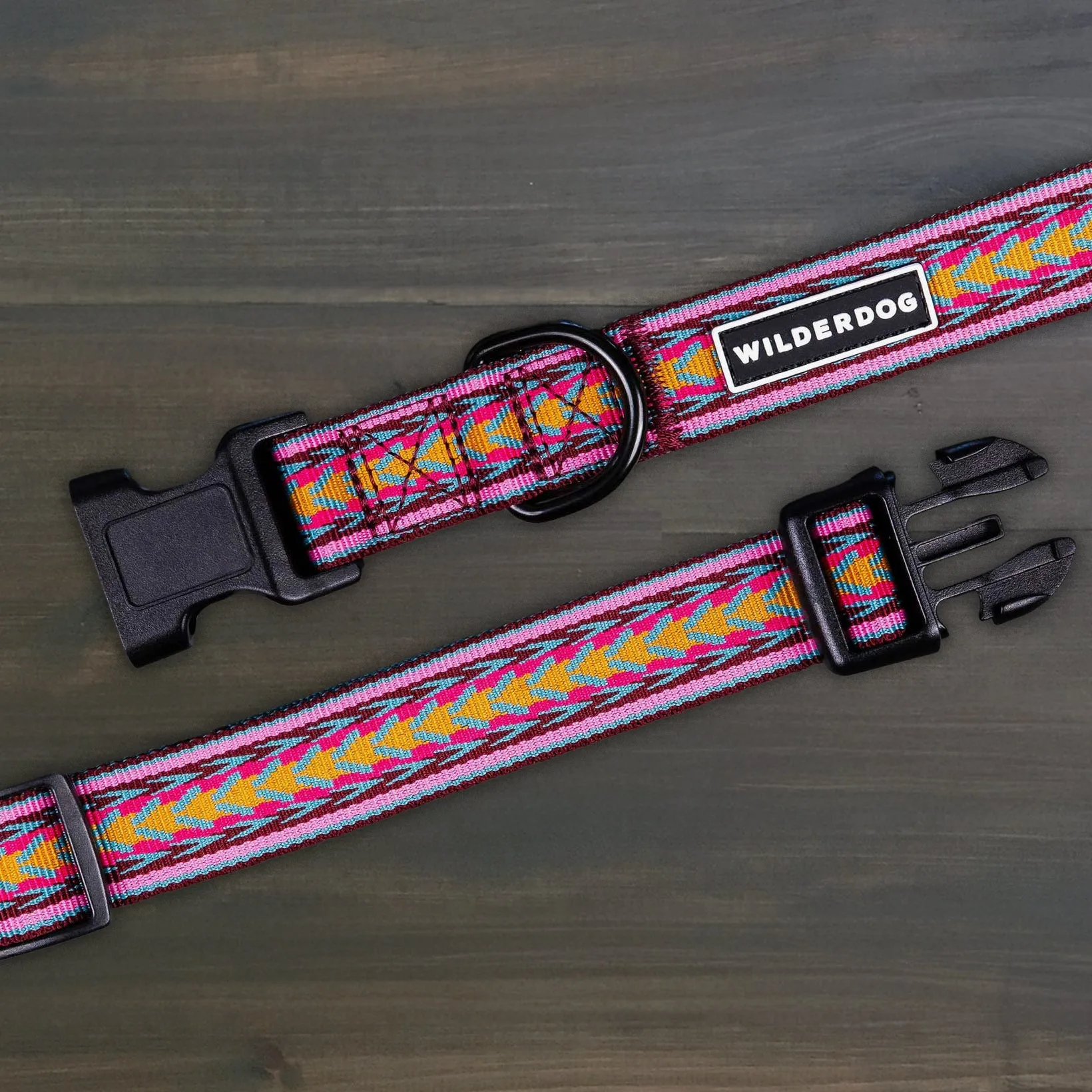
- Daybreak Ultralight Collar: Made from tightly woven, lightweight polyester webbing, 1 in wide, with a heavy-duty plastic buckle and iron d-ring. A lighter collar gives a puppy or small dog less material to grab and chew, and the woven webbing holds up better than thin flat nylon.