Quick answer
Most harness chafing comes from a strap that shifts against the armpit or shoulder, not from the dog being too sensitive. Tighten or loosen one adjustment at a time, confirm two fingers fit under every strap, and switch to a low-profile, laser-cut design if the rubbing continues after three walks.
Symptom: what chafing actually looks like on a walk
Chafing rarely shows up as an open wound on the first walk. You are more likely to see a pink or red patch behind the front leg, thinning fur along the shoulder, or a dog that stops, sits, or chews at the harness mid-route. Some dogs speed up and pull instead, which makes the strap rub harder.
Check after every walk for the first week. Run your fingers along the armpit, the chest plate, and the top of the shoulder. If the skin feels warm, damp, or slightly raised compared to the other side, friction is already happening.
Likely cause: pressure points and movement, not padding
A harness chafes when a strap moves against the same spot with every step. That movement usually comes from one of three things: the girth strap is loose enough to slide, the shoulder strap sits too far forward into the armpit, or the chest plate is too wide for the dog's build.
Padding is not automatically the fix. Thick padding can trap heat and moisture, which softens the skin and makes friction worse. A lower-profile harness that follows the dog's shape often reduces rubbing because there is less material to shift and bunch.
Corrective action: adjust one strap, then walk
Start with the girth strap, the one around the ribcage. It should be snug enough that you can fit two fingers flat under it, but not so tight that the webbing digs in. If the harness slides side to side when the dog trots, tighten the girth by one notch.
Next, check the shoulder straps. They should sit behind the shoulder blade, not in the armpit. If the strap crosses the armpit, lengthen the chest strap or move the harness slightly back. Walk the dog for five minutes and recheck the skin.
If the harness has a chest plate, make sure it lies flat and does not fold. A folded plate creates a hard edge that rubs with every stride. Smooth it out before you clip the leash.
When to stop adjusting and choose another harness
If you have adjusted the fit, checked for folds, and kept walks short for three days, and the redness or fur loss is still there, the harness shape is probably wrong for your dog. This is common with broad-chested dogs in narrow harnesses, or small breeds in harnesses scaled up from larger patterns.
At that point, stop walking in the current harness. Continued rubbing can turn a red patch into a sore. Switch to a design built with less bulk and a pattern that matches your dog's build, and reintroduce it on short walks while the skin heals.
Diagnosis: match the symptom to the fix
- Redness behind the front leg: The girth or shoulder strap is sliding into the armpit. Tighten the girth by one notch and move the harness back so the shoulder strap sits behind the shoulder blade. Recheck after a 10-minute walk. If the redness is gone, keep that adjustment.
- Fur thinning on the shoulder: The chest strap is too tight or the plate is folding. Loosen the chest strap one notch and flatten any folded material. If fur loss continues after three walks, the harness shape is too narrow for your dog.
- Dog slows down or chews at the harness: The harness is uncomfortable before visible marks appear. Check for a strap that sits on the armpit and switch to a lower-profile design if the behavior continues. Stop using the harness for long walks until the dog moves freely again.
Harness designs that reduce friction
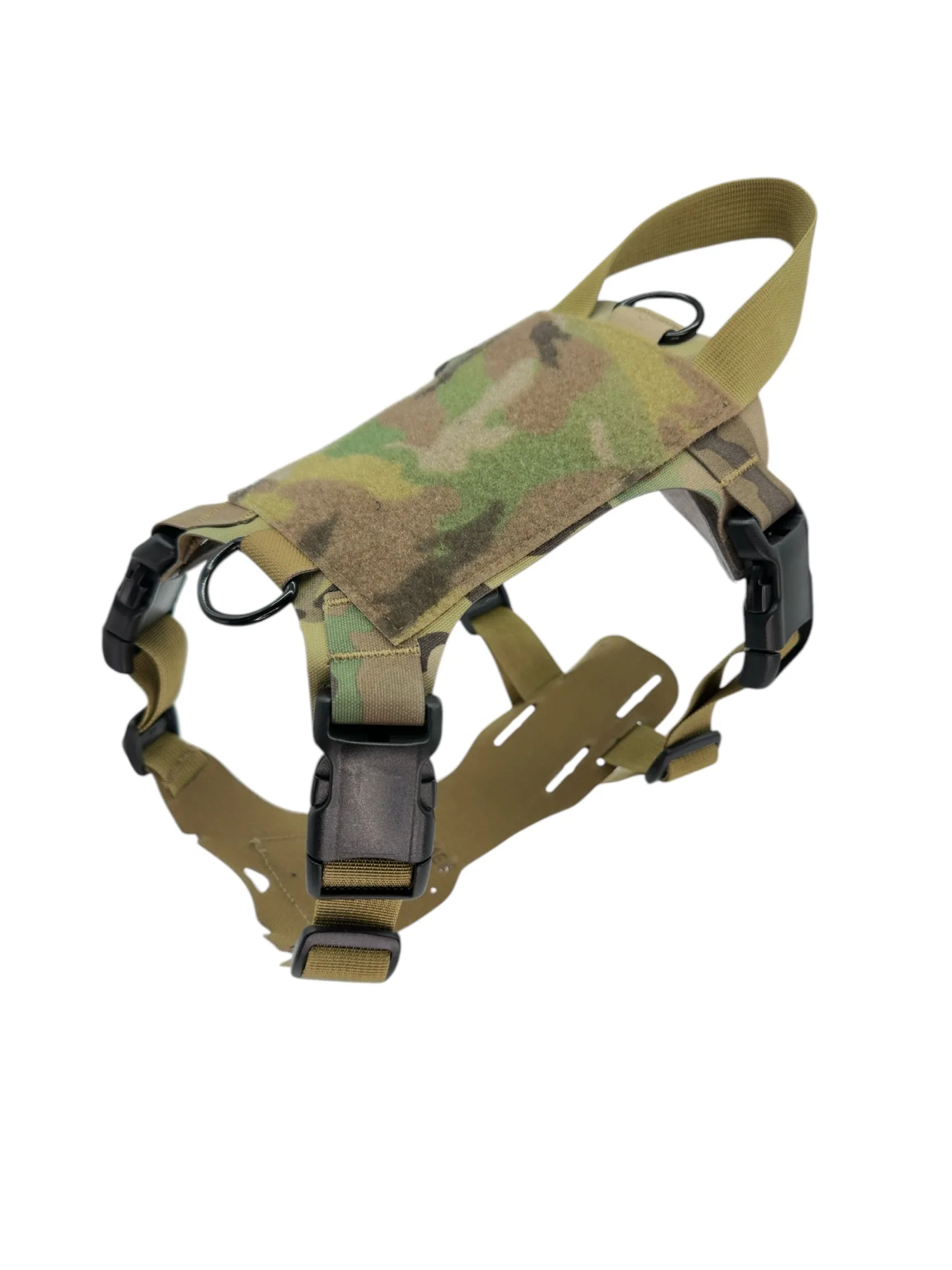
- K9R - M1 LightSpeed Harness: K9R - M1 LightSpeed Harness is hand-built in-house with a laser-cut process that eliminates bulk instead of adding padding, creating a low-profile pattern that maximizes airflow. Less material means fewer edges to rub and less heat trapped against the skin, which is often the difference between a harness that chafes and one that does not.
- K9R - M5 MOLLE Light Harness: K9R - M5 MOLLE Light Harness is built for small breeds with lightweight, durable materials and laser-cut construction that shapes a close fit. Small dogs have less surface area between the armpit and chest, so a harness scaled specifically for them is less likely to shift into the armpit on walks.
- K9R - M1 Lightspeed Harness for Cats: K9R - M1 LightSpeed Harness for Cats uses the same laser-cut, low-bulk approach as the dog version, with no bulky material getting in the way. If you walk a cat in a harness, the same chafing rules apply. A low-profile design reduces the chance of rubbing under the front legs.