Quick answer
Most slipping comes down to three things: the clip or band has no grip surface, it's placed on a round part of the head instead of a flat anchor point, or it's too heavy for the amount of hair holding it. Fix grip first, then placement, then weight. If a clip still slides after all three, the accessory is the wrong type for that hair, not a technique problem.
You fix the clip, it holds for ten minutes, and then it's on the floor again. Slipping hair accessories are one of the most common frustrations parents bring up, and the fix is rarely about buying more clips. It's about matching the grip, the placement, and the weight of the accessory to the hair it's holding.
This guide walks through the symptom you're seeing, the likely cause, the corrective action, and the point where you should stop trying and switch to a different style of accessory entirely.
Start with the grip surface, not the clip design
A clip holds by friction. Smooth plastic or metal on smooth hair has almost no friction, which is why the same clip that stays put on thick wavy hair slides straight out of fine straight hair. Before you change anything else, look at the inside of the clip. If it's flat and shiny with no ridges, no silicone strip, and no teeth, it has nothing to grab.
The fix is either a clip with a textured or lined grip surface, or a small helper. A tiny bit of dry shampoo or texturizing spray at the anchor point adds grip without making hair look dirty. Cross two bobby pins in an X at the base of the clip for extra hold. Both take under a minute and cost nothing.
- Check the inside of the clip: ridges, teeth, or a silicone strip mean grip; smooth and shiny means slip.
- A light mist of dry shampoo at the anchor point adds friction on clean, slippery hair.
- Two crossed bobby pins under a clip hold far better than one straight pin.
Move the anchor point to a flat part of the head
Clips slide most on the rounded sides of the head, where the surface curves away and gravity pulls the clip downward. The flat areas just above the temples and along the part line give a clip something to sit against. If you've been clipping hair at the widest curve of the head, that alone can explain why it keeps sliding.
For headbands, the same logic applies. A band that sits on the crown of a round head rolls forward or back. A band placed slightly behind the hairline, sitting on the flatter slope toward the crown, stays put longer. If the band has adjustable ends or a silicone lining, use them; if it doesn't, that's a design limitation, not something you can fix with technique.
- Anchor clips above the temples or along the part, not on the widest curve of the head.
- Seat headbands just behind the hairline where the head slopes toward the crown.
- If a band has no adjustable ends or lining, placement is your only lever.
Match the weight of the accessory to the amount of hair
A large bow or a heavy embellished clip needs a thick section of hair to support it. On fine hair, a heavy clip pulls itself down within minutes no matter how well it's placed. This is a weight problem, not a grip problem, and no amount of bobby pins will fully solve it.
The practical move is to size down. A smaller, lighter clip on a smaller section of hair holds better than a large clip on the same section. If your child wants a big statement piece, use it as a topper pinned into a base that's already secured, rather than as the only thing holding the hair.
- Fine hair supports small, light clips far better than large heavy ones.
- Use a big decorative clip as a topper over a secured base, not as the sole anchor.
- If a clip is heavier than the hair section it's holding, it will slide. Period.
When to stop adjusting and switch accessory types
If you've added grip, moved the anchor point, and sized down, and the clip still slides out within a few minutes, stop. You're now fighting the hair type, and more adjustments won't help. This is the point to switch to a different category of accessory: a headband with a silicone lining, a stretchy elastic band, or a snap clip with teeth designed for fine hair.
The same applies to headbands. If a rigid plastic band rolls off a fine-haired child's head every time, no amount of repositioning will fix it. A fabric band with adjustable ties or a lined band with a grippy inner strip is the right tool. Knowing when to switch saves you from a drawer full of accessories that never worked.
- If it slips after grip, placement, and weight are all addressed, the accessory type is wrong.
- Switch to lined headbands, elastic bands, or toothed snap clips for fine hair.
- Stop buying more of the same style if it has never held on your child's hair.
Slipping diagnosis: symptom, cause, fix, and stop point
- Clip slides out within minutes on clean, fine hair: The clip has a smooth inner surface and the hair has no texture to grip. Add dry shampoo at the anchor point or switch to a clip with ridges, teeth, or a silicone strip. If it still slides after adding texture and grip, the clip type is wrong for this hair.
- Headband rolls forward or backward off the head: The band is sitting on the rounded crown instead of the flatter slope behind the hairline. Reposition it, and if the band has no adjustable ends or lining, that's a design limitation you can't fix by moving it. Switch to a lined or adjustable fabric band if repositioning doesn't hold.
- Large clip pulls down even when placed correctly: The accessory is heavier than the hair section supporting it. Size down, or use the large piece as a topper over a base that's already secured with a smaller clip or pins. Stop adjusting and switch to a lighter clip if the weight mismatch persists.
Accessories that solve specific slipping problems
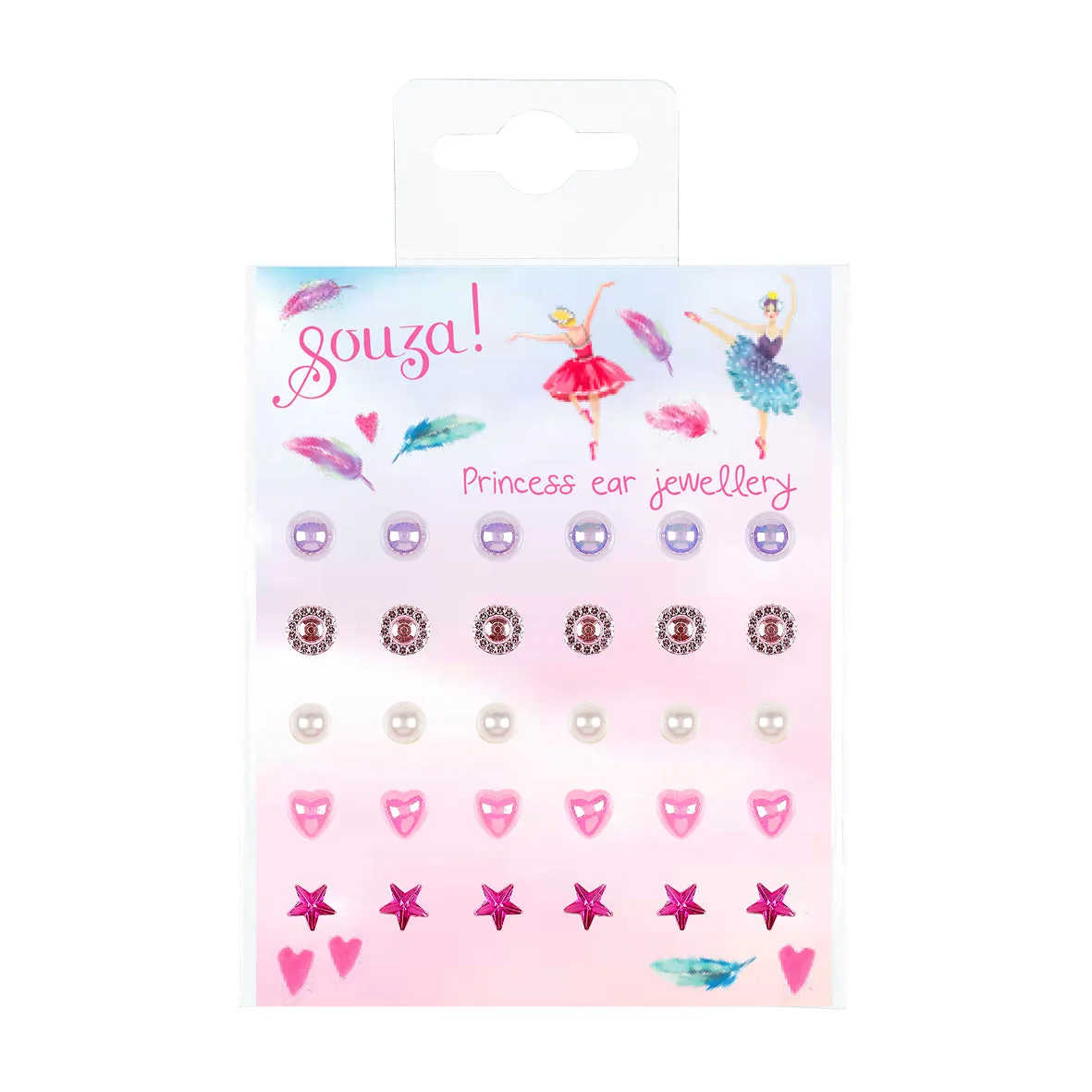
- Ear stickers - Ballerina: These Souza Ear Stickers are cute, self-adhesive decorative stickers designed to be worn on the ears for a fun and playful look, featuring charming ballerina-themed designs. Easy to apply and remove, these stickers are ideal for kids and adults alike who want a quick, temporary accessory without the hassle of traditional jewelry. If your child keeps losing clip-on earrings or ear pins because they slip off, ear stickers are a temporary alternative that stays on the ear without any grip mechanism at all. They solve the slipping problem by removing the hardware entirely.
- Unicorn Costume Cape Set w/ headband & wand - Role-Play for Children(2 sizes): The Unicorn Cape glistens with soft pastels and ethereal shimmer, trailing behind like a shooting star. The tiara, adorned with delicate gems and a magical unicorn horn, crowns each little dreamer with royal charm. Comes in 2 sizes for all ages. Costume headbands like this tiara are often the worst offenders for slipping because they're rigid and decorative. If your child wants to wear it for a party, plan to secure it with bobby pins at the sides, and check the size option so the band fits the head circumference rather than sitting loose.
Slipping hair accessories are almost always a mismatch between grip, placement, and weight. Fix those three in order, and if the clip or band still won't stay, stop adjusting and switch to a lined headband, an elastic band, or a toothed snap clip. The right accessory type for your child's hair will hold without constant fussing.