Quick answer
Stop resin terrain warping and cracking by removing heat and pressure: store pieces flat and unstacked in a cool, stable room, and never leave resin in a hot car or direct sun. For a mild bend, warm the piece evenly, press it flat, and let it cool fully before you use it. If a piece has a visible crack, a white stress line, or a bend that returns, stop and repair or replace it instead of forcing it back into shape.
Why resin moves at all
Resin is a rigid material, but it still responds to heat and sustained load. A warm room, a closed car, or a stack of heavy terrain can soften a thin section just enough for gravity or pressure to bend it. Cracking usually follows the same path: a piece flexes once, develops a faint stress line, and then splits when it is flexed again. The fix is not a stronger clamp. It is removing the heat and the load, then supporting the piece so it cannot sag.
Fix a mild bend without making it worse
Work on one piece at a time on a flat, heat-safe surface. Warm the bent area evenly with a hair dryer on low, moving constantly, until the resin just starts to relax. Press it flat against the surface with a flat weight or your hands, hold it until it cools, then leave it unloaded for several hours. Do not use boiling water, an oven, or a heat gun, and do not bend a cold piece. If the bend is in a thin decorative edge or a load-bearing wall, support the whole section rather than pushing on the weak point.
Storage that prevents the problem
Store resin terrain flat, in a single layer where possible, in a cool room with stable temperature. If you must stack, put the heaviest and flattest pieces at the bottom and keep pressure off thin walls, arches, and decorative edges. Keep pieces out of attics, garages, and cars, and away from windows where sun can heat them. For transport, pad each piece and avoid compressing a stack with straps. A rigid box with foam or bubble wrap between layers protects edges better than a tight plastic bin.
When to stop and choose another option
Stop if you see a crack that opens when you press it, a white stress line across a structural wall, or a bend that snaps back after cooling. Repeated heating weakens the same area, and a piece that has already cracked will usually crack again in play. At that point, repair the piece as a display or scatter terrain, or replace it with a set that fits the same layout. If a whole section of your build keeps warping, the cause is usually storage or heat, not the resin itself, so fix the storage before you buy replacements.
Diagnosis: match the symptom to the cause
- Piece is bowed but not cracked: Heat plus a sustained load, usually from stacking or a warm room, softened the resin and let it sag. Warm evenly, press flat, cool fully, then store unstacked. If it bows again, the storage location is still too warm or too loaded.
- Crack along a wall or edge: The piece flexed once and split, often after being forced into a tight build or dropped. Stop flexing it. Repair as display or scatter terrain, or replace the piece. Do not heat a cracked structural wall to straighten it.
- White stress line with no open crack: The resin has already yielded internally and will likely split with more handling. Retire the piece from active builds. If you need it in play, support it from behind and avoid pressing on the line.
- Several pieces warp in the same spot: A shared storage or transport condition, such as a hot car or a heavy stack, is affecting the whole collection. Change the storage before buying replacements. Cool, flat, single-layer storage solves more warping than any repair method.
Product facts
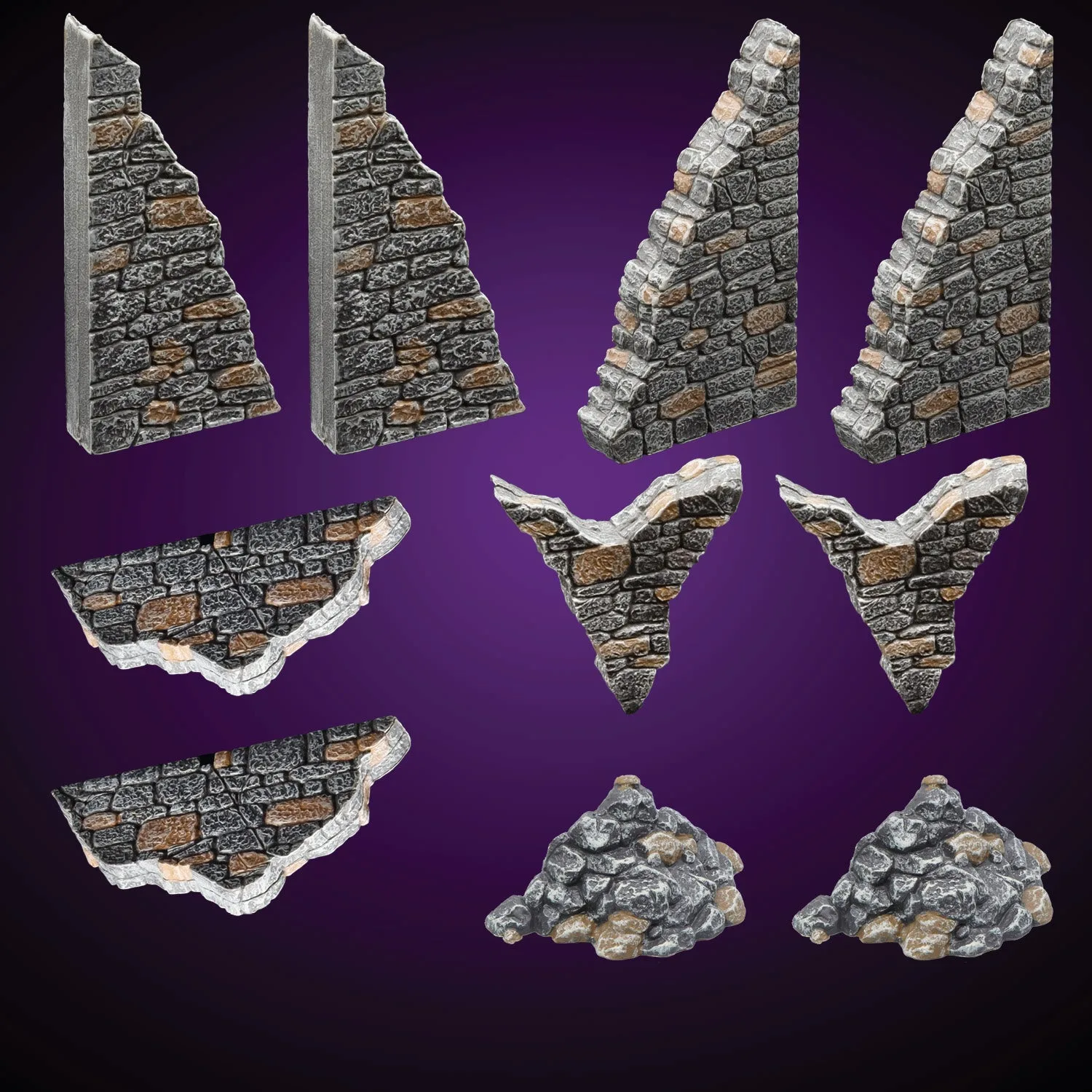
- Ruined Wall (Painted): Ruined Wall (Painted) is a set of 10 modular ruined wall pieces. Ruined walls are often thin and irregular, so store them flat and unstacked to avoid bending the broken edges.
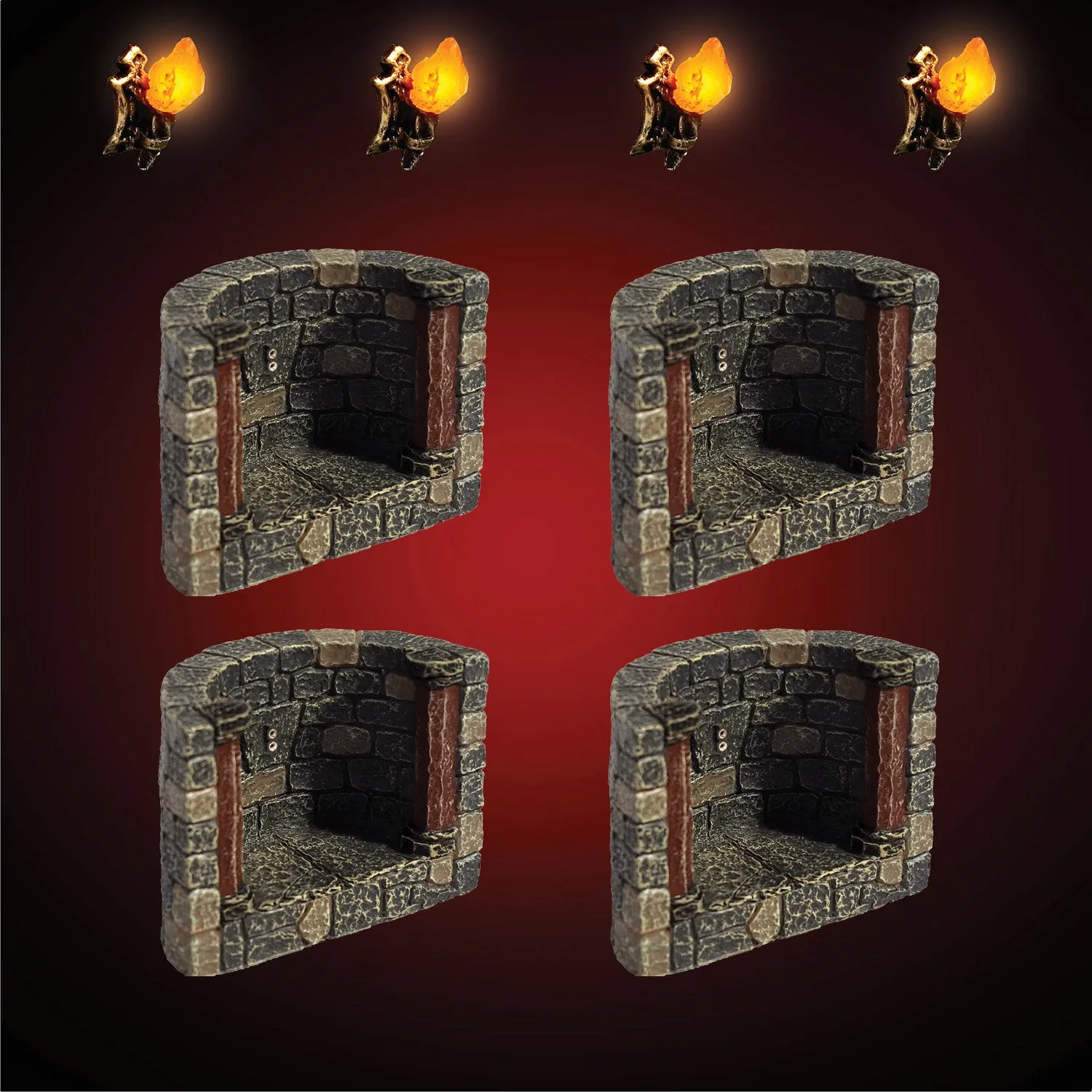
- LED Alcoves (Unpainted): LED Alcoves (Unpainted) are curved alcoves with modular LED sockets, and the set will be retired and replaced by Dungeon LED Alcoves - Vaulted once sold out. Curved sections and socket areas are easy to stress when stacked, so keep them supported and avoid pressure on the LED openings.
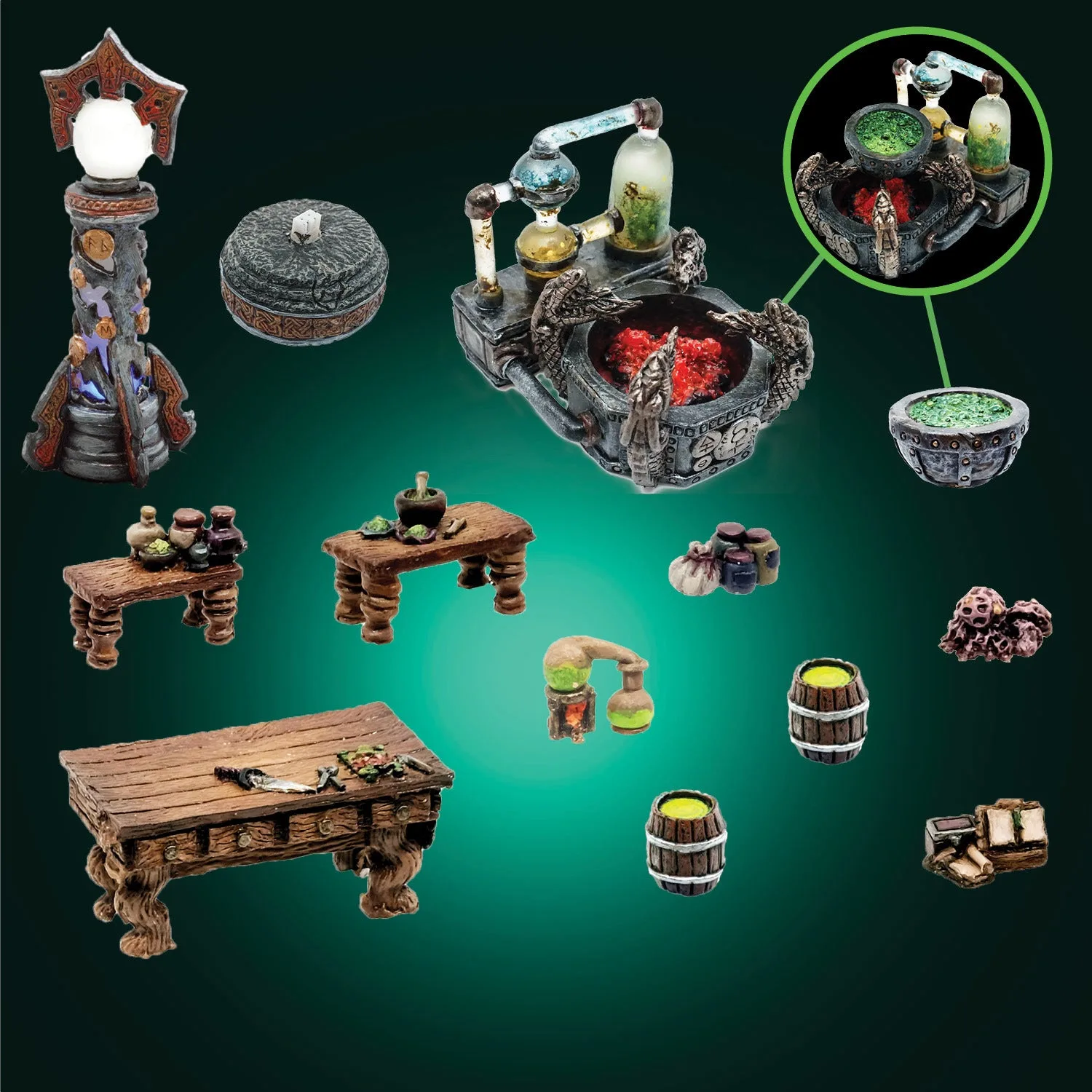
- Plaguestone - Alchemy Lab Accessories (Unpainted): Plaguestone - Alchemy Lab Accessories (Unpainted) includes small accessories such as barrels, a cauldron, shelves, and a decorative stone LED floor socket. Small accessories are the first pieces to go missing or get crushed, so store them in a padded tray rather than loose in a bin.