Quick Answer
Most Sanrio pins fall off because the rubber clutch has lost its grip, not because the pin itself is broken. Swap the clutch for a locking metal back, or squeeze the existing one tighter with pliers. Patches fall off when the iron-on glue was never fully activated, so re-press it with steady heat and pressure before reaching for a needle. If the pin post is bent or the patch backing has peeled away entirely, that's your signal to stop repairing and replace the item.
Why Your Enamel Pin Backs Keep Sliding Off
Rubber clutches work by friction, and friction fades. Every time you push a pin onto a bag strap or lanyard, the rubber bore widens slightly. After a few dozen wears, the clutch slides on easily and slides off just as easily. This is the single most common cause of lost Sanrio pins, and it has nothing to do with the pin's quality.
Test yours right now: push the pin into a scrap of fabric, then tug gently. A healthy clutch needs real resistance to remove. If it pops off with light pressure, the clutch is the problem, not the pin. Locking metal backs, which use a small set screw or a spring catch, hold far more securely on backpacks and denim where movement is constant.
- Bent pin post: roll the post on a flat table. If it wobbles, straighten it slowly with flat-nose pliers or retire the pin.
- Worn rubber clutch: replace it rather than squeezing it repeatedly, since over-squeezed rubber cracks.
- Thin fabric: a pin on a single layer of tote canvas has less material to grip than one on a doubled strap.
Fixing a Patch That Won't Stay Put
Iron-on adhesive is heat-activated, and most patches that peel were pressed too briefly or at too low a temperature. The glue needs sustained heat to melt into the fabric weave, not a quick pass with the iron. Place the patch where you want it, cover it with a thin cotton cloth or parchment, and press firmly for 20 to 30 seconds without sliding the iron. Let it cool completely before you move the garment, because the bond sets as it cools.
If the patch has already been washed and peeled, the original adhesive is likely contaminated with lint and detergent. Re-pressing rarely works at that point. Sew the patch down with a matching thread around the border instead, or use a fabric-safe adhesive designed for textiles. Curved surfaces like jacket sleeves and backpack pockets are the hardest spots for iron-on patches, so stitch those from the start.
- Press on a hard surface, not an ironing board, so the heat transfers through instead of sinking into foam.
- Avoid steam. Moisture interferes with the adhesive setting.
- Wait 24 hours before washing, and turn the garment inside out when you do.
Where to Put Pins So They Stay On
Placement matters as much as hardware. Pins on a bag's front panel take constant bumps against doors, chairs, and car seats. Pins tucked on a strap, an inner flap, or a lanyard near the body get far fewer impacts. If you collect kawaii pin displays on a cork board or fabric banner at home, standard rubber backs are perfectly fine because nothing is knocking into them.
For daily wear, use two backs per pin when the post is long enough, or switch to locking backs. Check your pins once a week for the first month after moving them to a new bag, since that's when you'll notice which positions are actually secure.
Pin and Patch Diagnosis Chart
- Pin slides off with a light tug: The rubber clutch has stretched. Replace it with a locking metal back or a fresh rubber clutch of the same size. Fixed in under a minute. No need to replace the pin.
- Pin post wobbles when rolled on a table: The post is bent. Straighten it once with flat-nose pliers; if it bends again, the metal is fatigued. One repair attempt is reasonable. A second bend means retire the pin to a display board.
- Patch lifts at the corners after washing: The iron-on adhesive has failed or was never fully activated. Re-press with sustained heat and no steam, or sew the border down. If the backing has peeled away completely, stop pressing and stitch it instead.
- Patch backing is gone or crumbling: There is no adhesive left to reactivate. Fabric adhesive or hand-sewing are the only remaining options. Choose another option: sew it, or replace the patch.
Pins and Charms That Hold Up to Daily Wear
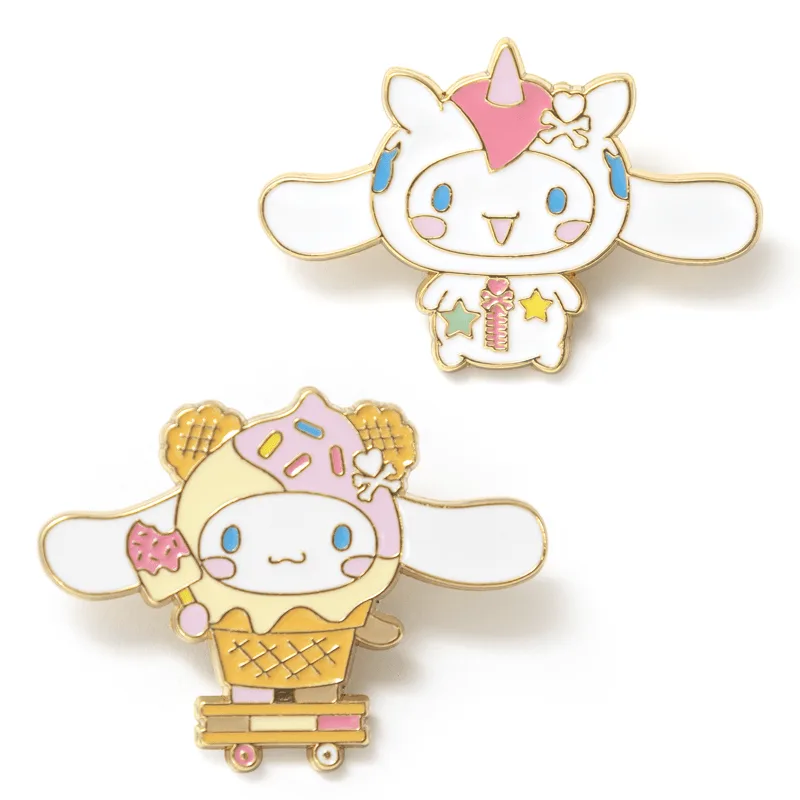
- tokidoki x Cinnamoroll Sweets Pin: The tokidoki x Cinnamoroll Sweets Pin is an enamel pin with gold-tone hardware, available in multiple styles. Enamel with metal hardware is the durable format described above; if you're replacing a lost pin, this is the construction to look for.
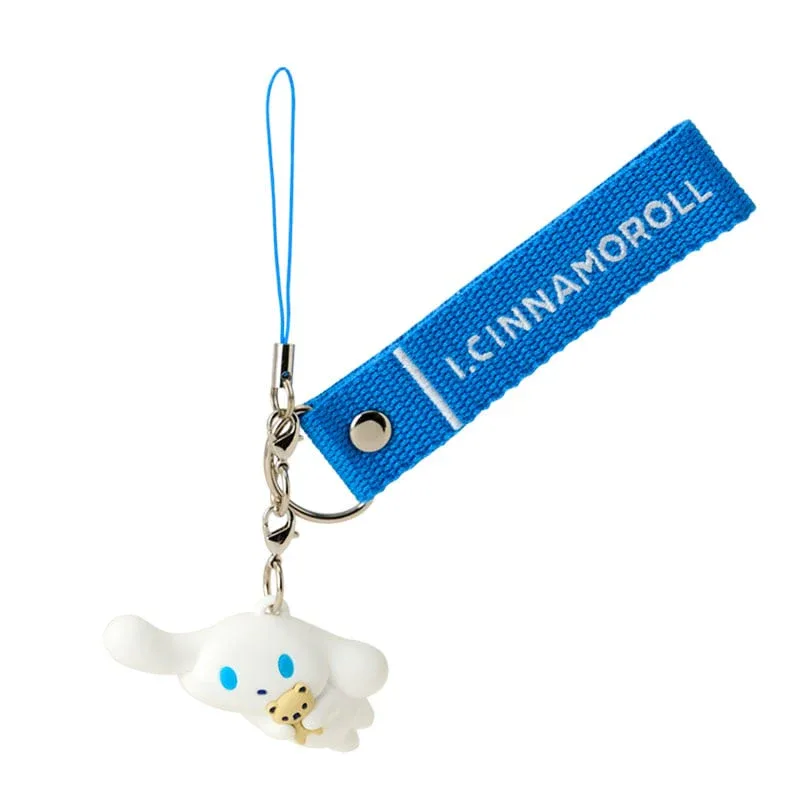
- I.Cinnamoroll Phone Charm: The I.Cinnamoroll Phone Charm has a removable strap and a character charm measuring about 1 inch. A removable strap lets you move the charm between phone and bag without stressing a single attachment point, which is the same logic behind swapping pin backs.