Quick answer
Most socks slide down because they are too loose for your foot or your shoe has too much slip in the heel. Check the size first, then look at shoe fit and sock fabric. A snug size with a reinforced heel and a bit of stretch — like modal or cotton-stretch blends — stays put far better than a loose, all-synthetic pair.
You put your shoes on, walk a few blocks, and feel that familiar bunching under your arch. Socks slipping off the heel is one of the most common everyday annoyances, and it almost always comes down to one of three things: the sock is too big, the shoe is too loose, or the fabric has lost its stretch.
The good news is you do not need special gadgets to keep socks in place. A quick diagnosis of what is actually happening inside your shoe will tell you whether to change the sock, change the fit, or change how you put them on.
Start with the size, not the sock
A sock that slides down is usually a sock that is too loose. Socks are sized like shoes, and wearing a size up because it feels comfortable at first is the fastest way to end up with fabric bunched at your heel. Check the size printed on the label against your actual shoe size, and if you are between sizes, size down rather than up.
If the sock fits but still slips, look at the heel construction. A reinforced heel and toe holds its shape longer and grips the back of your foot better than a plain tube. Socks with a defined heel pocket are less likely to rotate or slide forward during the day.
- Compare the sock size on the label with your shoe size before blaming the shoe.
- Choose socks with a shaped heel rather than a straight tube.
- If you are between sizes, take the smaller one for a snugger fit.
Check how your shoe holds the heel
Even a well-fitting sock will slide in a shoe that is too loose at the heel. Slip-on styles, worn-out elastic, and shoes that have stretched over time all let the foot move, and the sock moves with it. Press down on the back of the shoe while wearing it — if your heel lifts more than a few millimetres, the shoe is the problem, not the sock.
Lacing matters too. If you wear lace-ups, try a heel-lock lacing pattern, which pulls the ankle collar tighter around the back of the foot. For slip-ons, a thin insole or a heel grip can take up the extra space without changing the sock.
- Test heel lift by walking a few steps and watching the back of the shoe.
- Try heel-lock lacing on lace-up shoes for a tighter ankle hold.
- A thin insole can rescue a shoe that is slightly too roomy.
Pick fabrics that keep their grip
Fabric affects how well a sock stays in place. Cotton-stretch and modal blends have enough natural give to follow the foot without stretching out permanently, while all-synthetic socks can feel slick against the skin and slide more easily. A small amount of elastane is what lets a sock return to its shape after each wear.
Washing habits matter here too. Hot water and a hot tumble dryer break down elastic fibres over time, which is why socks that used to stay put start slipping after a few months. Wash at a lower temperature and air-dry when you can to keep the stretch alive longer.
- Look for cotton-stretch or modal blends with a small percentage of elastane.
- Avoid very hot washes and high dryer heat, which weaken elastic.
- Replace socks once the cuff stays stretched out after washing.
When to stop adjusting and change the sock
If you have checked the size, the shoe fit, and the fabric and the sock still slides, stop trying to fix it. A sock that will not stay up after those checks is either worn out or simply the wrong shape for your foot. Continuing to tug at it during the day only stretches the cuff further and makes the problem worse.
At that point, choose a different option: a sock with a reinforced heel and a closer fit, or a style designed for the shoe you are wearing. Slip-on shoes and very low-cut styles need a sock with a deeper heel pocket, while trainers and lace-ups work with a wider range of fits.
- If three checks fail, replace the sock rather than adjusting it all day.
- Match the sock height to the shoe: low-cut for slip-ons, standard for trainers.
- Keep a spare pair handy if you are between sizes in a particular brand.
Sock slip diagnosis
- Symptom: sock bunches under the arch: The sock is likely too large or has lost its stretch, so it has nowhere to grip and rolls forward as you walk. Check the label size against your shoe size and size down if you are between sizes.
- Symptom: heel of the sock pulls off the foot: The shoe is probably too loose at the heel, letting the foot lift and drag the sock with it. Test heel lift, try heel-lock lacing, or add a thin insole before changing socks.
- Symptom: sock slides only in some shoes: The sock is fine; the shoe shape or fit is the variable. Low-cut slip-ons need a deeper heel pocket than trainers. Match sock height and heel shape to the shoe, and keep one pair per shoe type.
- Symptom: sock used to stay up and now will not: Elastic fibres have weakened, usually from hot washing or high dryer heat. Wash cooler and air-dry; replace the pair once the cuff stays stretched.
DIM socks that stay put
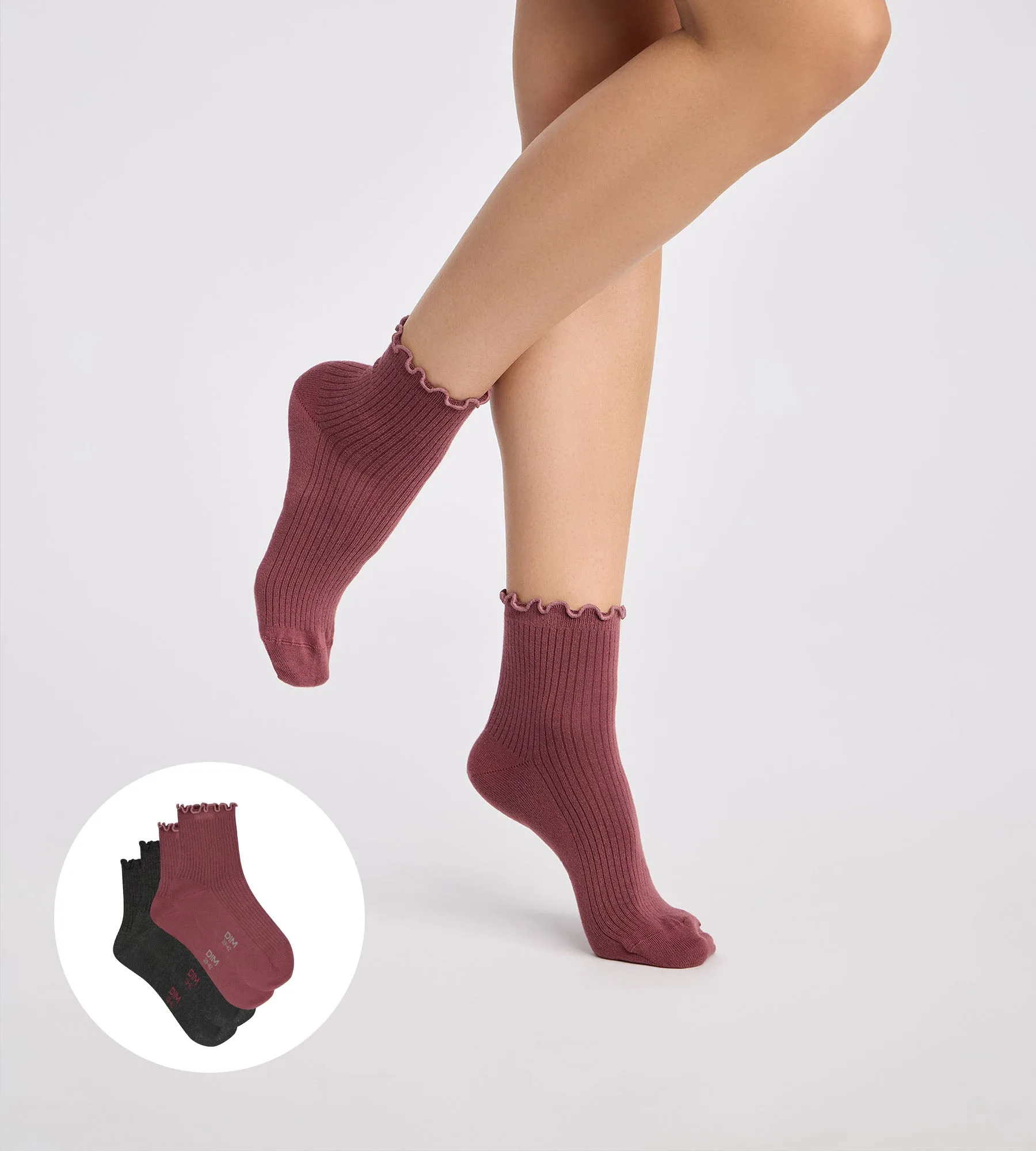
- Lot de 2 socquettes gris anthracite, bordeaux Modal: Made from a modal-rich fabric with a soft, silk-like feel, a ruffled ribbed edge, and reinforced heels and toes. The reinforced heel and toe help the sock hold its shape and grip the back of the foot, while the modal blend stays soft against the skin — useful if you want a low-cut sock that does not slip forward.
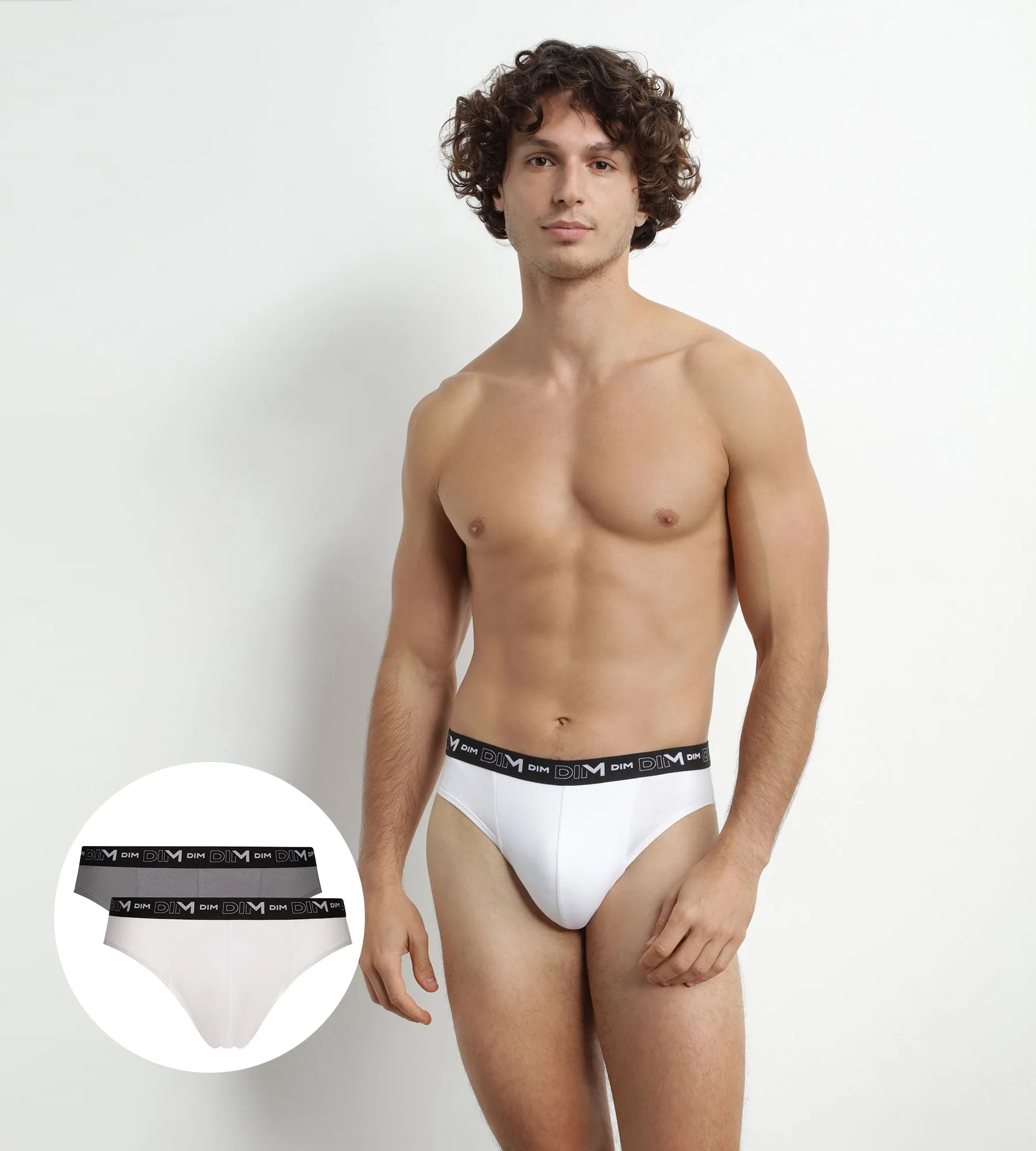
- Lot de 2 slips homme Blanc Gris ceinture contrastée Dim Coton Stretch: Cotton-stretch fabric with an ergonomic cut, a lined front pouch, and a stylised contrast waistband. The same cotton-stretch logic applies to socks: fabric with a little give follows the body and returns to shape, which is what keeps a garment from loosening and sliding during the day.
Socks sliding down in your shoes is rarely a mystery once you separate the cause: size, shoe fit, or worn-out fabric. Check the size first, test the heel of the shoe, then look at the fabric blend. If a sock still slips after all three, it is time to replace it rather than fight it.