Quick answer
A thong rides up when the back strap is too narrow, the size is off, or the fabric stretches out. Start by checking if the waistband stays put when you move; if it slides, size down or switch to a style with wider side straps and a bit more stretch recovery. If the fabric feels loose after a few wears, look for a denser knit or a blend with elastane to hold its shape.
Why thongs ride up: the three main causes
Most riding-up problems come down to one of three things: the back strap is too thin for your body shape, the waistband is too loose so the whole garment shifts, or the fabric has lost its stretch and no longer hugs. A thong that fits well should feel secure at the waist and lie flat without digging. If you constantly need to adjust, the issue is usually structural, not just a matter of pulling it down.
Check your size first
Before blaming the cut, verify your size. A thong that is too large will slide because there is no tension to keep it in place. Measure your hips and waist, then compare to the brand's size chart. If you are between sizes, size down for a snugger fit that stays put. Remember that natural fabrics like bamboo lyocell and organic cotton can relax slightly with wear, so a thong that feels perfect right out of the bag might loosen after a few hours.
Fabric matters: stretch and recovery
Fabric choice affects how well a thong stays in place. Blends with a small percentage of elastane, like 93% bamboo lyocell and 7% elastane, offer stretch and recovery that help the garment return to its original shape. Pure cotton may feel breathable but can stretch out over time, leading to riding up. Look for knits that are dense enough to hold their shape but still soft against the skin. If the fabric feels thin or overly stretchy, it may not provide enough support.
Adjust the fit with simple tweaks
Sometimes small adjustments make a big difference. Try pulling the back strap up slightly so it sits higher on your hips, which can reduce movement. If the waistband rolls or digs, look for a style with a wider elastic trim that distributes pressure. Avoid wearing a thong that is too tight, as it can cause discomfort and still ride up if the cut is wrong. If you have tried sizing and adjusting without success, the cut may not suit your body shape, and a different style with wider side straps or more coverage could be a better choice.
Diagnose your riding-up problem
- Symptom: Back strap slides between the glutes: Likely cause: The back strap is too narrow or the size is too large, so there is not enough tension to keep it in place. Corrective action: Size down or choose a thong with a wider back strap. If it still slides, the cut may not suit you.
- Symptom: Waistband rolls or shifts during the day: Likely cause: The waistband is too loose or the elastic has lost its recovery, often due to fabric aging. Corrective action: Check the size and fabric blend. A style with a wider elastic trim and elastane can help. If the waistband is stretched out, replace the thong.
- Symptom: Fabric feels loose after a few hours: Likely cause: The knit stretches out and does not bounce back, common in pure cotton or low-elastane fabrics. Corrective action: Switch to a fabric with better recovery, like a bamboo lyocell and elastane blend. If the fabric continues to sag, the garment may be worn out.
Product facts that matter for fit
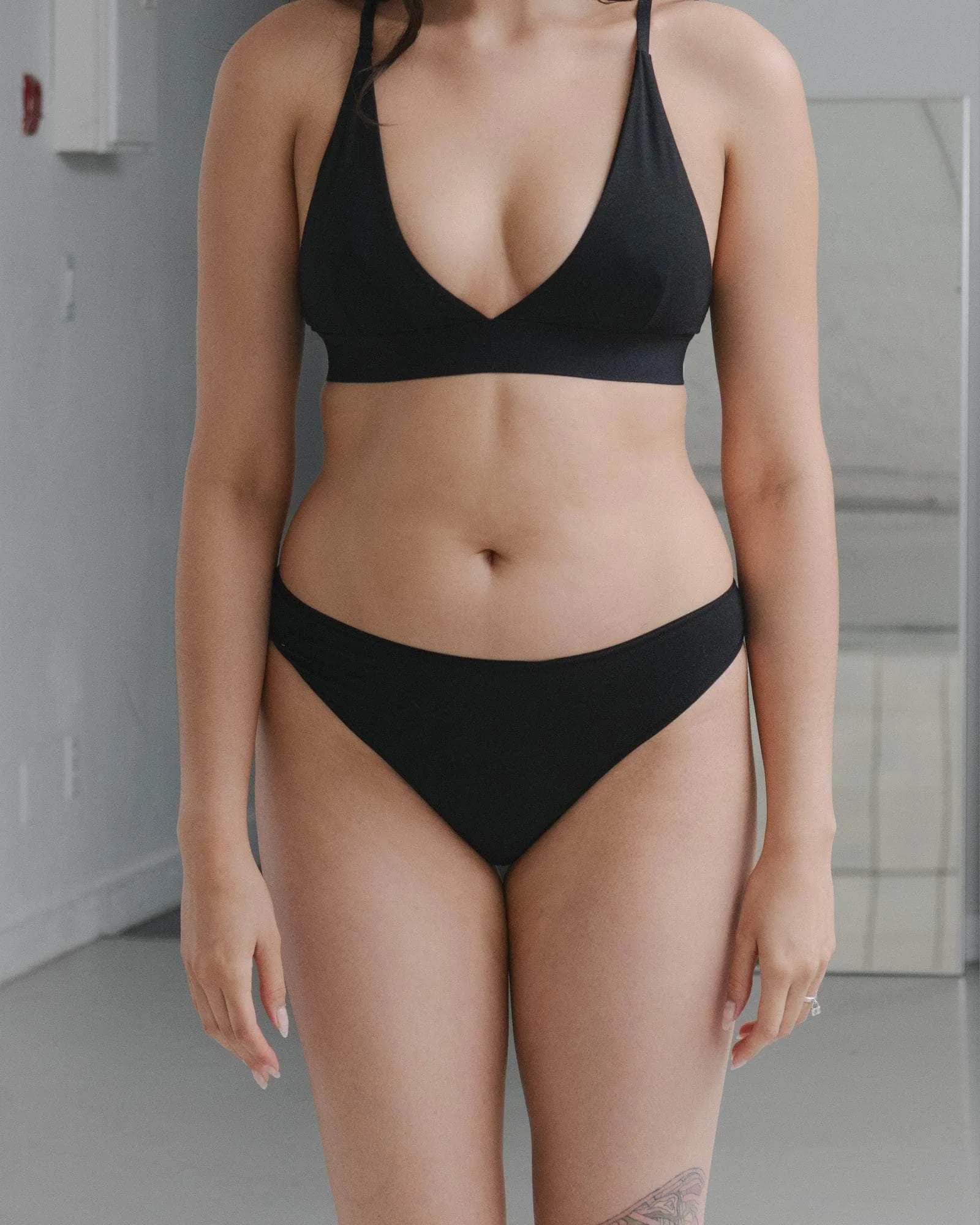
- Enna Thong: 93% Bamboo Lyocell 7% Elastane, elastic trim at waist and leg The elastane adds stretch and recovery to help the thong hold its shape, while the elastic trim provides a secure fit that can reduce riding up.