Quick Answer
You can store a pillow in a vacuum bag, but only for trips or short-term storage, and only if you stop compressing before the bag goes rock-hard. Use a bag that is clearly larger than the pillow, remove most but not all of the air, and unpack it within a few weeks. Memory foam and down pillows recover best; cheap chopped foam may never fully bounce back.
Why Pillows Are Harder to Vacuum-Seal Than Clothes
A sweater is just fabric, so crushing it flat does little harm. A pillow is a structure. Memory foam depends on open cells that spring back after compression, down relies on fragile feather clusters that trap air, and polyester fiberfill is a loose tangle of fibers that can mat together permanently once flattened. The tighter you pull the vacuum, the more likely you are to collapse those structures instead of just squeezing out air.
That is why the same vacuum bag routine you use for T-shirts needs a few adjustments for pillows. The goal is not the smallest possible brick. It is a smaller pillow that still looks and feels like a pillow when you open the bag.
What to Check Before You Seal Anything
Start by confirming two things: the pillow type and the bag size. Memory foam and latex are the most forgiving because they are designed to be compressed and rolled. Down and down-alternative pillows recover well if you give them time and a good shake. Inexpensive chopped-foam pillows are the riskiest, because the small foam pieces can lose their spring for good.
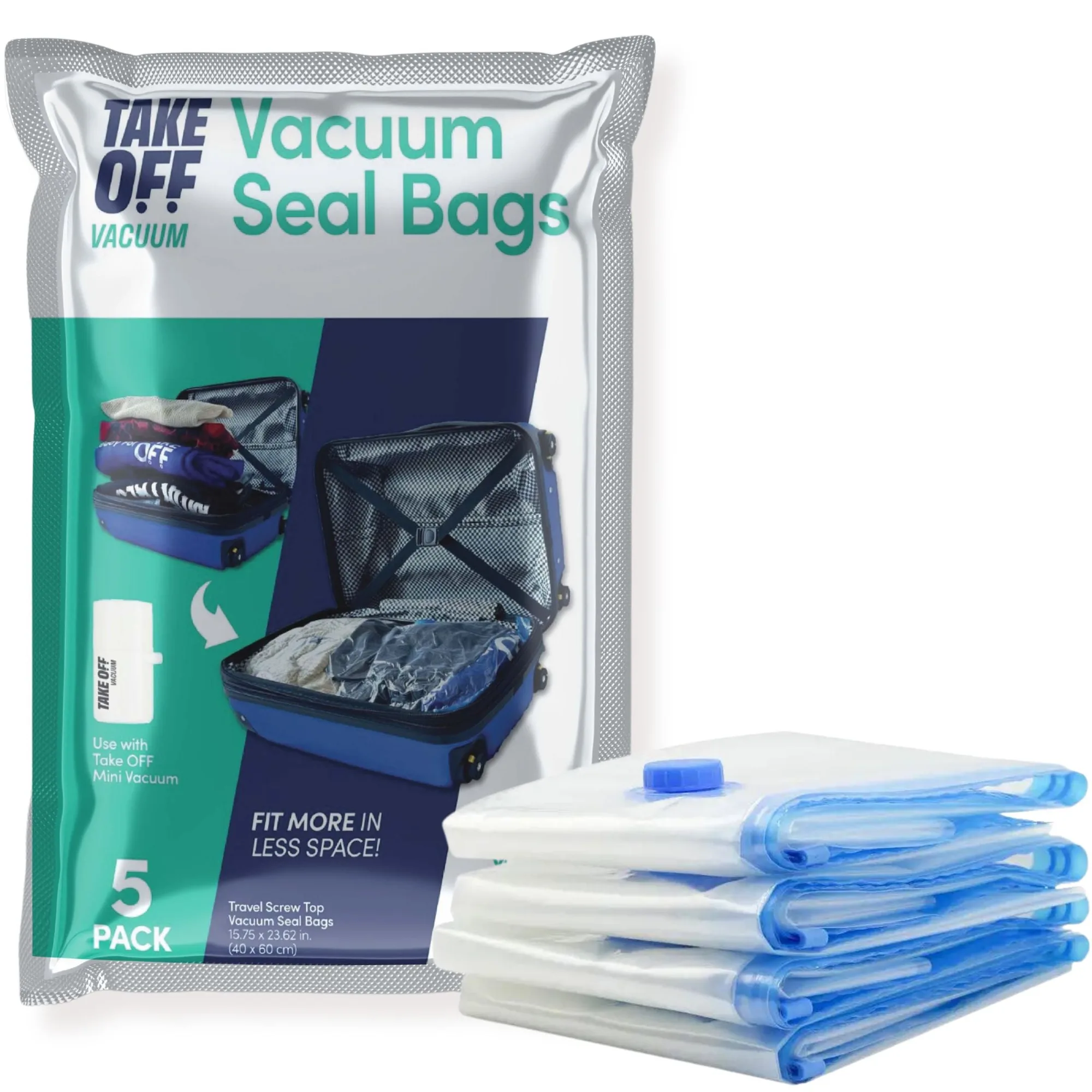
For bag size, lay the pillow flat and choose a bag with at least a few inches of slack on every side. A bag that is too small forces creases and pinches the seams, which is where leaks and tears usually start. If you are using the Vacuum Seal Bags - 5 Pack, test the fit with the pillow uncompressed first, before you commit to sealing it.
How Long Is Too Long for Compressed Storage
Treat vacuum-sealed pillow storage as a short-term tool, not a permanent home. For travel, a few days to a couple of weeks is ideal. For seasonal storage, aim to unpack and re-fluff the pillow every four to six weeks. The longer a pillow stays compressed, the more slowly it recovers, and some fiberfill pillows will not fully return at all after months of flat storage.
If you need to store a pillow for a full season, consider a plain breathable cotton storage bag instead and save the vacuum bag for the trip itself. That keeps the pillow in good shape and still gives you the space savings when it matters most.
Step-by-Step: Vacuum-Sealing a Pillow Safely
- 1. Match the pillow to the right bag: Lay the pillow flat on top of an unsealed bag. You want at least two to three inches of bag material free on all four sides. If the pillow overhangs the edges, size up. Checkpoint: if the zipper or valve sits directly against the pillow, the seal is more likely to fail.
- 2. Fold, don't cram: Fold the pillow in half or thirds along its natural curve so it slides in without forcing. Sharp creases pressed into a foam pillow can leave permanent dents. Mistake to avoid: stuffing a pillow in like laundry. That stretches seams before you even start pulling air.
- 3. Seal the bag completely before removing air: Run your fingers along the entire closure, pressing firmly from one end to the other. Any grit, hair, or wrinkle in the seal track will leak. Checkpoint: a quick press on the sealed bag should hold air for a few seconds. If it hisses, reseal.
- 4. Remove air in short bursts, not one long pull: With a pump or vacuum, stop every few seconds and press the pillow with your hand. You want it firm and flat, not rigid. For memory foam, stop while it still has a little give. Mistake to avoid: pulling until the bag is vacuum-tight. That is the single biggest cause of pillow vacuum bag damage.
- 5. Store flat and label the bag: Keep the sealed pillow flat, away from sharp objects, heat, and direct sun. Write the date on the bag so you know when to unpack it. Checkpoint: if you cannot remember when you sealed it, you have already left it too long.
- 6. Unpack and re-fluff within a few weeks: Open the bag, take the pillow out, and shake or knead it for a minute. Memory foam usually needs a few hours to fully expand; down needs a good fluff and a day or two of air. Next step: if the pillow still feels flat after 48 hours, it was compressed too hard or too long.
Vacuum Bag Options That Work for Pillows
- Vacuum Seal Bags - 5 Pack: Vacuum Seal Bags - 5 Pack: compression bags that shrink clothes and similar items so you can pack more into suitcases and carry-ons without adding weight. A five-pack gives you spares, which matters because pillows are bulky and a single failed seal can leave you with a full-size pillow and no backup bag.
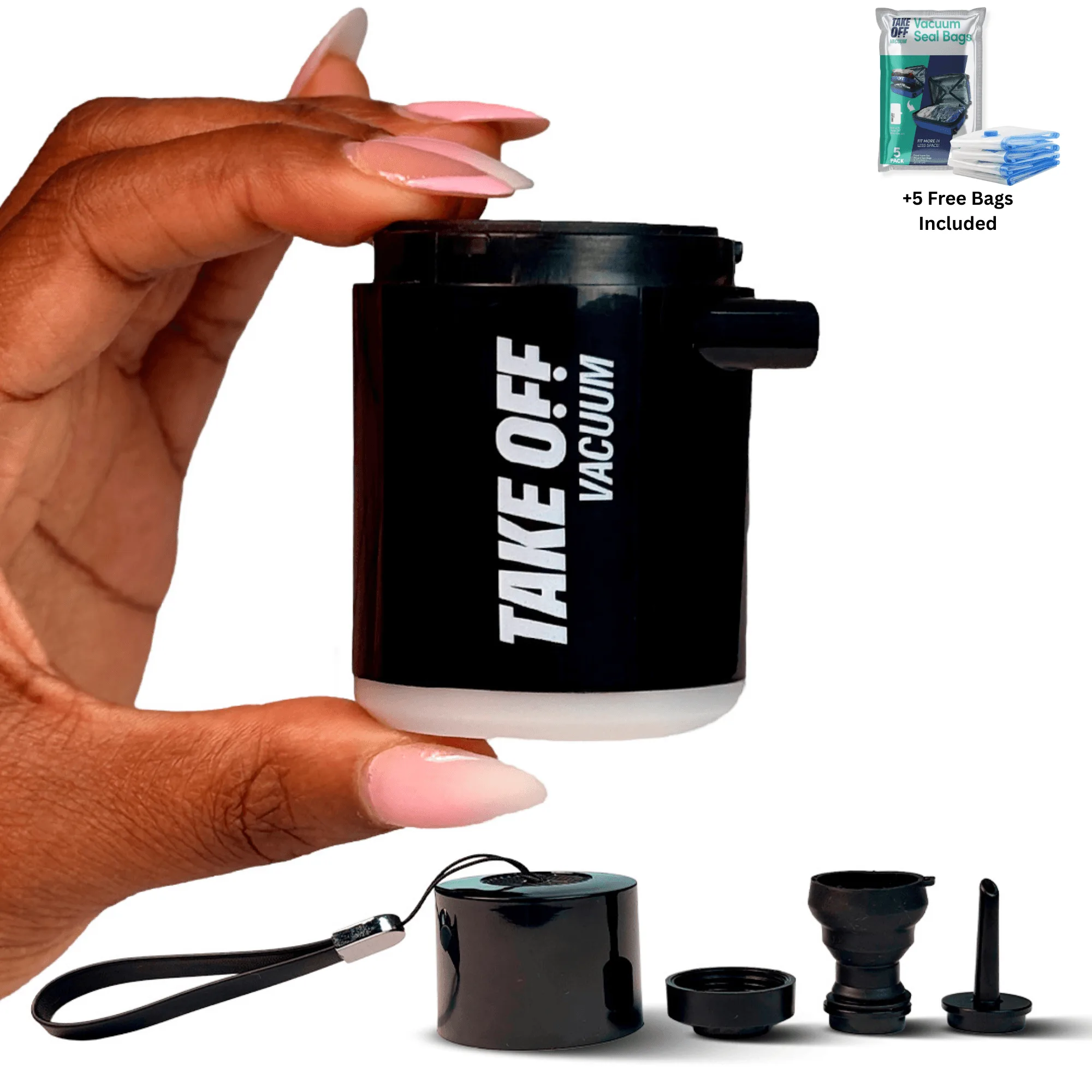
- Mini Vacuum Pump 2.0 (NEW) + Vacuum Bags (5 Pack) - Black: Mini Vacuum Pump 2.0 (NEW) + Vacuum Bags (5 Pack) - Black: a pocket-sized pump that removes air from clothing and comes with five vacuum seal bags. A handheld pump lets you control how much air you remove, so you can stop before a pillow turns into a hard brick, and it works without a full-size vacuum.