Quick answer
Store breast milk safely by using clean, BPA-free silicone bags, filling them in small portions, and following proper thawing and hygiene steps.
Why silicone bags are a smart choice for milk storage
Silicone breast milk bags are reusable, reducing waste compared to disposable plastic bags. They are made from food-grade, BPA-free material that withstands freezing and gentle reheating without leaching chemicals.
The BABYGO® Reusable Silicone Breast Milk Bags include a clear measurement scale up to 240ml (8oz) and a double-seal design to prevent leaks. This makes portioning and storing easy while keeping milk fresh.
Know the limits: not for long-term freezing
While silicone bags work well for short-term freezing (up to 3 months), they are not ideal for very long-term storage beyond that. For longer periods, consider using hard plastic or glass containers designed for deep freezing.
If you plan to freeze milk for more than 3 months, check your bag's specifications. Reusable silicone bags may lose seal integrity over many freeze-thaw cycles.
Step-by-step: How to store breast milk safely in silicone bags
- Wash hands and sterilize the bag: Wash your hands thoroughly with soap and water. If using a reusable silicone bag, sterilize it by boiling for 5 minutes or using a steam sterilizer. Disposable bags are ready to use straight from the pack. Skipping sterilization can introduce bacteria. Always check the bag for damage before use.
- Fill the bag with the right portion: Pour expressed milk into the bag, leaving about 1 inch of headspace at the top because milk expands when frozen. Use the measurement scale to portion 60–120ml (2–4oz) per bag to avoid waste. Overfilling can cause the bag to burst in the freezer. Stick to small portions that match a single feed.
- Seal and label the bag: Press out as much air as possible before sealing the bag completely. Write the date and volume on the label area with a permanent marker. For reusable bags, note the number of uses if tracking cycles. Air inside the bag can cause freezer burn and spoil the milk. Always label to track freshness.
- Store flat in the freezer: Lay the sealed bag flat in the freezer until the milk is solid. Then you can stand the bags upright or stack them to save space. Keep them away from the freezer door where temperature fluctuates. Freezing flat helps the milk freeze evenly and makes stacking easier. Avoid placing near raw meat.
- Thaw safely before feeding: Thaw frozen milk by placing the bag in the refrigerator overnight or under warm running water. Never use a microwave or boiling water, as this can destroy nutrients and create hot spots. Use within 24 hours after thawing. Never refreeze thawed milk. If your baby doesn't finish a bottle, discard the leftover within 2 hours.
Products mentioned
-
BABYGO® Reusable Silicone Breast Milk Bags (5 Pack): Made from BPA-free, food-grade silicone with a clear measurement scale up to 240ml (8oz) and double-seal design. The measurement scale helps you portion milk accurately for feeds, and the double seal prevents leaks during freezing and thawing.
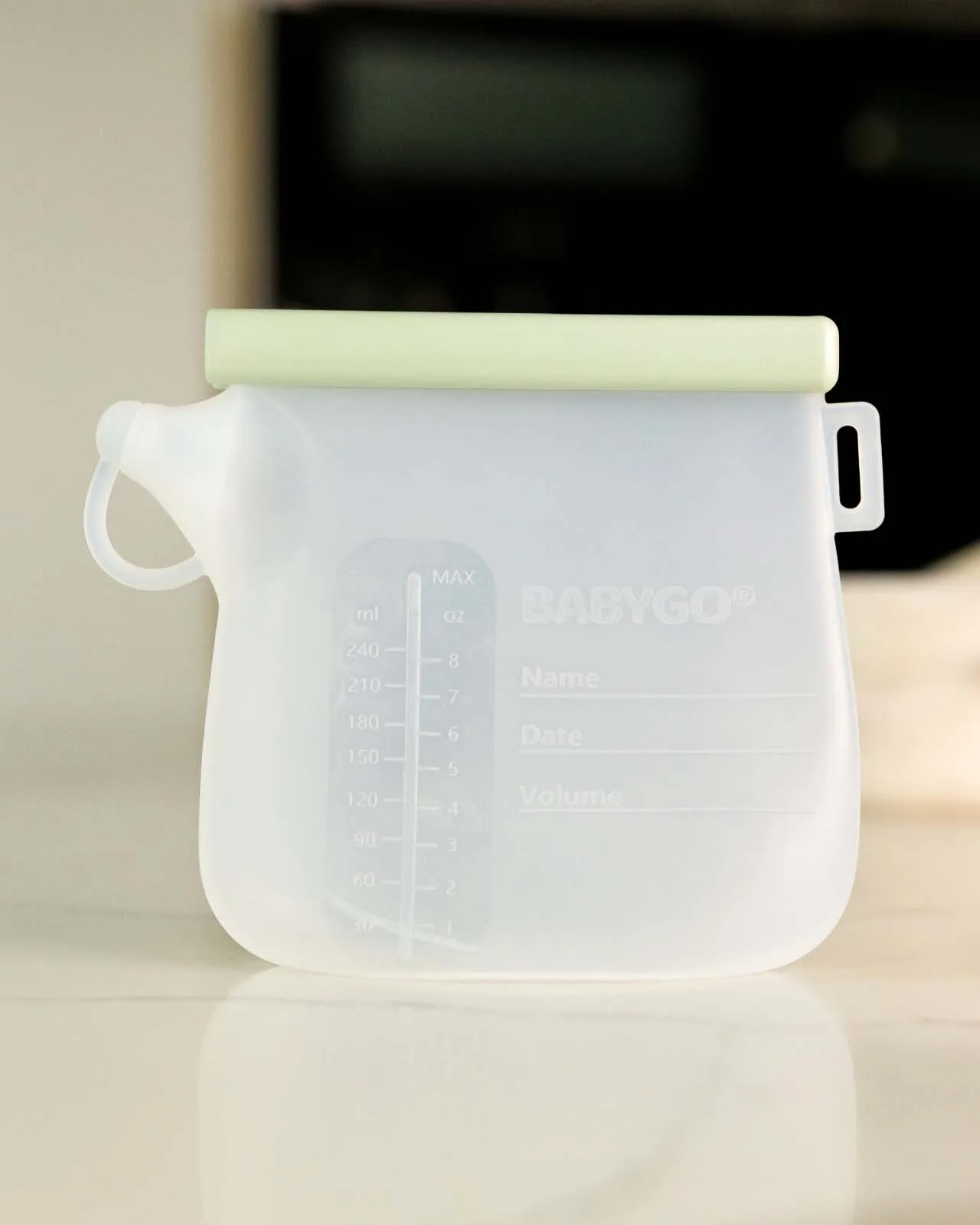
BABYGO® Reusable Silicone Breast Milk Bags (5 Pack)
-
BABYGO® Disposable Breast Milk Storage Bags: Disposable bags hold up to 180ml and feature a sturdy standing base and pourable spout. The standing base makes filling and storing spill-free, and the spout allows mess-free transfer to bottles—ideal for on-the-go use.
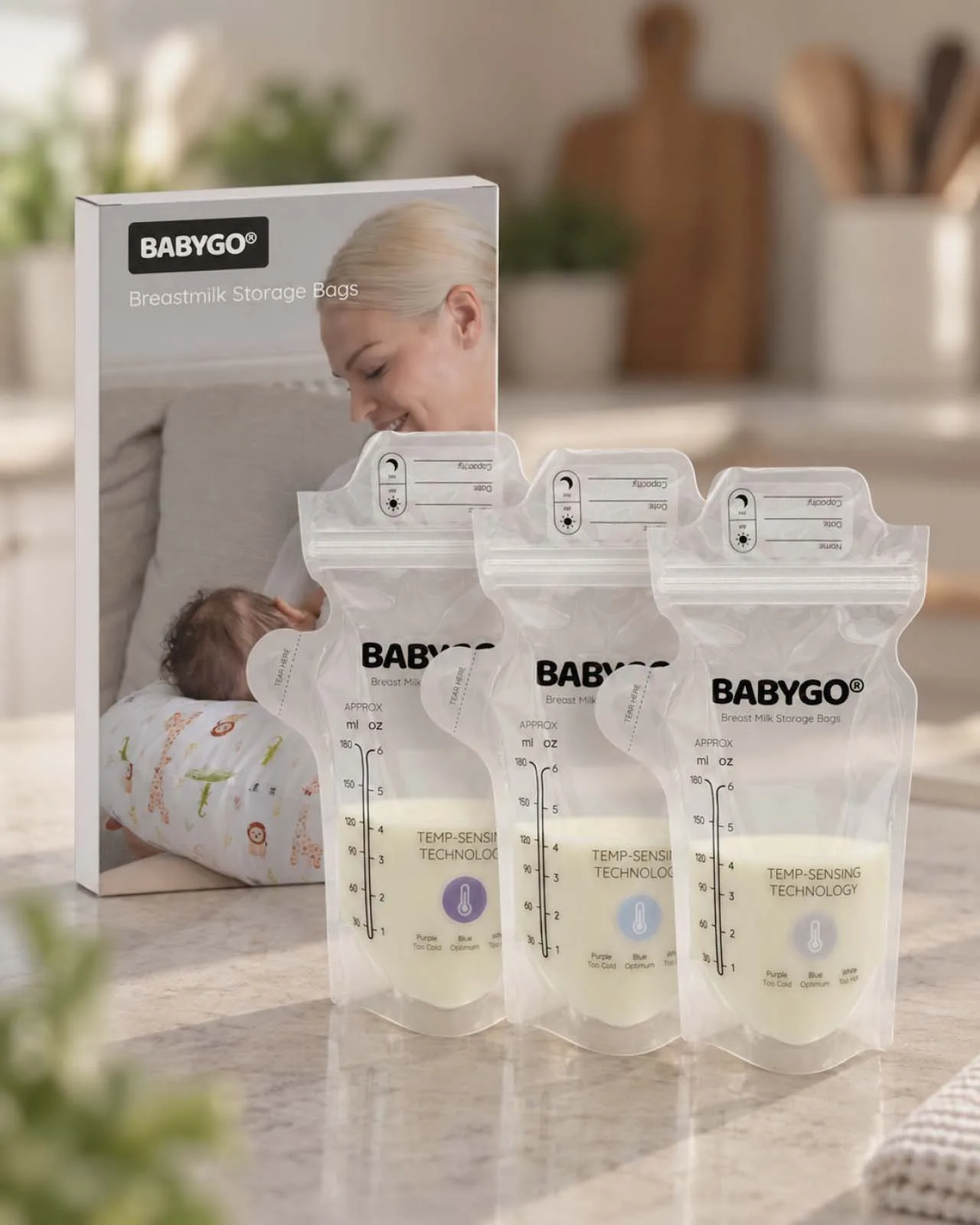
BABYGO® Disposable Breast Milk Storage Bags