Quick answer
For long-term storage, discharge each lithium-ion camera battery to about 50% capacity, remove it from the camera, and keep it in a cool, dry place between 15°C and 20°C (59°F to 68°F). Avoid full charges, extreme heat, and moisture. Recharge to 50% every 6 to 12 months. This routine works for Canon LP-E17, Nikon EN-EL14a, and similar li-ion packs.
Why lithium-ion batteries lose capacity when stored wrong
Lithium-ion cells age fastest when they sit at 100% charge or at high temperatures. A full charge increases voltage stress on the cell, and heat accelerates chemical breakdown. Storing a battery at 100% in a hot car or a sunny room can permanently reduce its capacity in a few months. The same battery stored at 50% in a cool cupboard may keep most of its capacity for a year or more. Camera batteries like the Canon LP-E17 and Nikon EN-EL14a are not immune to this chemistry, so the storage routine matters as much as the brand.
Prepare each battery before storage
Before you put any battery away, check its charge level. If it is above 80%, use the camera until it drops to roughly half. If it is below 20%, charge it to about 50%. Many chargers do not show a precise percentage, so use your camera’s battery indicator as a guide. For a more accurate reading, some cameras show a percentage or a five-bar icon. Aim for the middle. Do not store a fully depleted battery; it can fall into a deep discharge state and may not recover. Also, clean the contacts with a dry cloth to prevent corrosion.
Choose the right storage location
Find a spot that stays cool, dry, and dark. A closed cabinet away from windows works well. Avoid garages, sheds, and cars where temperatures swing widely. Humidity is also an enemy: if you live in a humid climate, add a silica gel packet to your storage box. Do not store batteries in the refrigerator or freezer. Condensation can form inside the battery when you take it out, and extreme cold can damage the separator. A stable room temperature between 15°C and 20°C (59°F to 68°F) is ideal.
Use a dedicated battery case or organizer
Loose batteries can short-circuit if their terminals touch metal objects like keys or coins. Store each battery in a plastic battery case, a padded pouch, or a compartmentalized box. If you keep multiple batteries, label them with the date you stored them so you can rotate them. Never store batteries in a bag with loose change, tools, or other metal items. A simple plastic case costs little and prevents a ruined battery or a fire risk.
Recharge every 6 to 12 months
Lithium-ion batteries self-discharge slowly. If you leave them for a year or more, the voltage can drop too low, and the battery may become unrecoverable. Set a reminder to check your stored batteries every 6 to 12 months. If the charge has fallen below 30%, top it up to about 50%. If you have several batteries, rotate them: use the oldest ones first when you return to shooting. This keeps all cells exercised and extends their overall life.
Step-by-step long-term battery storage routine
- Discharge to about 50%: Use the camera or a charger with a discharge function to bring the battery down to roughly half charge. If you cannot measure precisely, aim for the middle indicator on your camera. Checkpoint: Never store a fully charged or fully empty battery.
- Remove from camera and clean contacts: Take the battery out of the camera. Wipe the metal contacts with a dry, lint-free cloth to remove any residue or moisture. Common mistake: Leaving the battery in the camera, which can cause slow drain and corrosion.
- Place in a protective case: Put each battery in a non-conductive case or pouch. Do not let terminals touch metal objects. Label the case with the storage date if you have several batteries. Checkpoint: A plastic battery case is cheap insurance against short circuits.
- Store in a cool, dry, dark place: Choose a location with a stable temperature between 15°C and 20°C (59°F to 68°F). Avoid humid areas, direct sunlight, and extreme cold. Add a silica gel packet if humidity is high. Common mistake: Storing batteries in a hot car or a damp basement.
- Recharge to 50% every 6–12 months: Set a calendar reminder to check stored batteries. If the charge has dropped below 30%, charge it back to about 50%. Rotate batteries into use when you shoot. Checkpoint: Mark the date so you do not forget a battery for over a year.
Compatible batteries for long-term storage
- Canon LP-E17 Lithium-Ion Battery Pack: The Canon LP-E17 Lithium-Ion Battery Pack powers Canon EOS 200D, 250D, 250D Mark II, 750D, 760D, Rebel T6i, and T6s cameras. It is compatible with the optional LC-E17 charger and is offered as a spare or replacement part. If you own one of these Canon models, the LP-E17 is the exact battery to store. Having a spare means you can keep one in the camera and store the other at 50% for long-term backup.
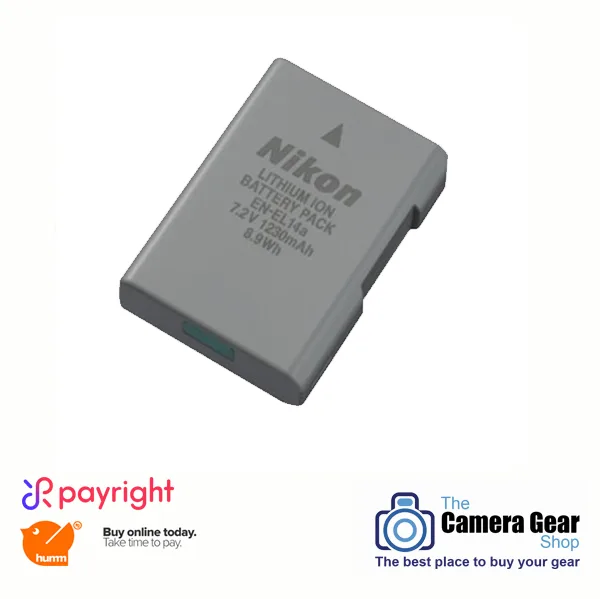
- Nikon EN-EL14a Original Battery: The Nikon EN-EL14a Original Battery is a replacement or spare Lithium-ion battery for Nikon D3100, D3200, D3300, D3400, D5100, D5200, D5300, D5500, and D5600 cameras. Nikon DSLR owners can use the same storage steps for the EN-EL14a. Because it fits many camera bodies, a single spare can serve as a backup for multiple cameras, making proper storage even more valuable.