Quick answer
Move your dog's food out of the garage, shed, or any spot that climbs above room temperature and into a cool, dark, dry area—ideally below 80°F. Transfer kibble from its bag into an airtight, waterproof container like the GUNNER Food Crate to block humidity, pests, and UV light. Check the food daily for clumping, a sour smell, or color changes, and buy smaller bags during hot months so nothing sits long enough to go rancid.
Why heat and humidity wreck kibble faster than you think
Kibble is sprayed with fats and oils that oxidize when exposed to heat, light, and air. The warmer the storage spot, the faster those fats break down—turning food rancid and stripping the vitamins your dog needs. Humidity adds a second problem: moisture migrates into dry food, softening it and creating conditions where mold and bacteria can grow. A garage that hits 100°F in July or a pantry next to the oven will push spoilage into overdrive, even if the bag is still sealed.
Where to store dog food when it's hot outside
The best spot is the coolest, darkest, driest place in your home—usually an interior closet or a lower cabinet away from appliances that throw heat. Avoid the garage, laundry room, sunroom, and anywhere near a water heater or furnace. If you must use a garage, choose an insulated, elevated container and check the food more often. Keep the original bag inside your container if it fits; the bag's lining adds an extra barrier, and you keep the lot number and best-by date for recalls or questions.
Pick a container that blocks heat, humidity, and light
Look for an airtight seal, opaque walls, and a latch that stays put. Clear plastic bins let light in and often have flimsy lids that pop loose. A dedicated pet food container with a gasket and lockable latch does a better job of keeping out moisture and pantry pests. Elevated feet matter too—they keep the base off a hot concrete floor and allow air to move underneath. If the container has no UV protection, store it in a dark cabinet rather than on a sunny shelf.
How to spot spoiled dog food before you feed it
Rancid kibble often smells sour, musty, or like old crayons. It may look darker, feel greasy, or clump together from moisture. Your dog might sniff and walk away, or eat and then vomit or have diarrhea. If you see mold—white, green, or black fuzz—throw the whole batch out; scraping off the top won't make it safe. When in doubt, toss it. A vet visit costs far more than a bag of food.
Buying and rotating food during hot months
Buy the smallest bag your dog will finish in two to four weeks. Larger bags sit longer and expose more food to warm air every time you open them. Write the purchase date on the bag or container and use older food first. If you switch to a new bag, wash and dry the container before refilling—old crumbs and oils can speed up spoilage in the fresh batch. Never mix new kibble into old; finish one bag before opening the next.
Step-by-step: hot-weather dog food storage
- Find the coolest spot in your home: Choose an interior closet or cabinet away from ovens, dishwashers, water heaters, and direct sun. Aim for a steady temperature below 80°F. Checkpoint: if the spot feels warm to your hand or gets afternoon sun, it's too hot.
- Transfer kibble to an airtight, opaque container: Pour food into a sealed container with a gasket and latch. Keep the original bag's label or lot number if you can. Don't leave food in the bag alone—bags tear, and rodents chew through them. Mistake to avoid: using a clear bin with a loose lid; light and air sneak in.
- Elevate the container off the floor: Set it on a shelf or use a container with built-in feet. Concrete floors stay cooler than air but can wick moisture; a gap lets air move and prevents rust or condensation. Checkpoint: the container should not sit directly on bare concrete or against an exterior wall.
- Control humidity around the container: If your storage area is damp, add a rechargeable desiccant pack nearby—not inside the food. Keep the container away from sinks, pet water bowls, and humidifiers. Mistake to avoid: putting a wet scoop back into the kibble; always dry it first.
- Scoop with a dry, clean cup: Use a dedicated dry measuring cup or scoop. Wash and dry it weekly. Never scoop with a wet bowl or your hand if it's damp. Checkpoint: any moisture introduced at scooping time shortens the food's safe window.
- Inspect the food every few days: Smell the kibble, look for clumps or color shifts, and check for mold. If anything seems off, discard the whole batch. Mistake to avoid: tasting it yourself—some molds and bacteria are harmful even in tiny amounts.
- Buy smaller bags and rotate stock: During hot months, purchase only what your dog will eat in two to four weeks. Date the container and use the oldest food first. Next step: set a reminder to check your supply before the next heat wave.
Product facts
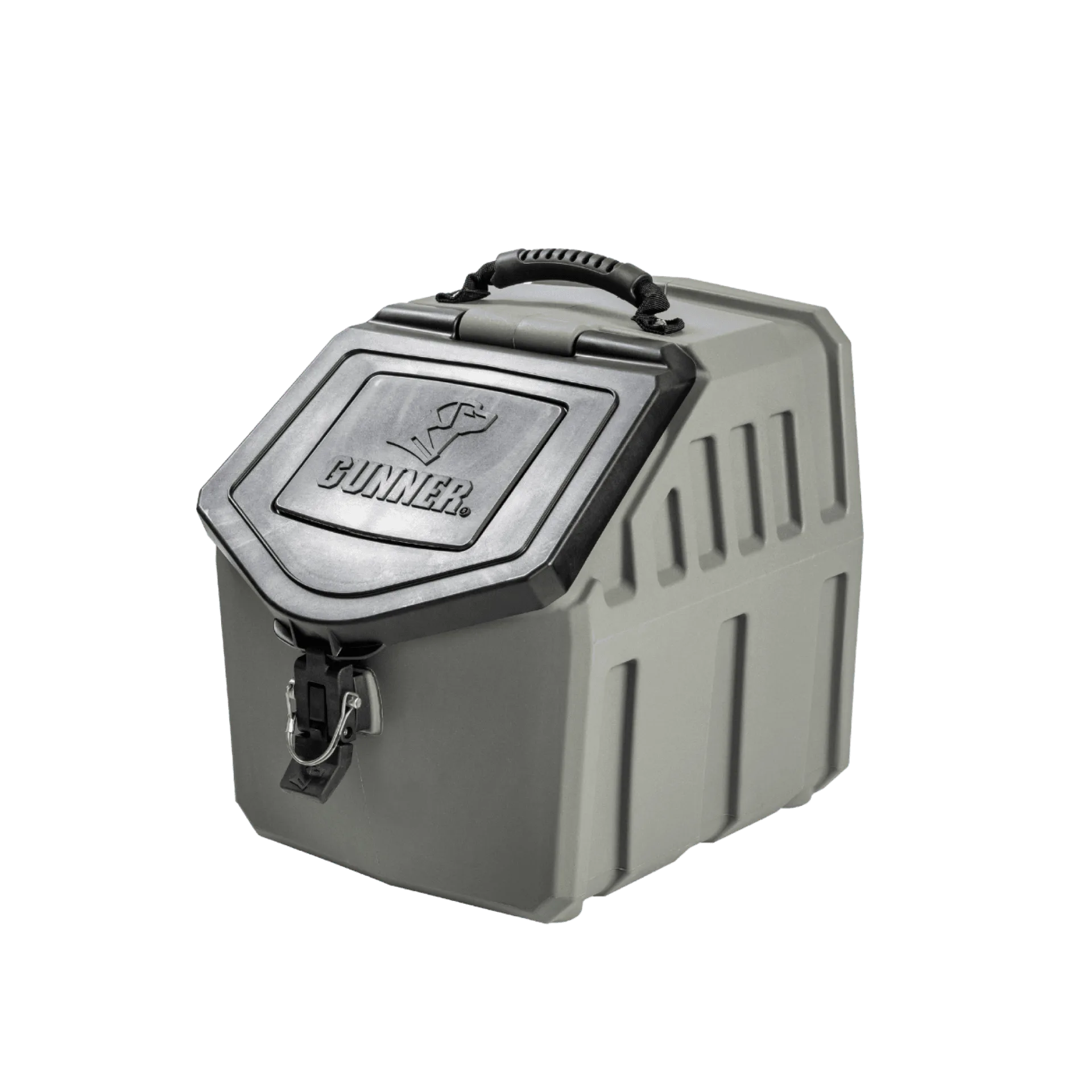
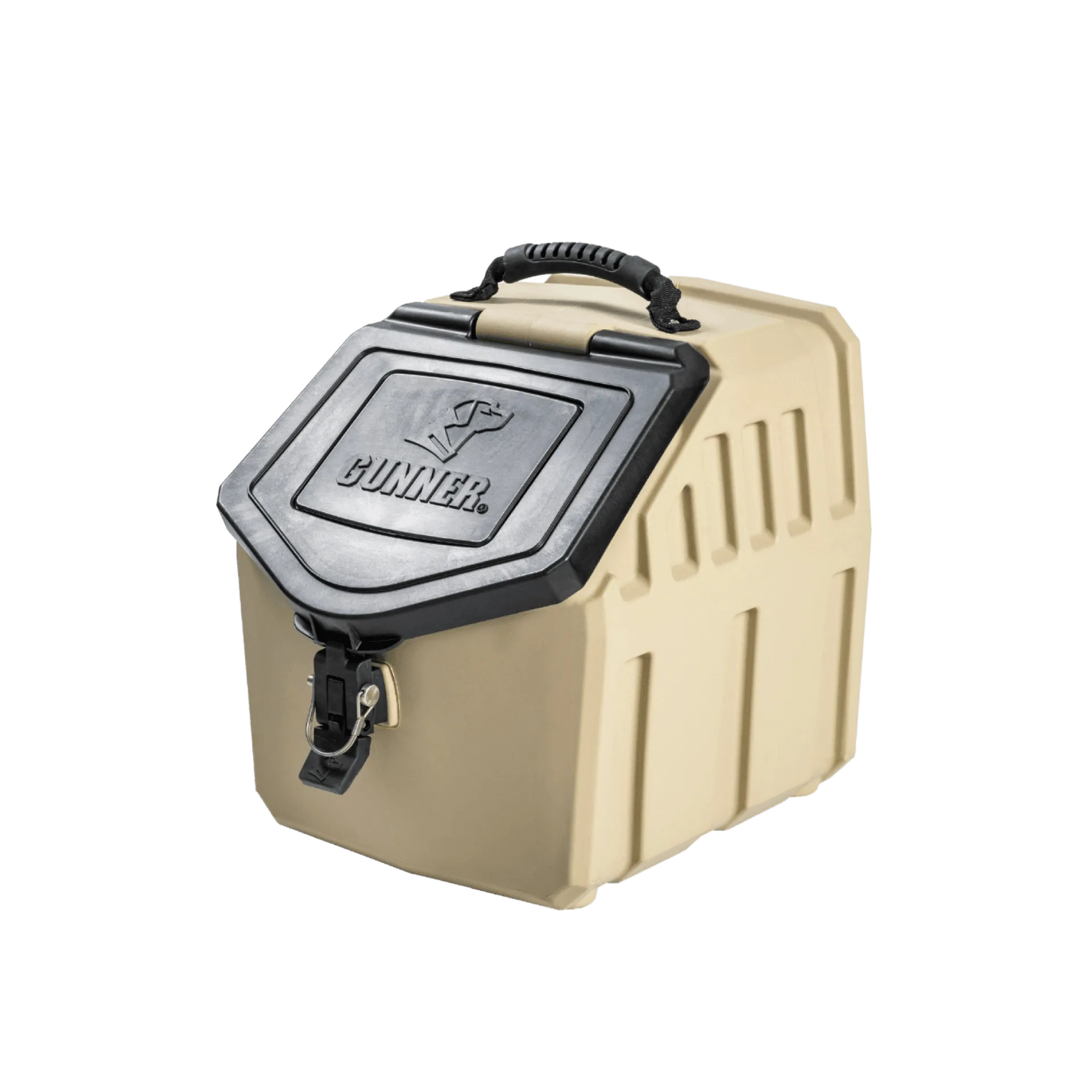
- GUNNER FOOD CRATE - TAN: Built with the same principles as the G1 kennel series, the patent-pending GUNNER Food Crate has an IP66 rating, meaning it is waterproof and dust proof. It's also odor proof. An IP66 seal keeps out rain, hose spray, and fine dust—useful if your only storage spot is a garage or covered patio where humidity and grit are constant.
- GUNNER FOOD CRATE - GUNMETAL: The GUNNER Food Crate features an ultra-durable angled nylon lid, a draw-style lockable latch, and elevated rubber feet to better protect pet food from outside elements, temperatures, and UV light. The lockable latch keeps raccoons and determined dogs out, while the elevated feet lift the crate off hot concrete and let air circulate underneath.