Quick answer
Cool granola completely, then seal it in an airtight container and keep it in a dark, dry spot. For everyday eating, a glass jar or zip-top bag works well. For bulk amounts, portion into smaller containers so you open the main supply less often. If your granola is already soft, a low oven can bring back some crunch before you store it.
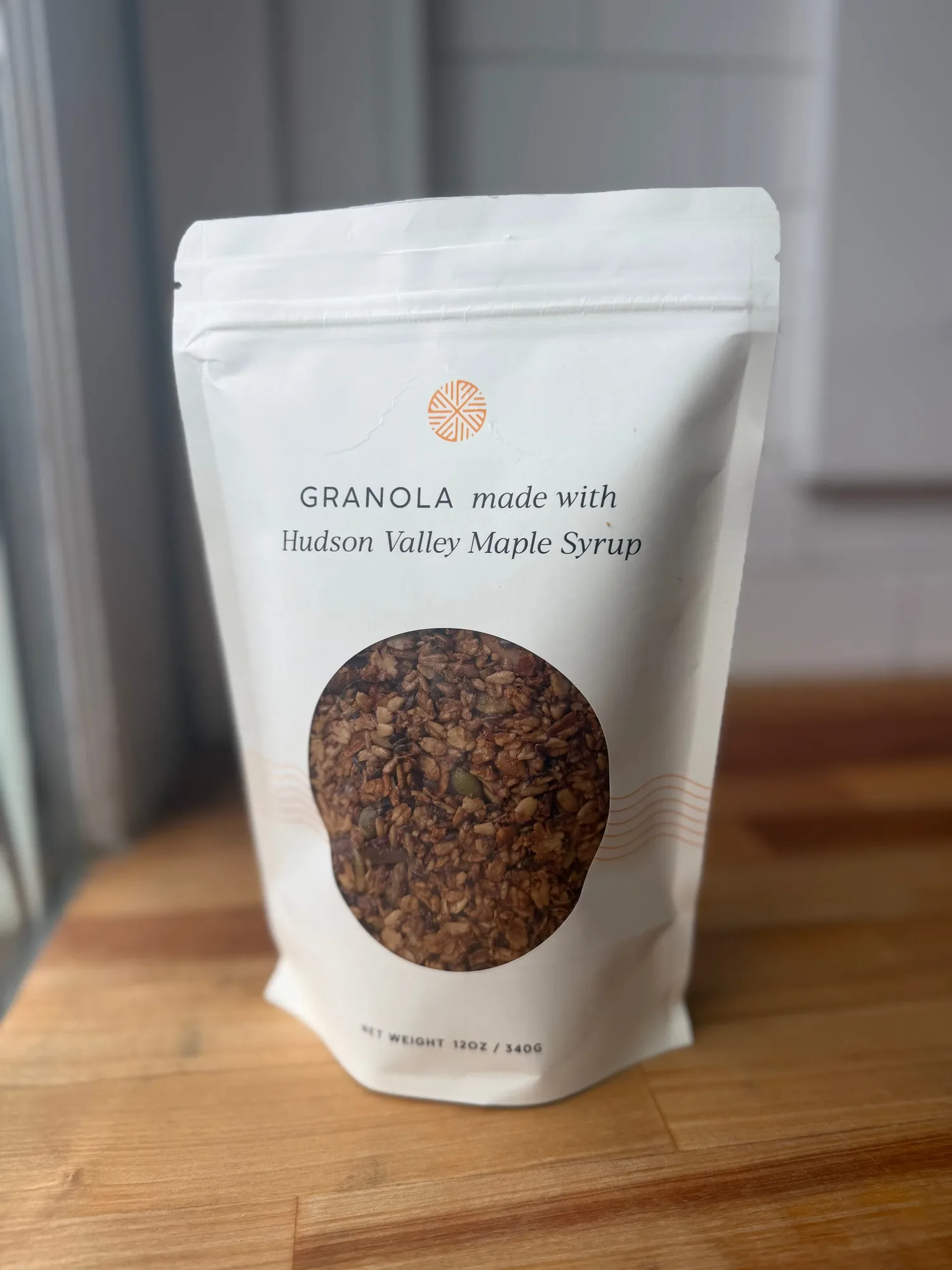
granola
Granola is at its best when it shatters under the spoon. But within a day or two of sitting out, those clusters start to bend instead of snap. The culprit is almost always moisture, not stale oats. Understanding how to store granola properly is the difference between a week of crisp breakfasts and a jar of chewy, sad crumbs.
The good news: you do not need special equipment. A few containers, a cool cupboard, and a couple of habits will keep your granola crunchy for weeks. This guide walks through the exact steps, including what to do when granola going soft has already started.
Why granola goes soft (and what actually helps)
Granola is a dry, sugar-coated product. The oats and nuts are hygroscopic, meaning they pull moisture from the air. Every time you open a container, humid kitchen air rushes in. The sugar coating dissolves slightly, and the crunch turns to chew. Heat speeds this up, and so does storing granola near a kettle, dishwasher, or stove.
The fix is not one magic container. It is a chain: cool the granola fully after baking, choose a container that actually seals, keep it in a stable, dry place, and avoid repeatedly opening a large supply. Each step reduces the moisture that reaches the oats.
- Never store granola while it is still warm; trapped steam softens it from the inside.
- A container that is merely 'close' is not enough. Test the seal by filling it with water and shaking.
Choosing granola storage containers
For daily use, a glass jar with a rubber gasket or a sturdy zip-top bag works well. Glass does not hold odors and is easy to wipe clean. Bags are flexible and take up less shelf space, but they need a proper press-seal, not a loose fold. If you buy granola in bulk, transfer it out of the original bag only if that bag is not resealable.
For larger amounts, use a container with a tight lid and a wide mouth so you can scoop without tipping. Avoid open bowls, paper bags, or cloth sacks for anything longer than a day. Those let air exchange freely, which is exactly what makes granola going soft.
- A one-quart jar holds roughly the amount of granola a single person eats in a week.
- If your container has a plastic lid with a thin gasket, check it every few months for cracks.
Step-by-step: storing granola so it stays crunchy
Start by cooling baked granola completely on the sheet pan, at least one hour. If you can feel any warmth on the bottom of the pan, wait. Once cool, transfer it to your chosen container and seal it. Store in a cupboard away from the stove, sink, and any appliance that vents steam. A dark, room-temperature spot is ideal.
If you have a large batch, divide it into two or three smaller containers. Open only one at a time. This keeps the rest sealed and dramatically extends granola shelf life. Label the container with the date so you know when it was packed, especially if you rotate between batches.
- Do not refrigerate granola unless your kitchen is very hot and humid; the fridge adds moisture every time you open the door.
- Freeze granola only if you will not eat it within a month, and thaw it fully sealed before opening.
How long granola stays crunchy
Homemade granola stored in an airtight container at room temperature generally stays crunchy for two to three weeks. After that, it may still be safe but will lose its snap. Store-bought granola often lasts longer because it is packaged drier, but once opened, the same clock starts. The type of sweetener matters too: honey and syrups attract moisture more than plain sugar.
If you live in a humid climate, expect the shorter end of that range. In dry climates, you may get an extra week. The best test is a bite: if it bends instead of breaks, it is time to refresh it or finish the batch in yogurt or a smoothie.
- Write the storage date on the lid so you are not guessing.
- A silica gel packet in the container can help in very humid kitchens, but keep it out of reach of children and pets.
What to do when granola goes soft
If your granola has already lost its crunch, do not throw it out. Spread it on a baking sheet and warm it in a 250°F oven for 10 to 15 minutes. Stir once, then cool completely before returning it to a sealed container. This drives off surface moisture and can restore much of the original texture.
For small amounts, a toaster oven works. Avoid the microwave, which heats unevenly and can make the problem worse. If the granola is clumped and sticky rather than just soft, it may have absorbed too much moisture to recover fully. In that case, use it as a topping for ice cream, yogurt, or baked apples.
- Do not re-bake granola with chocolate chips or dried fruit mixed in; pick them out first or they will burn.
- After refreshing, let the granola cool completely before sealing, or you will trap steam again.
Storing granola in bags and on the go
For lunchboxes or travel, portion granola into small zip-top bags and press out the air before sealing. Single servings reduce the number of times a larger container is opened. If you are packing granola with yogurt, keep them separate until eating time. Yogurt is mostly water, and granola touching it will soften within minutes.
Reusable silicone bags or small hard containers are a better choice than thin plastic if the granola will be jostled. The goal is a barrier against air and physical crushing. Crushed granola is not spoiled, but it loses the cluster texture that makes it satisfying.
- Pack granola at the top of the bag, away from juicy fruit.
- If you reuse zip-top bags, wash and dry them fully before refilling.
Granola storage steps at a glance
- Cool completely: Spread granola on a sheet pan and let it sit until it is fully room temperature, at least one hour. Warm granola traps steam. Checkpoint: the bottom of the pan should feel cool to the touch.
- Pick an airtight container: Use a glass jar with a gasket, a hard plastic container with a tight lid, or a heavy-duty zip-top bag. Test the seal before filling. Mistake to avoid: using a container with a loose or cracked lid.
- Portion into smaller containers: Divide a large batch into two or three containers. Open only one at a time so the rest stays sealed. This single habit extends crunch more than any other step.
- Store in a cool, dry place: Keep granola in a cupboard away from the stove, sink, dishwasher, and kettle. Heat and steam are the enemies. Do not refrigerate unless your kitchen is extremely humid.
- Label and date: Write the date on the lid or bag. Homemade granola is best within two to three weeks. If it bends instead of snaps, refresh it in a low oven.
- Refresh soft granola: Spread soft granola on a baking sheet and warm at 250°F for 10 to 15 minutes. Cool completely before resealing. Remove chocolate chips or dried fruit first so they do not burn.
Products that help with granola storage and serving
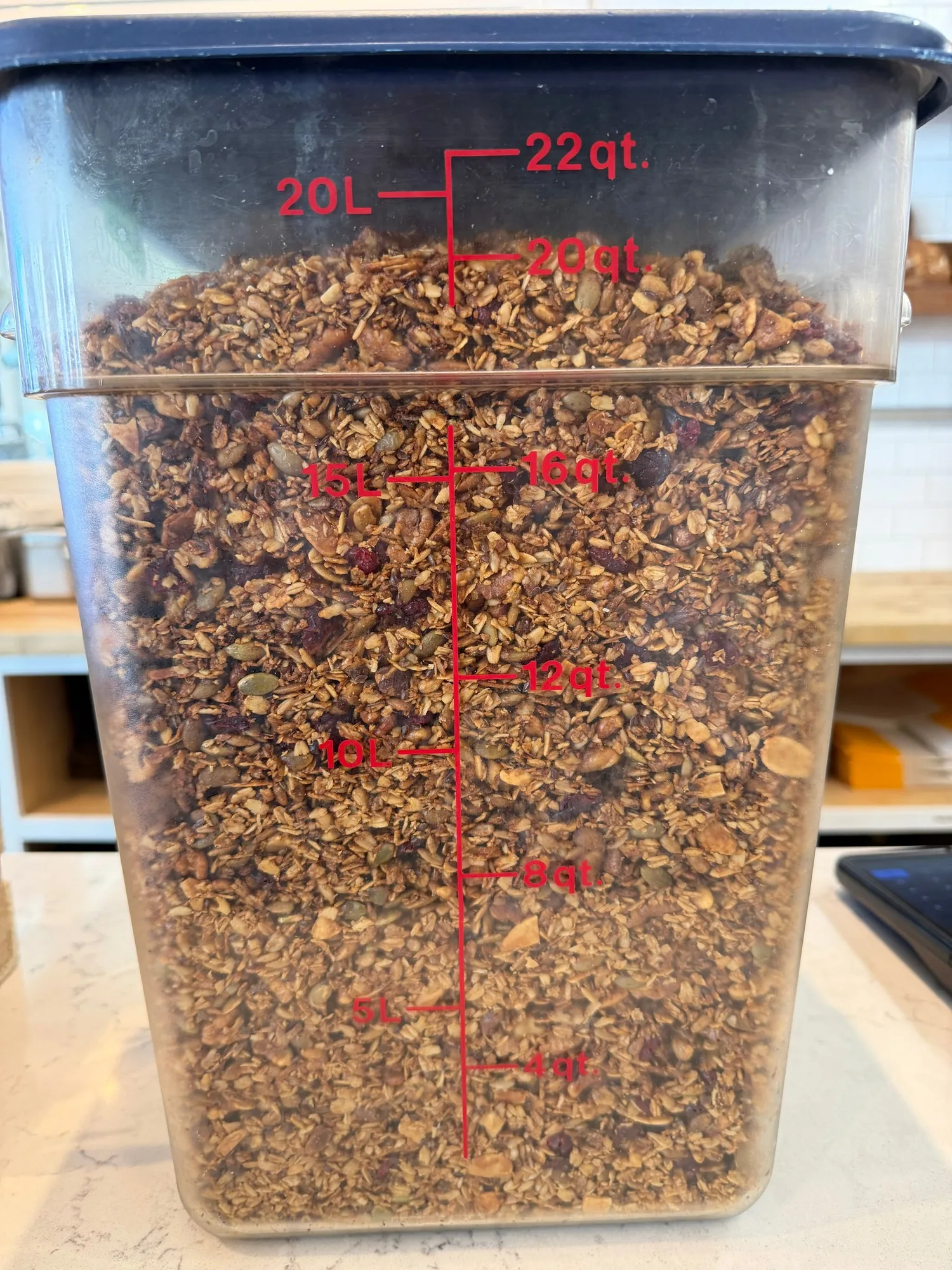
- Granola Bulk 22qt: Granola Bulk 22qt is offered by Kneads • Bakery • Café • Mill, tagged as CommissaryKitchen and Wholesale-Only, and available in a Standard option. If you buy in bulk, you will need to portion it into smaller airtight containers at home to keep it crunchy. The 22-quart size is designed for commissary use, so plan your storage before opening.
- Handle Bags Small: Handle Bags Small are available by the case from Kneads • Bakery • Café • Mill. The listed case size is 8" x 4.75" x 10.25", giving you a compact handled bag option for everyday packaging needs. These small handled bags are useful for packing single servings of granola for lunch or gifting. Sealing granola in a small bag reduces air exposure compared to a large open container.
- Handle Bags Large: Handle Bags Large are packaged for commissary and wholesale use, with 200 bags per case. Each bag measures 14" x 10" x 15". For larger batches or sharing, these bags hold a generous amount. Use them to divide a bulk granola supply into smaller sealed portions so you open only what you need.
Crunchy granola comes down to keeping moisture out. Cool it fully, seal it tight, store it cool and dark, and portion bulk amounts so you are not opening the same container all day. Do that, and your granola will stay crisp from the first scoop to the last.