Quick answer
Clean and fully dry each fabric toy first, then store it flat in a breathable cotton bag or a cotton-lined bin in a cool, dry spot away from sunlight and damp walls. Keep felt books and plush toys out of vacuum-sealed bags and hot attics, and check them once a season for moisture or pests.
Fabric toys are the quiet workhorses of a Montessori shelf: soft books, plush animals, felt activity pages. They get handled daily, stuffed into bags, and then one day your child moves on and the question becomes where to put them so they are still usable later.
Montessori
Long term storage is less about space and more about moisture, pressure, and light. Get those three right and a felt book or plush barn can come back out for a younger sibling, a cousin, or a grandparent's house looking and feeling close to new.
Why fabric toys need a different storage plan than wooden ones
Wooden toys tolerate a dry shelf and a wipe-down. Fabric toys absorb. Felt, plush, and cotton bindings take in humidity, hold dust, and crease permanently if something heavy sits on them for months. That is why the storage routine starts with condition, not with the box.
The other difference is that fabric toys are often the ones with the most sentimental value: a first soft book, a holiday plush. Storing them well protects both the material and the memory. It also keeps them safe for a child who is still mouthing everything, because a clean, dry toy is a safer toy.
- Never store a fabric toy that is still damp, even slightly.
- Avoid stacking heavy bins directly on felt books; pressure creases felt permanently.
- Keep fabric and wood separate so wood does not rub or snag the fibers.
Step 1: Clean before you store, not after
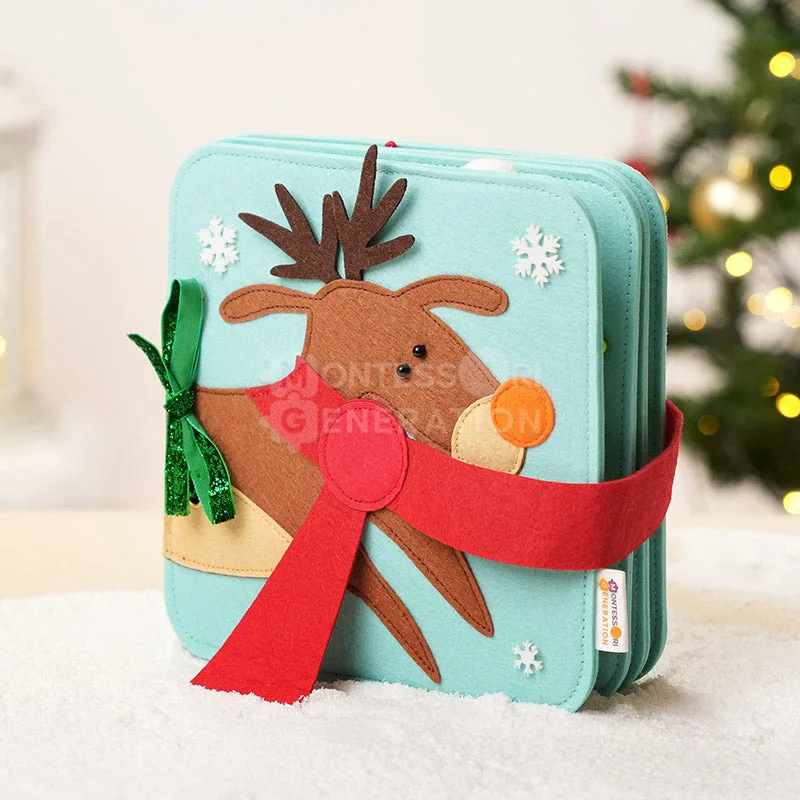
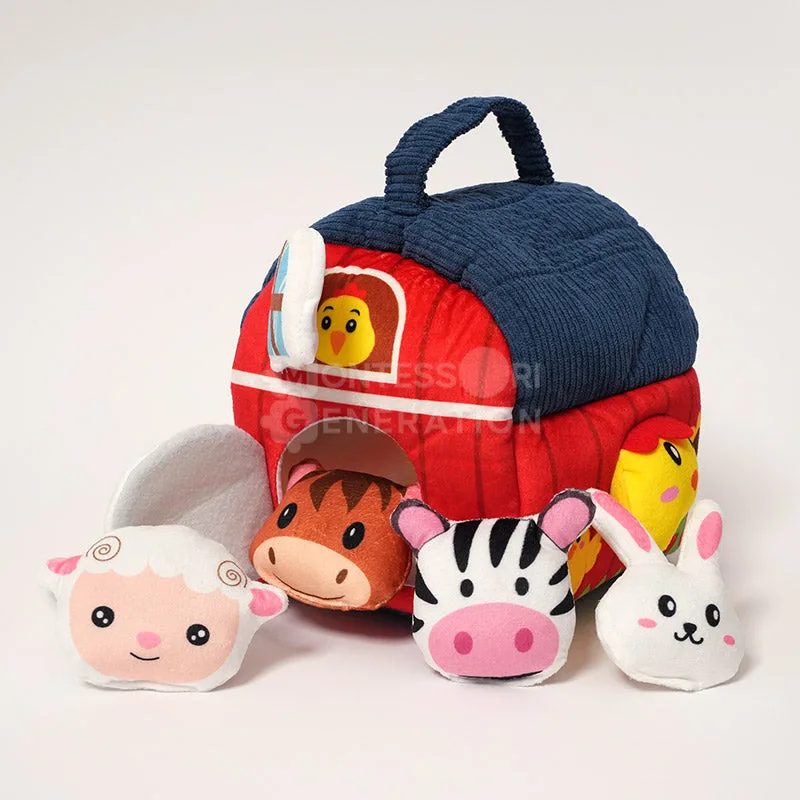
Dirt and skin oils set into fabric over time and can attract pests. Clean each toy according to its own care instructions before it goes into storage. The Montessori Baby Soft Barn is machine-washable, which makes it one of the easier items to refresh. The Montessori Rabbit's Book and Montessori Reindeer Book are spot clean only, so use a barely damp cloth and let them air dry completely.
The common mistake here is washing everything the same way. A felt book that goes through a machine cycle can lose its shape and its bindings. Follow the care line for each item, and when in doubt, spot clean and air dry.
- Check the care instructions on each toy before choosing a cleaning method.
- Spot clean felt books with a damp cloth, never soak them.
- Let everything air dry in a ventilated room, away from direct sun.
Step 2: Dry completely, then wait a day
This is the step most people skip. A toy can feel dry on the surface while the inner padding or binding is still holding moisture. That trapped dampness is what causes musty smells and mildew during long term storage. After cleaning, give fabric toys a full 24 hours in open air before they go into any bag or bin.
If you live in a humid climate, point a fan at the toys or place them near a dehumidifier. Do not use a hot dryer for felt books unless the care label allows it. Heat can shrink or warp soft bindings.
- Lay felt books flat to dry so the pages do not curl.
- Turn plush items occasionally so air reaches all sides.
- If you can still smell moisture, wait another day.
Step 3: Choose breathable storage, not airtight
Cotton drawstring bags, cotton pillowcases, and open or lidded bins lined with cotton are the best homes for fabric toys. They let air move, which prevents trapped humidity. Vacuum-sealed bags and tightly closed plastic totes seem protective, but they trap any remaining moisture and can cause odors or mildew over months.
For soft books, store them flat rather than upright. Standing a felt book on its spine for a year can bend the binding. If you are storing several, stack them with a sheet of acid-free tissue between each one so the pages do not press into each other.
- Use cotton bags or cotton-lined bins for breathability.
- Store felt books flat, not standing on edge.
- Separate toys with tissue or clean cotton cloth to prevent rubbing.
Step 4: Pick a cool, dry, dark spot
Attics get hot enough to degrade fabric and glue. Basements and garages get damp. The best long term storage spot is a closet or shelf inside your living space, away from exterior walls, direct sunlight, and heating vents. Sunlight fades colors and weakens fibers over time.
If you must use a garage or basement, raise the bin off the floor on a shelf and add a moisture absorber nearby. Check it monthly for the first few months to make sure the spot is actually staying dry.
- Avoid attics, damp basements, and anywhere near a water heater.
- Keep stored toys out of direct sun to prevent fading.
- Elevate bins off concrete floors.
Step 5: Label, rotate, and check seasonally
Label each bag or bin with the contents and the age range so you are not opening five bags to find one book. A quick seasonal check, maybe when you swap out holiday items, lets you catch moisture, pests, or a toy that got stored while still damp.
If you are storing toys for a future child, rotate the ones you keep accessible. A toy that never gets air can develop a smell even in a good spot. Opening the bag once a season and letting the fabric breathe for an hour solves most of that.
- Write the toy name and age range on the bag or bin.
- Air out stored fabric toys once a season.
- Check for musty smells, discoloration, or tiny holes from pests.
Your long term fabric toy storage routine
- Clean each toy by its own care label: Machine-wash the Montessori Baby Soft Barn if it needs it; spot clean felt books like the Montessori Rabbit's Book and Montessori Reindeer Book with a barely damp cloth. Checkpoint: no visible dirt or sticky residue before drying.
- Air dry for a full 24 hours: Lay felt books flat and turn plush items so air reaches every side. Use a fan or dehumidifier in humid weather. Checkpoint: no cool or damp feeling when you press the thickest part.
- Store flat in breathable cotton: Use cotton bags or cotton-lined bins. Stack felt books flat with acid-free tissue between them. Keep plush animals in the same bag as their barn or set. Checkpoint: nothing is compressed under a heavy bin.
- Place in a cool, dry, dark spot: Choose an interior closet or shelf. Avoid attics, damp basements, direct sun, and heat vents. Checkpoint: the spot stays dry through a full season.
- Label and check every season: Write the contents and age range on each bag. Open the bags once a season to let fabric breathe and look for moisture or pests. Next step: rotate one stored toy back onto the shelf so it gets air and use.
Fabric toys that store well (and how)
- Montessori Baby Soft Barn: Machine-washable, 100% baby-safe soft plush, with 6 plush animals and 1 plush barn; 7.5" x 6.7" x 6.7". Because it is machine-washable, you can clean it thoroughly before storage instead of spot cleaning. Store the barn and animals together in a cotton bag so small plush pieces do not go missing.
- Montessori Rabbit's Book: Soft felt book with 10 activity pages, spot clean only, 8.3" x 9.3" x 3.1". Spot clean only means no machine washing. Store it flat with tissue between pages so the felt activity pages do not crease or stick together.
- Montessori Reindeer Book: Quiet felt book, spot clean only, 3.1" x 8.7" x 8.5". Its compact size makes it easy to tuck into a cotton bag, but the felt still needs to lie flat. Do not stack heavy bins on top of it.
Storing Montessori soft books and fabric toys long term comes down to a simple rhythm: clean, dry completely, store flat in breathable cotton, and keep them cool and dark. Do that, and the felt books and plush sets your child loved will be ready for the next pair of small hands.