Quick answer
Transfer dried organic pasta to an airtight container, keep it in a cool, dark, dry spot, and use it within its recommended shelf life. For long-term storage, add oxygen absorbers and store in a temperature-stable area. Always check for off smells or pests before cooking.
Why organic pasta needs a little more attention
Organic pasta is made without synthetic pesticides, but that doesn't make it more fragile. The real threats are moisture, heat, light, and pantry pests. Organic whole-grain or flavored varieties may contain natural oils that can turn rancid faster than plain semolina, so proper storage matters even more. If you buy in bulk or during sales, you'll want to protect that investment.
Choosing the right container
Airtight is non-negotiable. Glass jars with rubber gaskets, BPA-free plastic canisters with locking lids, or vacuum-sealed bags all work. Avoid thin plastic bags or open boxes—they let in air and moisture. For long-term storage, consider Mylar bags with oxygen absorbers for a near-zero oxygen environment. Label with the date so you rotate stock.
Where to store it for maximum shelf life
The ideal spot is a cool, dark, dry place—like a lower pantry shelf away from the stove, dishwasher, or fridge. Heat and humidity speed up spoilage. If your kitchen runs warm, a basement or climate-controlled closet works. Avoid storing pasta above the refrigerator or near a window. For extended storage, a root cellar or freezer (in airtight containers) can work, but let frozen pasta come to room temperature before cooking to prevent condensation.
Step-by-step long-term storage
- Step 1: Inspect and prep: Check the pasta for any signs of moisture, clumping, or pests. If it looks fine, proceed. If you bought in bulk, divide into smaller portions for easier handling. Common mistake: skipping inspection and sealing in already-damaged pasta.
- Step 2: Choose your container: Select an airtight container sized to your storage duration. For short-term (under 6 months), a glass jar or plastic canister works. For long-term (6+ months), use Mylar bags with oxygen absorbers or vacuum-sealed bags. Checkpoint: the container should be clean and completely dry.
- Step 3: Fill and seal: Fill the container, leaving minimal headspace. If using a jar, press down gently to remove air pockets. Seal tightly. For Mylar, expel air before sealing or use an oxygen absorber. Common mistake: not sealing tightly enough, allowing air and moisture in.
- Step 4: Label and date: Write the contents and date on the container or a piece of tape. This helps you rotate and use older pasta first. Checkpoint: use within recommended shelf life—typically 1-2 years for dried pasta, less for whole grain.
- Step 5: Store in the right conditions: Place containers in a cool, dark, dry area with stable temperatures between 50-70°F (10-21°C). Avoid areas with temperature swings. Common mistake: storing near heat sources like the oven or in direct sunlight.
- Step 6: Rotate and monitor: Use older pasta first. Check containers every few months for condensation, pests, or off smells. If you spot issues, discard the affected pasta. Checkpoint: if pasta smells musty or looks discolored, it's past its prime.
Giadzy pasta storage notes
- 2-Pack Organic Bucatini Lunghi Pasta: 2-Pack Organic Bucatini Lunghi Pasta comes as a convenient two-pack to help you stock your pantry. Buying a 2-pack means you'll have extra pasta on hand; store one pack in your everyday container and keep the second sealed in a cool, dark spot for later.
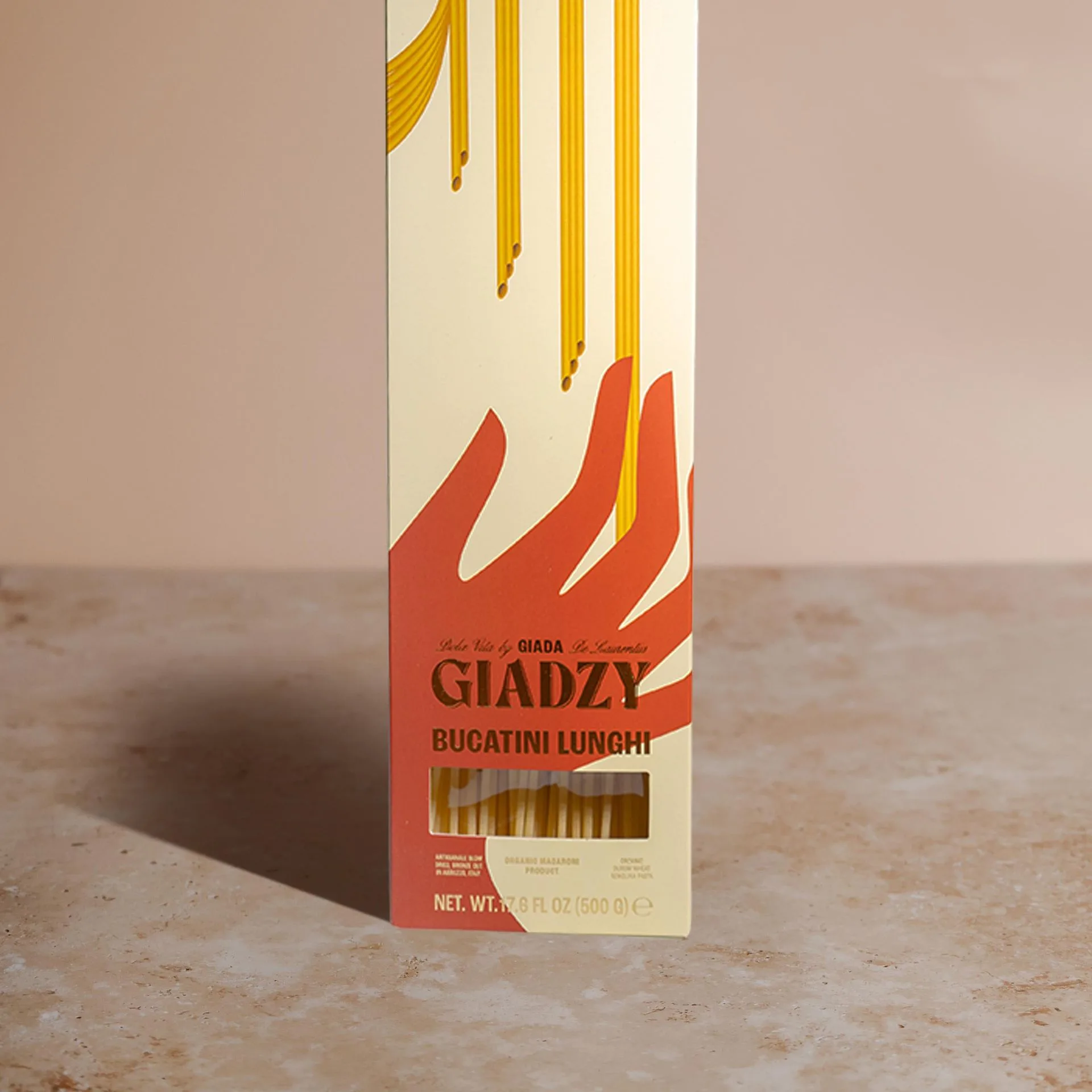
Organic Bucatini Lunghi Pasta
- Organic Manfredi Lunghi Pasta: Organic Manfredi Lunghi Pasta has long, ruffled edges and is super-sized. The ruffled shape can trap moisture if stored improperly, so make sure it's completely dry before sealing and use an airtight container that won't crush the edges.