Quick answer
Store pattern blocks in a shallow, compartmented container with a lid, sorted by shape and color, and keep the activity cards in the same bin. Return blocks after every session rather than leaving them out, and label the container so it goes back on the shelf in one motion. This single habit prevents most lost pieces.
Why pattern blocks go missing in the first place
Pattern blocks are small, flat, and easy to sweep off a table. Because they are used for open-ended building as well as structured math tasks, they tend to migrate: one hexagon ends up in a couch cushion, a handful of triangles land in a pencil case, and the set slowly stops being complete. The problem is rarely the blocks themselves; it is the lack of a defined home. A dedicated container with a consistent return routine solves most of it.
Choose a container that matches how the blocks are used
Shallow is better than deep. A deep bin forces kids to dig, which scatters pieces, while a shallow tray lets them see and grab shapes quickly. Compartments or small removable cups help separate shapes, but avoid tiny sections that make cleanup slow. If your set includes activity cards, pick a container wide enough to hold them flat so they do not get bent or lost.
Set up a sorting system that survives real use
Sorting by shape is more useful than sorting by color for most pattern block tasks, because the shape determines how pieces fit together. If your set has several colors of the same shape, a shape-first sort still works; color becomes a secondary check. Keep a small reference card or photo inside the lid showing the intended layout so anyone can reset the bin correctly.
Step-by-step pattern block storage routine
- 1. Pick a shallow, lidded container: Measure your largest block and choose a tray that holds a single layer with a little room to spare. A lid that snaps or slides closed keeps dust out and pieces in. Checkpoint: if the blocks stack more than two deep, the container is too deep.
- 2. Add simple dividers or cups: Use removable dividers or small cups to separate shapes. Keep the number of compartments low so cleanup does not become a chore. Common mistake: creating so many tiny sections that kids dump everything back in one pile.
- 3. Store activity cards in the same bin: Place cards flat on top of the blocks or in a lid pocket. This keeps the kit self-contained and ready to use. Checkpoint: the bin should hold blocks and cards together without forcing the lid.
- 4. Label the container and its shelf spot: Write the kit name on the lid and mark the shelf location. A label removes guesswork when several kits look similar. Common mistake: labeling only the lid, so the bin and lid get separated.
- 5. Do a two-minute reset after every session: Before the blocks go back on the shelf, count or visually scan for the main shapes and return stray pieces. A quick reset catches losses the same day. Checkpoint: if a shape is missing, check the floor and table edges before the pieces travel further.
- 6. Do a monthly full count: Once a month, empty the bin and compare the pieces against the original count or a photo. Replace or note missing pieces before the next lesson. Common mistake: waiting until a specific activity fails to notice the set is incomplete.
Product facts
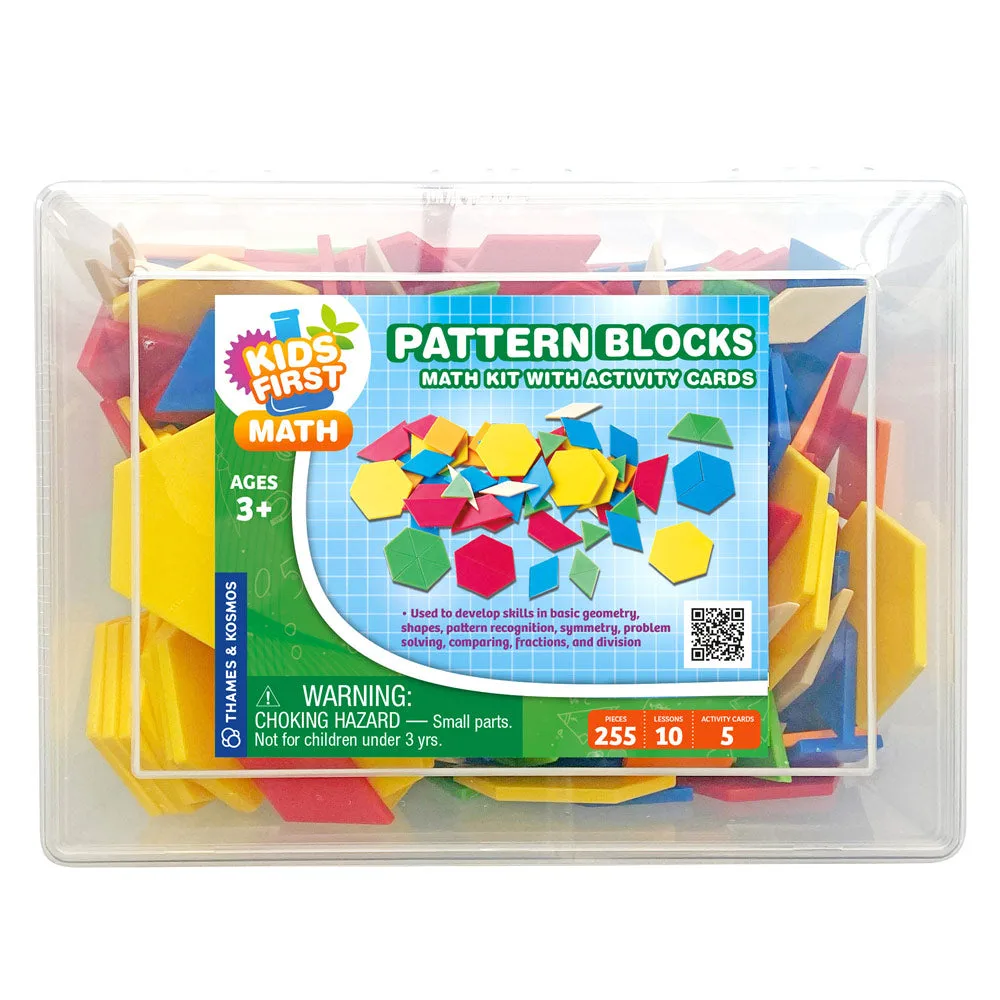
- Kids First Math: Pattern Blocks Math Kit with Activity Cards: The Kids First Math: Pattern Blocks Math Kit with Activity Cards is designed around learning by manipulating physical objects with your own hands, and it includes activity cards. Because the cards are part of the kit, store them with the blocks so a lesson can start without hunting for instructions.