Quick answer
Store perfume oils upright, capped tight, in a cool dark place — a closed drawer or cabinet away from windows, radiators, and bathroom steam. That single habit solves most spoilage, because light, heat, and air are what actually degrade a rollerball oil. If your oil already smells sour, sharp, or like nothing at all, storage can't reverse it; the fix is prevention and replacement.
Why perfume oil goes off in the first place
Perfume oil is a carrier oil holding fragrance molecules, and those molecules are reactive. Ultraviolet light breaks down the top notes first, which is why a citrus or apple opening often fades before the base does. Heat accelerates the same reaction, and repeated temperature swings — a car glovebox in summer, a windowsill in winter — are worse than a steady warm room. Oxygen is the third factor: every time you uncap and roll, air enters the bottle. Alcohol-free oils don't evaporate the way alcohol sprays do, so they hold their concentration longer, but they still oxidize. The practical takeaway is that spoilage is cumulative exposure, not a countdown clock.
The storage setup that actually works
Pick one spot and keep every rollerball there: a bedroom drawer, a closed cabinet, or a lidded box on a shelf that never gets direct sun. Upright matters more than people expect — laying a rollerball on its side lets oil pool against the ball and seal, where it can weep or pick up residue. Keep the cap on between uses and don't leave a bottle open while you decide. If you travel with oils, use a small hard case rather than a soft pouch so the glass isn't pressed against the roller assembly. Avoid the bathroom medicine cabinet despite the convenience: shower steam creates exactly the heat-and-humidity cycling that ages oil fastest.
- Cool and stable beats cold: a refrigerator is unnecessary and condensation on the glass is unhelpful.
- Dark beats tinted: an opaque box or drawer outperforms a clear shelf every time.
- Capped and upright beats convenient: a loose cap is the most common avoidable mistake.
- One location beats scattered: you'll actually notice a bottle that's changing.
Realistic perfume oil shelf life
There's no universal expiry date printed on a rollerball, and anyone quoting one exact number is guessing. In practice, a well-stored alcohol-free oil commonly stays true for several years, while a bottle kept on a sunny shelf can shift noticeably within months. The variables that shorten it most are heat, direct light, and how often the bottle is opened. If you rotate many oils, date the bottom of each bottle with a marker when it arrives — that's the only reliable way to know whether a change in scent is age or storage. A 10 ml rollerball used daily typically empties long before spoilage becomes the issue, which is one quiet advantage of the format.
When to stop troubleshooting and replace
Some changes are recoverable and some aren't. If an oil smells sharper or flatter than you remember, first rule out the boring causes: you may be smelling it on skin that's warmer, drier, or freshly moisturized, or your nose may simply be fatigued from wearing it daily. Give it a week away from that scent, then test on clean skin. If it still reads sour, vinegary, or like a burnt candle rather than a softer version of itself, the molecules have degraded and no storage trick will bring them back. At that point, replace rather than ration. Also stop troubleshooting if the texture has visibly separated or the roller has become gritty — those are physical changes, not scent perception, and they mean the bottle is done. If you're replacing anyway, this is a reasonable moment to move the whole collection to a drawer and start the date-labeling habit.
Diagnose what's wrong with your bottle
- Smells sharp, sour, or vinegary: The fragrance molecules have oxidized, usually after heat or light exposure. Move the bottle to a dark drawer immediately to stop further decline. If the sour note persists on clean skin after a week away, the oil is past saving.
- Smells weak or like nothing: Often this is nose fatigue rather than spoilage, especially if you wear the same oil daily. Test a different scent for a few days, then retry. If a well-stored oil still reads flat after that break, it has faded and needs replacing.
- Roller is gritty, sticky, or the oil has separated: This is a physical change, not a perception issue. Clean the ball with a lint-free cloth and check whether the oil itself looks cloudy or layered. Stop using it. Physical separation isn't fixable with better storage.
- Scent changed only slightly and you're unsure: Compare against your memory on clean, unmoisturized skin at the same time of day, and check the date you wrote on the bottle. A gentle softening over several years is normal; a sudden turn is not.
Bottles built for the storage habits above
- Oil Perfumery Impression of Tom Ford - Ombre Leather 16: 10 ml glass bottle with a stainless steel roller ball; notes include black leather, violet leaf, cardamom, jasmine sambac, moss, and patchouli. A leather-and-moss profile is base-heavy, so it tends to hold its character longer than a bright citrus opening — a good candidate for longer-term storage.
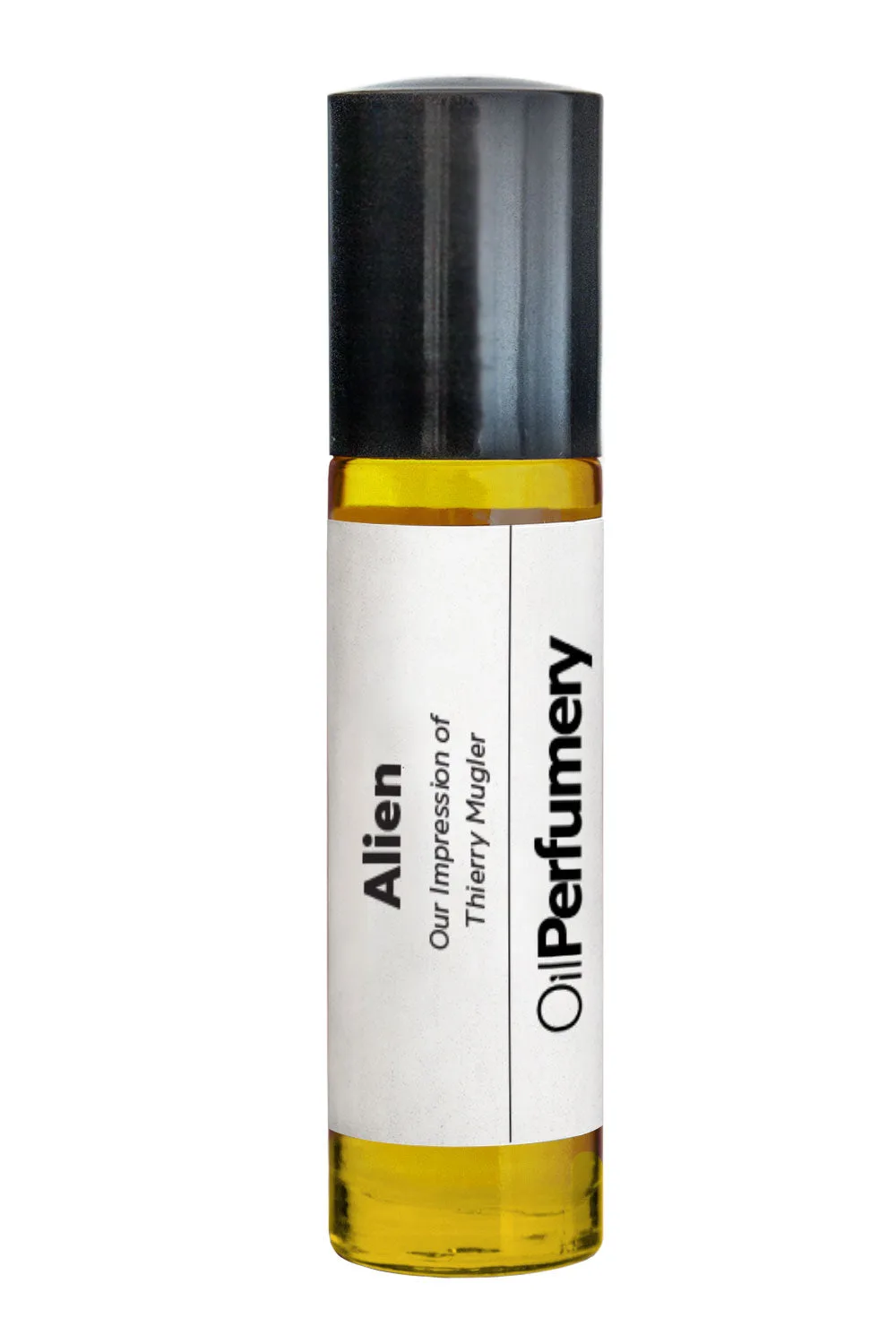
- Oil Perfumery Impression of Thierry Mugler - Alien: 10 ml glass bottle with a stainless steel roller ball; notes are jasmine, woodsy notes, and amber. The amber base is the part most likely to survive a few years of drawer storage, while the jasmine top is what you'd notice fading first if the bottle sat in sunlight.
- Oil Perfumery Impression of Creed - Vetiver Geranium: 10 ml glass bottle with a stainless steel roller ball; top notes include Granny Smith apple, bergamot, and lemon, with geranium, cinnamon, and rose at the heart. Fruit and citrus top notes are the most light-sensitive part of any oil, so this is the bottle to keep furthest from a window.