Quick Answer
Store sealed Pokémon booster boxes flat, off the floor, in a room that stays between 45–55% relative humidity and roughly 65–72°F (18–22°C). Keep them out of attics, garages, and damp basements, and avoid stacking heavy boxes on top of them. If you open a box, sleeve and top-load the cards immediately so they stay flat. For Japanese Pokémon cards storage, keep the same humidity range because foil and backing behave similarly.
Why Booster Boxes Warp Cards in the First Place
Cardboard and paper card stock absorb and release moisture as room humidity changes. When a sealed booster box sits in a humid space, the cards inside can take on moisture and curl toward the foil side. When the air is too dry, they can cup the other way. The box itself also softens, so the packs inside are no longer held flat.
Temperature swings matter almost as much as humidity. A box that warms up during the day and cools at night goes through repeated expansion and contraction. Over months, that cycle is what turns a flat stack into a wavy one. Stable conditions beat perfect conditions every time.
Pick the Right Room Before You Pick a Container
A climate-controlled living space is almost always safer than a garage, attic, or unfinished basement. Those spaces swing hard with the seasons, and a single damp summer can affect a sealed box. A closet or interior shelf in a main room stays closer to the middle of the safe range.
If you live in a very humid climate, a small dehumidifier or a few silica gel packets in the storage bin can help. In a very dry climate, avoid placing boxes directly next to a heater or air vent.
Use the Right Container Without Trapping Moisture
A rigid plastic storage bin with a gasketed lid is a good default. It blocks dust, pests, and sudden humidity spikes. Avoid vacuum-sealing booster boxes or wrapping them tightly in plastic film. If any moisture is already inside, sealed plastic traps it against the cardboard.
For individual cards pulled from a box, penny sleeves plus top loaders or rigid card savers keep them flat. Store those in a binder or card box in the same room as the sealed product, not in a separate damp space.
Stack and Position Boxes to Avoid Pressure Warping
Lay booster boxes flat rather than standing them on a long edge. A box standing on edge puts pressure on one side of the packs and can bow the cards inside over time. If you must stack, keep the stack low and put the heaviest boxes at the bottom.
Never place a booster box under heavier items like books, tools, or other boxes. Even a few pounds of steady pressure can leave a curve in the packs and the cards inside.
Step-by-Step Booster Box Storage Process
- 1. Measure humidity and temperature first: Place a cheap digital hygrometer in the room where you plan to store boxes. Aim for 45–55% relative humidity and 65–72°F (18–22°C). Check it at the same time each day for a week before committing the space. Checkpoint: if readings swing more than 10% in a day, choose a different room.
- 2. Choose a rigid, breathable storage bin: Use a gasketed plastic bin or a sturdy cardboard storage box that fits the booster box with a little room to spare. Do not vacuum-seal or shrink-wrap the box. Add a small silica gel packet in humid climates, but keep it out of direct contact with the cardboard. Common mistake: sealing a box in plastic film traps moisture and speeds up warping.
- 3. Place the box flat, off the floor, and away from walls: Set the booster box flat on a shelf at least a few inches off the floor and a few inches from exterior walls. Floors and outside walls are the first places where dampness shows up. Checkpoint: if the shelf feels cool or damp to the touch, move the box.
- 4. Stack low and never load weight on top: If you stack multiple boxes, keep the stack to two or three boxes high and put heavier boxes on the bottom. Do not put books, tools, or display items on top of a booster box. Pressure is one of the most common causes of curved packs. Common mistake: storing boxes under a bed or in a closet where other items get piled on top.
- 5. Open and protect cards immediately: When you open a booster box, sleeve and top-load any cards you want to keep flat, especially foil cards. Store those in the same climate-controlled room as your sealed product. For Japanese Pokémon cards storage, the same sleeve-and-top-loader method works. Checkpoint: if a card already shows a slight curve, place it flat under a light, even weight in a rigid holder for a few days and recheck.
- 6. Recheck seasonally and after weather events: Look at your hygrometer and inspect the boxes at the start of each season. After heavy rain, a heat wave, or a power outage that affects climate control, check the storage area for dampness or condensation. Next step: if you find moisture, move the boxes to a dry room and let them adjust slowly before sealing them back in a bin.
Product Notes for Your Collection
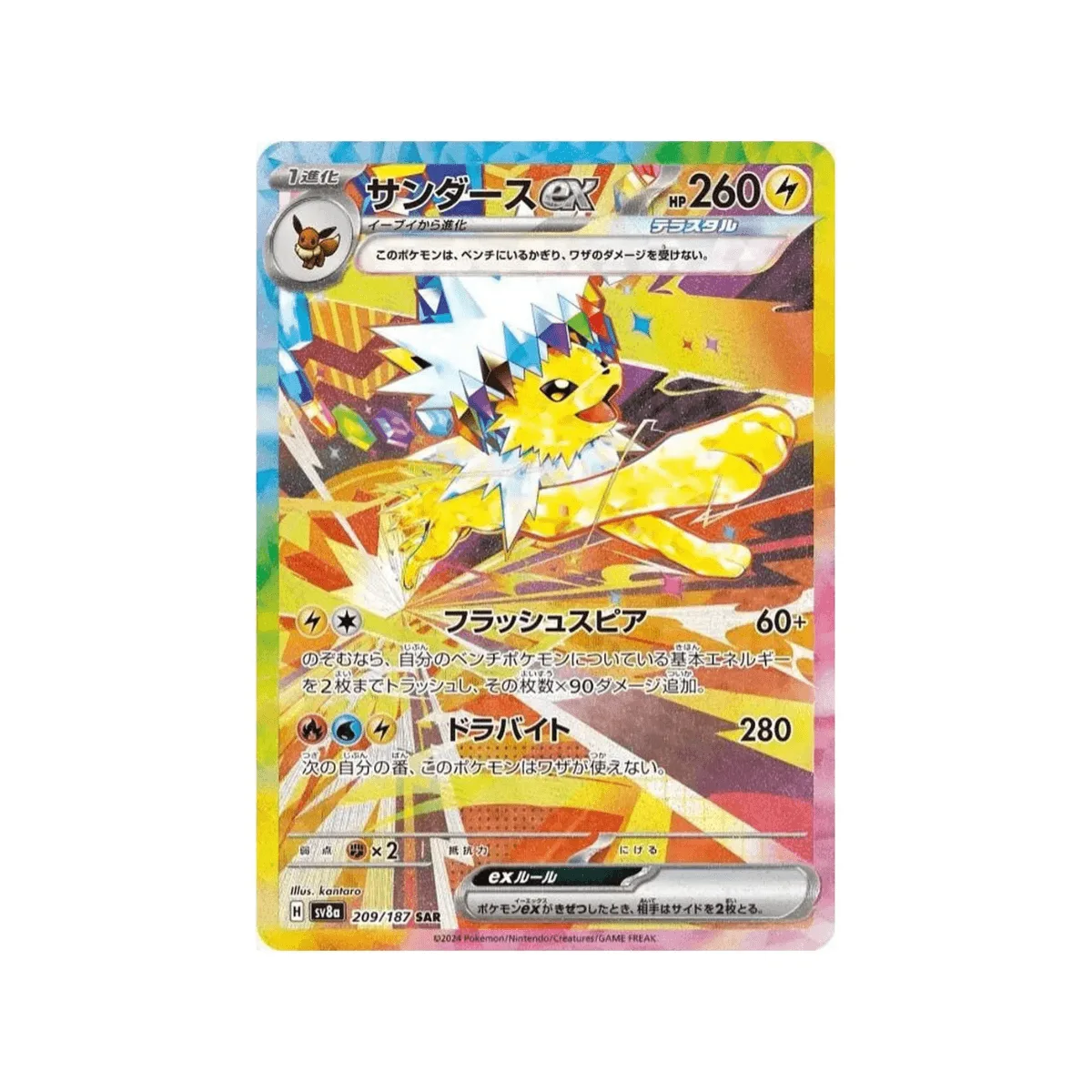
- Jolteon ex - 209/187 - SV8a: Terastal Fest ex Japanese Pokémon Card: Jolteon ex - 209/187 is a Japanese Pokémon card from the SV8a: Terastal Fest ex expansion, with a Terastal-inspired design. Japanese Pokémon cards storage follows the same humidity and flat-stacking rules as English cards, so a single high-value pull like this belongs in a sleeve and top loader right after opening.