Quick answer
Use clear, labeled bins for each loose parts category, keep them on a mobile storage cart, and rotate only one or two bins at a time. Run a quick piece count when you swap bins, and store the cart in a dry, covered spot. This keeps small parts visible, accounted for, and ready to use.
Set up a labeled bin system that matches how children sort
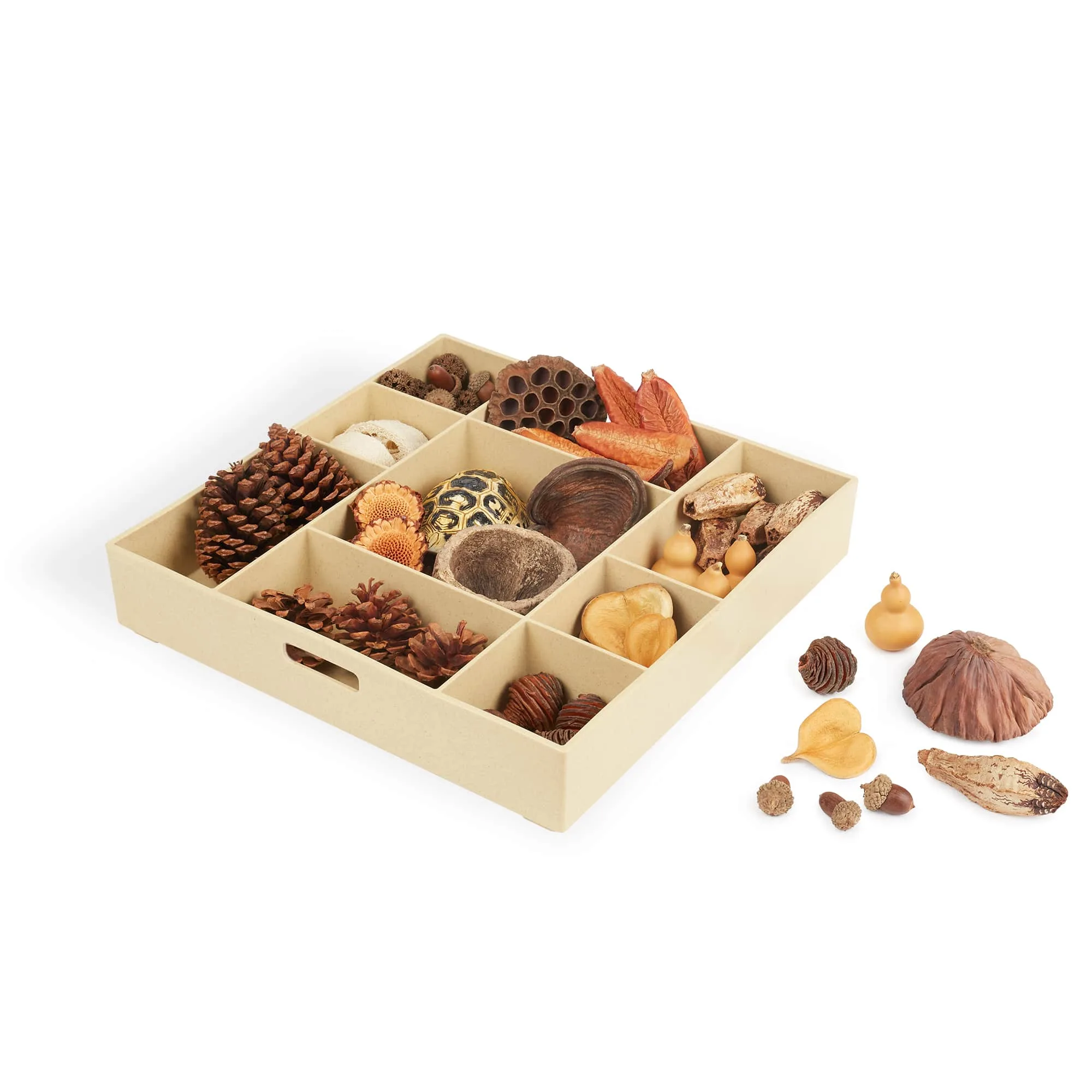
Start by sorting loose parts into categories children already notice: shape, texture, color, or material. Clear bins let you see what is inside without opening them, which makes a missing piece obvious at a glance. Label each bin with a word and a simple icon or photo so pre-readers can return items independently. For a kit like the Nature's Geometry Loose Parts STEM Kit, which includes authentic natural materials, group by shape family or texture rather than by exact item so children can still explore combinations without you policing every piece.
Choose a storage cart that moves with the activity
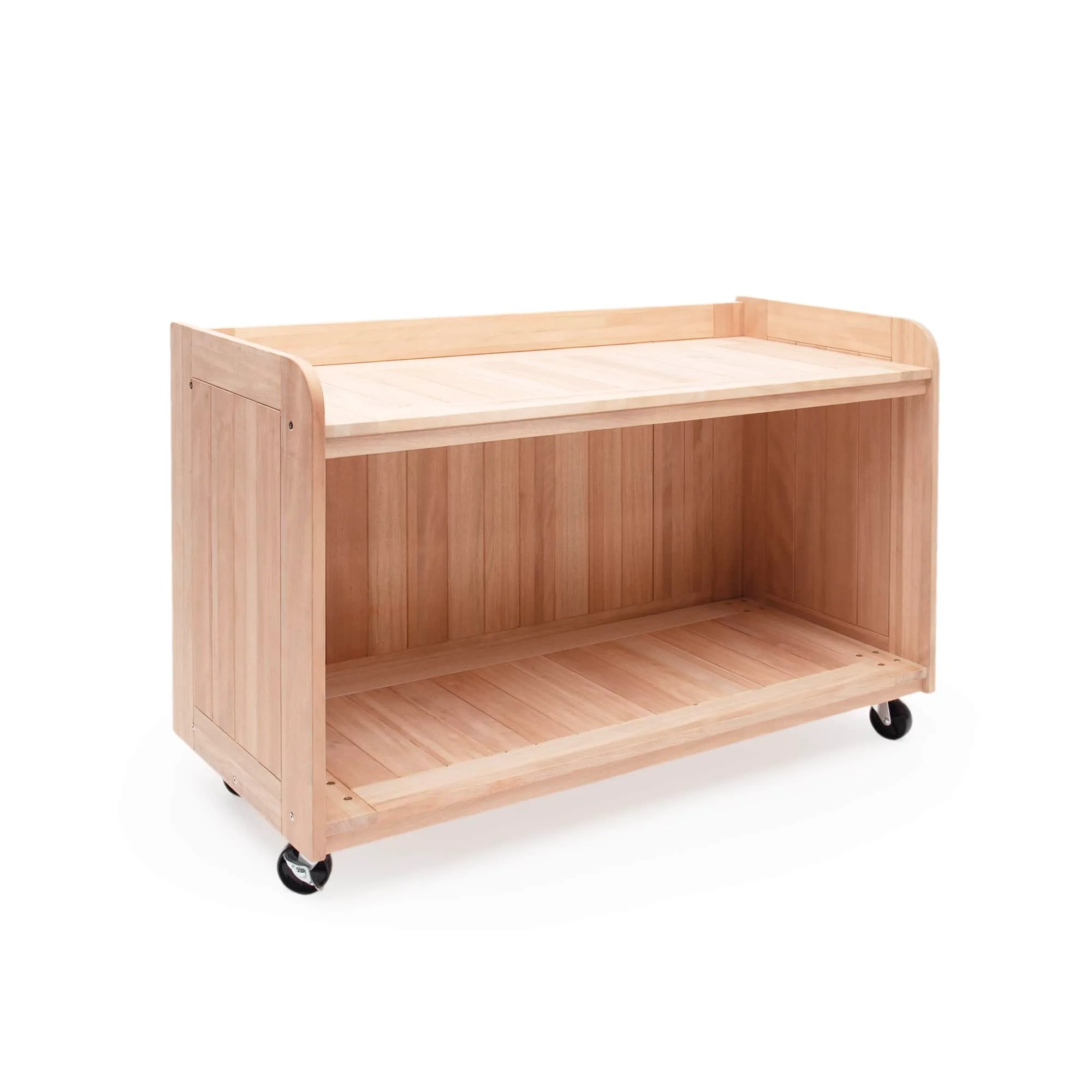
A stationary shelf forces you to carry bins back and forth, which is when pieces get dropped. A mobile cart keeps the whole collection together and lets you roll it to the block area, the light table, or outside. If you already use large outdoor blocks, the Outdoor Hollow Blocks Storage Cart is designed for that job: it holds a 25-piece block set, has 4-inch locking swivel casters, and is made of eucalyptus wood. Even if you use it for smaller loose parts instead of blocks, the locking casters and covered storage principle apply. Check that your cart fits through doorways and can be parked in a dry, covered location, because damp storage ruins natural materials.
Rotate in small batches and count on the way in and out
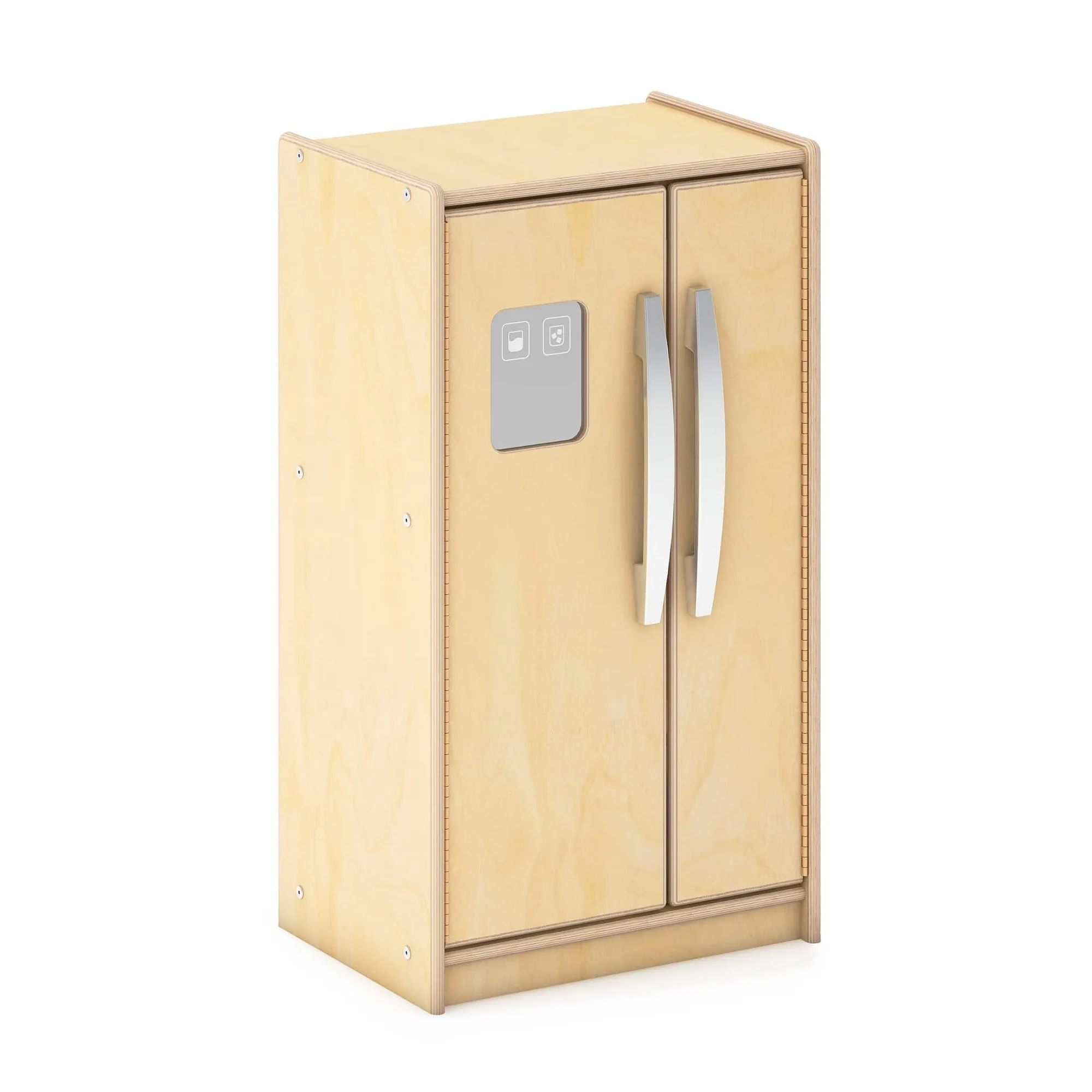
Rotating everything at once overwhelms children and makes missing pieces impossible to trace. Pull one or two bins per week, and leave the rest stored. Before a bin goes out, snap a photo of the full contents on your phone. When it comes back, count the pieces against the photo. This two-minute checkpoint catches losses while you still remember where the bin was used. If a piece is missing, check the floor near the play area and inside any nearby dramatic play furniture, such as a play refrigerator, before marking it lost.
Use labels that survive real classroom use
Paper labels peel off within weeks. Use laminated cards, write directly on the bin with a paint pen, or use adhesive label pockets that let you swap cards. Include the kit name and the number of pieces so anyone helping tidy up knows the target count. For mixed kits, label by the largest category first, then add a sub-label for smaller groups. Avoid labeling by color alone if you have colorblind children; pair color with a shape or texture symbol.
Do a monthly audit and replace what is missing
Once a month, empty every bin onto a tray and count against your photos. This is also the time to wipe down bins and check natural materials for cracks or splinters. If a piece is broken, remove it rather than leaving it in the bin, because damaged edges can injure small hands. Keep a small reserve of common pieces, like smooth stones or wooden discs, so you can replace losses without buying a whole new kit. If a kit is consistently losing pieces, simplify it by storing half the pieces and rotating the rest less often.
Step-by-step storage and rotation routine
- Sort into clear, labeled bins: Group by shape, texture, or material, and label each bin with a word plus a simple icon. Clear bins make missing pieces visible without opening every lid. Checkpoint: can a child return a piece to the right bin without asking an adult?
- Load bins onto a mobile cart: Use a cart with locking casters so it stays put during play and rolls away for storage. Keep the cart in a dry, covered spot to protect wood and natural materials. Checkpoint: does the cart fit through your doorways and park out of damp areas?
- Rotate one or two bins at a time: Pull only a small batch each week. Photograph the contents before the bin goes out, and count pieces back in when it returns. This keeps the collection fresh without overwhelming children. Checkpoint: if a piece is missing, search the floor and nearby play furniture before marking it lost.
- Audit monthly and replace broken pieces: Empty each bin, count against your photos, and wipe down bins. Remove cracked or splintered natural pieces immediately, and keep a small reserve of common shapes for replacements. Checkpoint: if one kit keeps losing pieces, store half the pieces and rotate the rest less often.
Product facts that support this system
- Nature's Geometry Loose Parts STEM Kit: The Nature's Geometry Loose Parts STEM Kit is designed for children 3 and up to investigate shapes, textures, and patterns using authentic natural materials. Because the pieces are natural and varied, sorting by texture or shape family makes the kit easier to store and rotate than sorting by exact item.
- Outdoor Hollow Blocks Storage Cart: The Outdoor Hollow Blocks Storage Cart holds a 25-piece block set, has 4-inch locking swivel casters, and is made of eucalyptus wood; it should be stored in a dry, covered location. Locking casters keep the cart stable during play, and the dry-storage requirement protects wooden parts and natural materials from moisture damage.
- EdQ Kitchen Refrigerator: The EdQ Kitchen Refrigerator includes three shelves inside a spacious cabinet, a mirrored temperature screen, and a built-in ice maker. Small loose parts can roll under or behind dramatic play furniture, so checking inside and around the refrigerator is a practical step when a piece goes missing.