Quick answer
Store stuffed animals upright or lightly supported so nothing presses on them from above. Use open shelving or loosely packed bins instead of vacuum bags, and rotate or fluff plush toys every few weeks. This prevents permanent creases and keeps stuffing distributed evenly.
Why compression is the main enemy of plush shape
Plush toys are filled with loose fiber or foam that compresses under steady weight. A heavy stack, a tight vacuum bag, or a crowded bin flattens the stuffing and can leave hard creases in the fabric. Once the fiber mats down, it rarely springs back on its own.
The fix is not complicated: give each plush enough room to hold its own silhouette. If you can see the toy pressing against a wall or another toy, it is too tight. This matters for small plush like the Frieren: Beyond Journey's End Fuwakororin Plush Blind Box, which is only about 3.54 inches tall and can easily get lost or squashed in a large bin.
Pick the right container for the job
Open shelves work best for display pieces you want to keep fluffy. For storage, use breathable cotton bags, cardboard boxes, or plastic bins with ventilation holes. Avoid airtight vacuum bags for anything you plan to keep long term.
If you use a bin, fill it loosely and place a sheet of acid-free tissue between layers. Do not stack more than two layers of plush. For a small keychain like the Chainsaw Man - Reze Arc Okkochi Plush Keychain [Reze], which is about 4.33 inches tall, a small divided box or a hanging organizer keeps it from tangling with heavier items.
Arrange by weight and size, not by color
Heavier plush should go on the bottom of a shelf or bin, with lighter items on top. This prevents the heavier toys from crushing the smaller ones. If you are organizing a shelf, place larger dolls and playsets at the back and smaller plush in front.
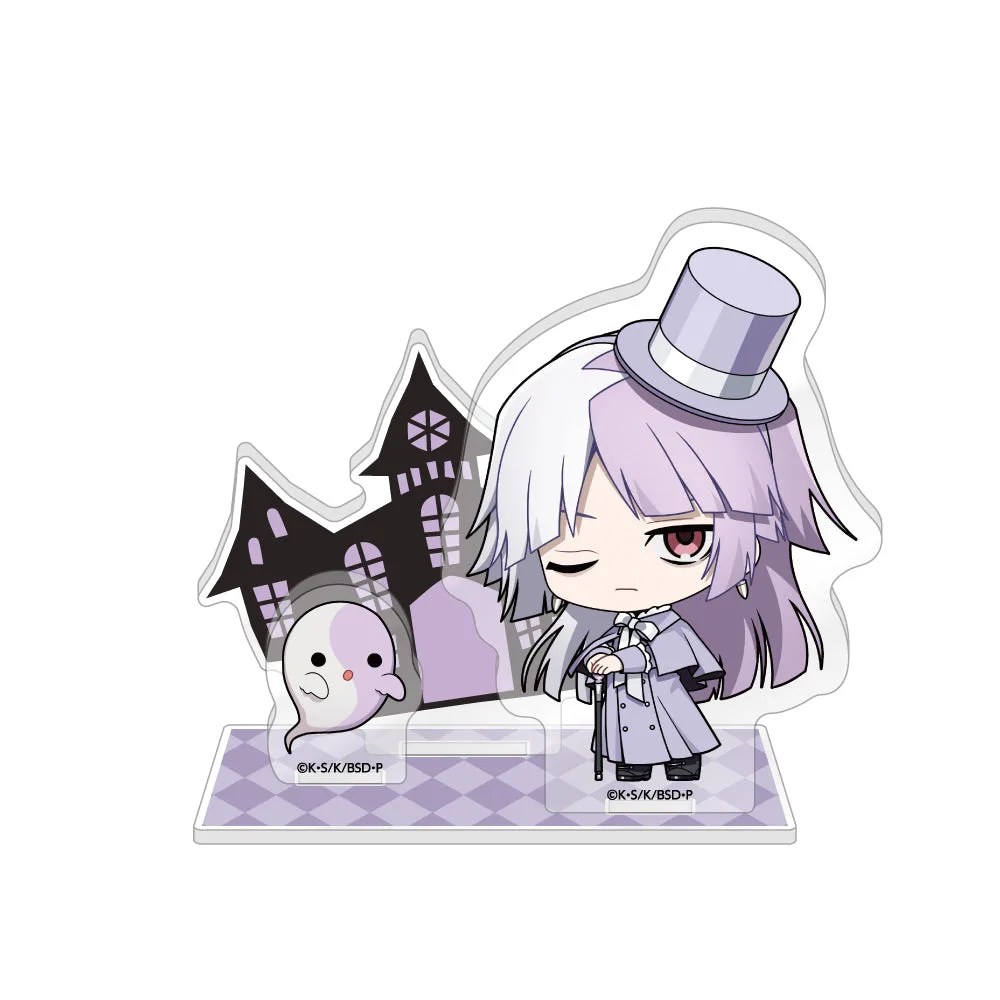
For a mixed collection, group by material and weight. A felt-and-boa keychain is lighter than a dense stuffed animal, so it can sit on a higher shelf or hang from a peg. Acrylic dioramas like the Bungo Stray Dogs (Ghost House ver.) Mini Acrylic Diorama [Sigma] are rigid and should be stored separately from soft plush to avoid scratches.
Control light, dust, and humidity
Direct sunlight fades fabric and can make fibers brittle. Keep shelves out of direct sun or use a curtain. Dust settles into plush and dulls the surface, so a quick pass with a soft brush or a low-vacuum hose every two weeks helps.
Humidity above 60% encourages mildew in stored plush. If you live in a damp climate, add a silica gel packet to closed bins and check it monthly. Never store plush in a basement or attic without climate control.
Rotate and refluff on a schedule
Even with good storage, plush settles over time. Every four to six weeks, take items out, gently massage the stuffing back into corners, and let them sit in open air for a few hours. This simple habit is the core of how to keep plushies fluffy without washing them constantly.
For items on display, rotate their position so the same side is not always facing the light. This also prevents dust from concentrating in one area. If a plush feels flat, a short tumble in a pillowcase on air-only (no heat) can help, but check seams first.
Step-by-step storage routine
- Sort by size and weight: Separate large, heavy plush from small, light ones. Place heavier items on the bottom of bins or shelves. Checkpoint: if a small plush can slide under a larger one, the layering is wrong.
- Choose breathable containers: Use open shelves, cotton bags, or ventilated bins. Avoid vacuum-sealed bags for long-term storage. Mistake to avoid: sealing plush in airtight plastic traps moisture and flattens fibers.
- Add support where needed: For plush that tends to slump, place acid-free tissue or a small pillow inside the bin to hold the shape. Checkpoint: the plush should look the same coming out as it did going in.
- Keep out of direct sun and damp: Store in a cool, dry spot away from windows. Use silica gel in closed bins if humidity is high. Mistake to avoid: attics and basements swing in temperature and humidity.
- Schedule a monthly fluff: Every four to six weeks, take plush out, massage the stuffing, and let them air for a few hours. Next step: set a phone reminder so rotation becomes automatic.
Product facts that affect storage
- Frieren: Beyond Journey's End Fuwakororin Plush Blind Box: Approx. 3.54 in tall; polyester; blind box lineup includes Frieren, Fern, Stark, Himmel, Heiter, and Eisen. Small polyester plush compress easily, so store them in a small, loosely packed container or on a shelf where they are not buried under larger items.
- Chainsaw Man - Reze Arc Okkochi Plush Keychain [Reze]: Approximately 4.33 inches tall; made from felt, boa, and nylex materials; keychain attachment. The mixed materials can snag or mat if stored in a tight pile. Hang it or keep it in a separate compartment to protect the texture.
- Bungo Stray Dogs (Ghost House ver.) Mini Acrylic Diorama [Sigma]: Made from durable acrylic; measures approximately 4.72 inches in length and 4.72 inches in width. Rigid acrylic can scratch soft plush and vice versa. Store this diorama on a flat surface away from plush toys to avoid pressure marks and abrasion.

![Chainsaw Man - Reze Arc Okkochi Plush Keychain [Reze]](https://xilands.com/api/media/sync/54/548de0af50c2aca9ad78da2c580f5c36880fcd4756217fb66c31df0ddbf31923.webp)


