Quick answer
Store wooden boards and utensils upright with airflow on all sides, away from direct heat and standing water. Oil them monthly with food-safe mineral oil to keep the wood from drying and cracking. Control kitchen humidity by avoiding steam traps and wiping wood dry immediately after washing.
Why wood cracks and what storage has to do with it
Wood moves as it gains or loses moisture. When a board or spoon dries unevenly, the surface shrinks faster than the core, and cracks open along the grain. Storage is often the hidden cause: a board left flat on a counter traps moisture underneath, while one propped against a hot oven dries too fast on one side. The fix is not complicated, but it has to be consistent.
Kitchen wood care is mostly about slowing moisture changes. A stable environment matters more than any single product. That means no soaking, no dishwasher, and no long steamy spells near the stove. If you live in a dry climate, add a small humidifier nearby or keep a bowl of water in the room. If you live in a humid climate, run the exhaust fan when cooking and give wood more airflow.
Choose the right spot before you oil or stack
Before you oil or stack anything, find a storage spot with three qualities: air can move around the wood, the temperature stays fairly even, and water cannot pool. A countertop near the sink is usually the worst place because splashes and damp sponges keep the underside wet. A shelf above the dishwasher is also risky because steam rises.
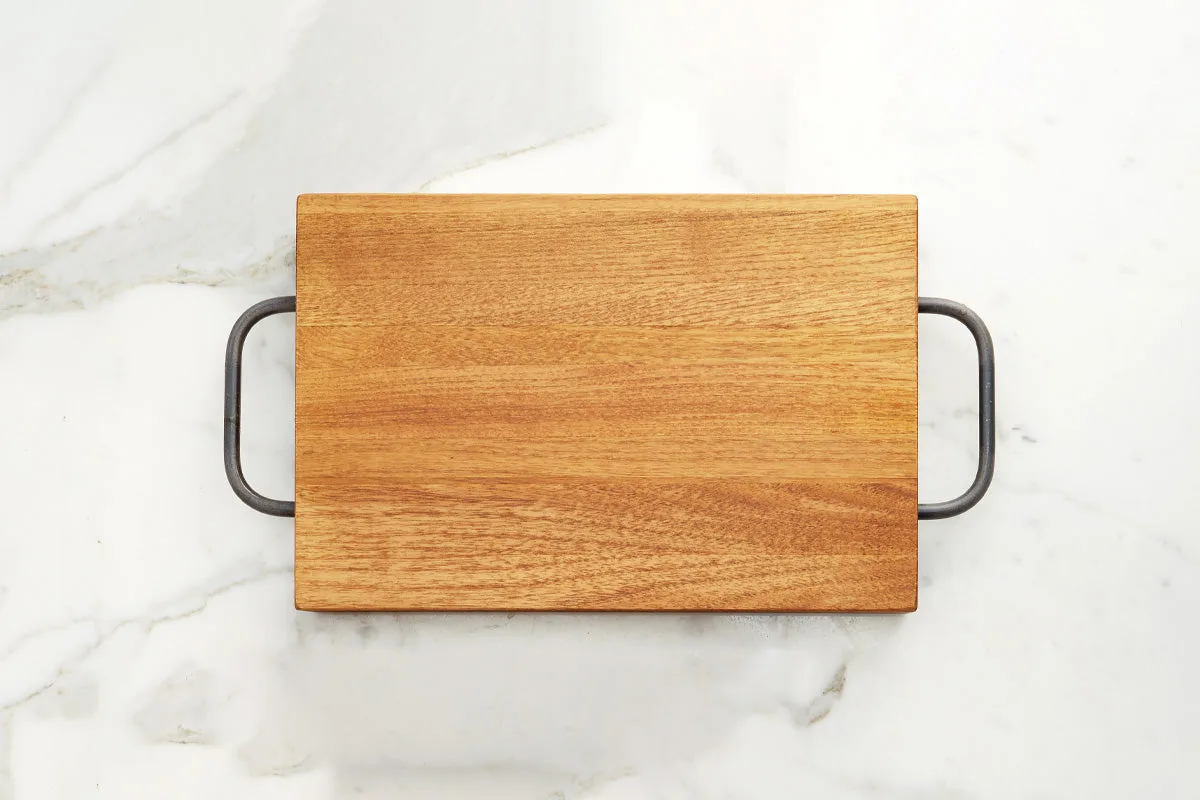
Good options include a wall-mounted rack, a slotted upright holder, or a cabinet shelf with a wire rack insert. If you must stack boards, put a folded towel or cork trivet between them so air can pass. Never store wood in a closed plastic bag or a sealed container unless it is completely dry and you are storing it for months, not days.
Step-by-step storage routine to prevent cracks
- Wash and dry immediately: Hand wash with mild soap and warm water, then dry with a towel within two minutes. Do not soak. Common mistake: leaving a board to air-dry flat on the counter, which lets water sit on the surface and under the board. Checkpoint: the wood should feel dry to the touch before it goes anywhere near storage.
- Oil monthly with food-safe mineral oil: Apply a thin coat of food-safe mineral oil with a lint-free cloth. Let it soak in for 15–20 minutes, then wipe off the excess. For charred or naturally oiled pieces, re-oil when the surface looks pale or feels dry. Common mistake: using olive oil or vegetable oil, which can turn rancid and attract dust. Checkpoint: if the wood absorbs the oil quickly and still looks dry, apply a second thin coat.
- Store upright with airflow: Stand boards on edge in a slotted rack or lean them against a wall with the open side facing out. For utensils, use a crock with the handles down and heads up, or a drawer organizer that keeps them separated. Common mistake: stacking boards flat on top of each other, which traps moisture between them. Checkpoint: slide your hand behind the board. You should feel air, not a damp surface.
- Control kitchen humidity: Run the exhaust fan when boiling or frying. Keep wood at least three feet from the stove, oven, and dishwasher. In dry months, a small humidifier nearby helps; in humid months, a dehumidifier or open window does the same. Common mistake: storing wood directly above the dishwasher or beside the kettle, where steam collects. Checkpoint: after cooking, touch the wood. If it feels damp or warm, move it to a drier spot.
- Deep-condition before long storage: If you plan to store a board or wooden pan for more than a month, clean it, oil it generously, wrap it in a cotton cloth or paper, and place it in a breathable cotton bag. Do not seal it in plastic. Common mistake: storing wood in a basement or garage where humidity swings widely. Checkpoint: label the wrap with the date so you can re-oil every six months.
Wood care in practice: a product example
- SERAX Pure - Pan wood L: SERAX Pure - Pan wood L is made from charred ash wood and coated with natural oil. It has pure, simple shapes and is designed by Pascale Naessens. Dimensions: H2.5cm x W34cm x L48.6cm. Because this pan is charred and oiled, it needs the same airflow and re-oiling routine as other wooden kitchenware. Its long, flat shape means it can warp if stored flat on a damp surface, so stand it upright or lean it with the open side facing out.