Quick Answer
To season a wooden cutting board, clean and dry it, then apply a food-safe mineral oil or board cream, let it absorb, and buff off the excess. Repeat monthly or when the wood looks dry.
Why Seasoning Matters
Seasoning a wooden cutting board isn't just about looks—it creates a protective barrier that keeps moisture out, prevents cracking, and reduces odors. Wood is naturally porous, and without a protective layer, it can absorb juices from food, leading to stains and bacteria growth.
A well-seasoned board also feels smoother and is easier to clean. The oil fills the wood's pores, creating a surface that resists water and makes it less likely to warp or split over time.
Oil vs. Wax: What's the Difference?
Mineral oil is the most common choice for seasoning because it's food-safe, odorless, and doesn't go rancid. It penetrates deep into the wood to provide lasting moisture.
Beeswax or a board cream (a blend of oil and wax) adds a surface-level barrier that helps repel water and gives a nice sheen. Many people use oil for the initial soak and then a wax blend for a finishing touch.
Avoid vegetable or olive oils—they can turn rancid and leave a sticky residue that attracts dirt.
How Often Should You Season?
The frequency depends on how often you use your board. A good rule of thumb is to season once a month for regular use. If the board looks dull, feels dry, or water doesn't bead on the surface, it's time to re-season.
For boards used daily, you might need to oil every two weeks. For occasional use, every two to three months is usually enough.
Step-by-Step Seasoning Process
- Clean and Dry the Board: Wash the board with mild soap and warm water. Rinse thoroughly and dry with a clean towel. Let it air-dry completely before oiling—any moisture trapped under the oil can cause mold. Wait at least 1-2 hours for the board to dry fully.
- Apply a Generous Amount of Food-Safe Oil: Pour a small amount of mineral oil or board cream onto the surface. Use a clean cloth or paper towel to spread it evenly, covering all sides, edges, and the handle (if wood). Let it soak in for at least 20 minutes. Don't forget the end grain—it absorbs the most oil.
- Let It Absorb and Reapply if Needed: After 20 minutes, check the surface. If the wood looks dry or the oil has been fully absorbed, apply another coat. Repeat until the board looks saturated. If the oil pools on the surface, you've applied enough.
- Buff Off Excess Oil: After the final coat has absorbed (about 30-60 minutes), use a clean, dry cloth to buff the surface. This removes any sticky residue and leaves a smooth, satin finish. Don't skip buffing—it prevents a tacky feel.
- Let It Cure Before Use: Allow the board to rest for at least 4-6 hours, or overnight if possible, before using it. This lets the oil fully set and ensures a food-safe surface. If you use it too soon, the oil may transfer to food.
A Cutting Board Worth Caring For
-
Farmhouse Cutting Board, Small: This farmhouse cutting board is hand-crafted from oak wood and finished with organic oil, with sturdy wrought iron handles. The organic oil finish provides initial protection, but regular seasoning will keep the oak wood hydrated and prevent the handles from loosening over time.
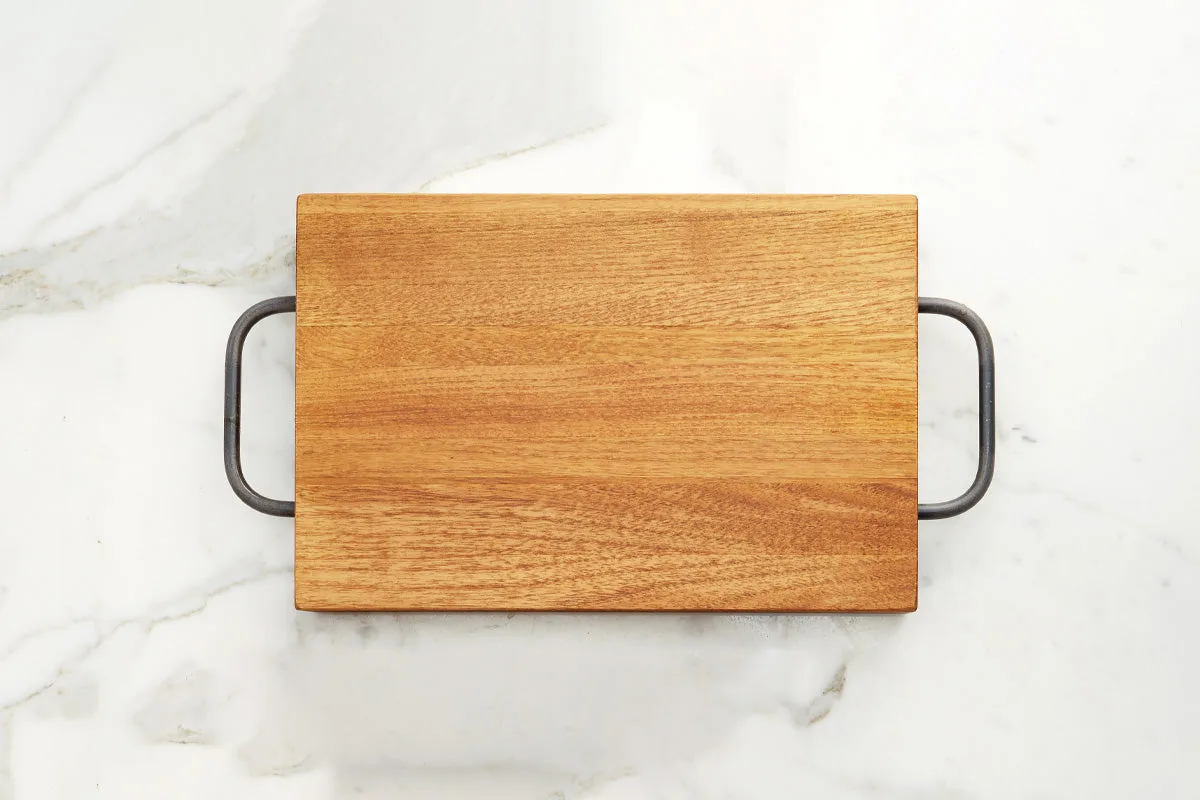
Farmhouse Cutting Board, Small