Quick answer
Start with a soft, stretchy knit beanie that fits snugly without being tight. Then, coordinate the color or print with your child's outfit and adjust the hat's position to suit their head shape and the weather.
Why fabric and fit matter first
Before you think about style, make sure the beanie is comfortable. Babies and toddlers have sensitive skin, so a hat made from organic cotton is a smart choice—it's breathable and gentle. The beanie should also have a bit of stretch (like the 5% elastane in many knit beanies) so it stays put without leaving marks. A hat that's too loose can slip over the eyes, and one that's too tight can cause irritation.
How to style a knit beanie in 4 steps
- Choose the right size and fit: Measure your child's head circumference and compare it to the beanie's size chart. The hat should cover the ears and sit just above the eyebrows. A common mistake: don't buy a size up for 'room to grow' unless the hat has stretch—if it's 100% cotton with no elastane, a too-large hat will sag and block vision. Check the fabric composition: stretchy beanies (with elastane) forgive sizing errors; rigid cotton beanies need a precise fit.
- Coordinate with the outfit, not match it: Pick a beanie in a neutral tone (like the soft base of the Pine Forest Friends print) to pair with bold patterns, or choose a beanie that has a print that complements the outfit's main color. For example, the Bumblebees print works well with earthy tones. Common mistake: matching the hat exactly to the outfit can look too busy—aim for coordinated, not identical. Let the beanie either blend in or stand out; both work as long as the hat doesn't clash.
- Adjust the beanie position for function and style: For warmth, pull the beanie down to cover the ears completely. For a casual look, let the top knot or pom pom sit to one side or back. On a windy day, ensure the brim stays low on the forehead. Common mistake: pulling the hat too far back leaves the forehead and ears exposed, reducing warmth. Test the hat's position by checking that ears are covered in cold weather.
- Secure the hat for active toddlers: If your toddler tends to remove their hat, choose a knot beanie that ties under the chin, or use a hat with a snug stretch fit. Alternatively, layer the beanie under a hooded jacket. Common mistake: relying solely on a loose beanie to stay on—toddlers will pull it off, so choose a design that stays put naturally. A stretchy organic cotton beanie often stays on better than a non-stretch one because it conforms to the head.
Beanie options to consider
-
Organic Cotton Knot Beanie - Pine Forest Friends: The Organic Cotton Knot Beanie - Pine Forest Friends is made from 95% organic cotton and 5% elastane, offering a gentle stretch. This combination provides a snug yet comfortable fit that stays in place during active play, and the soft organic cotton is kind to delicate skin.
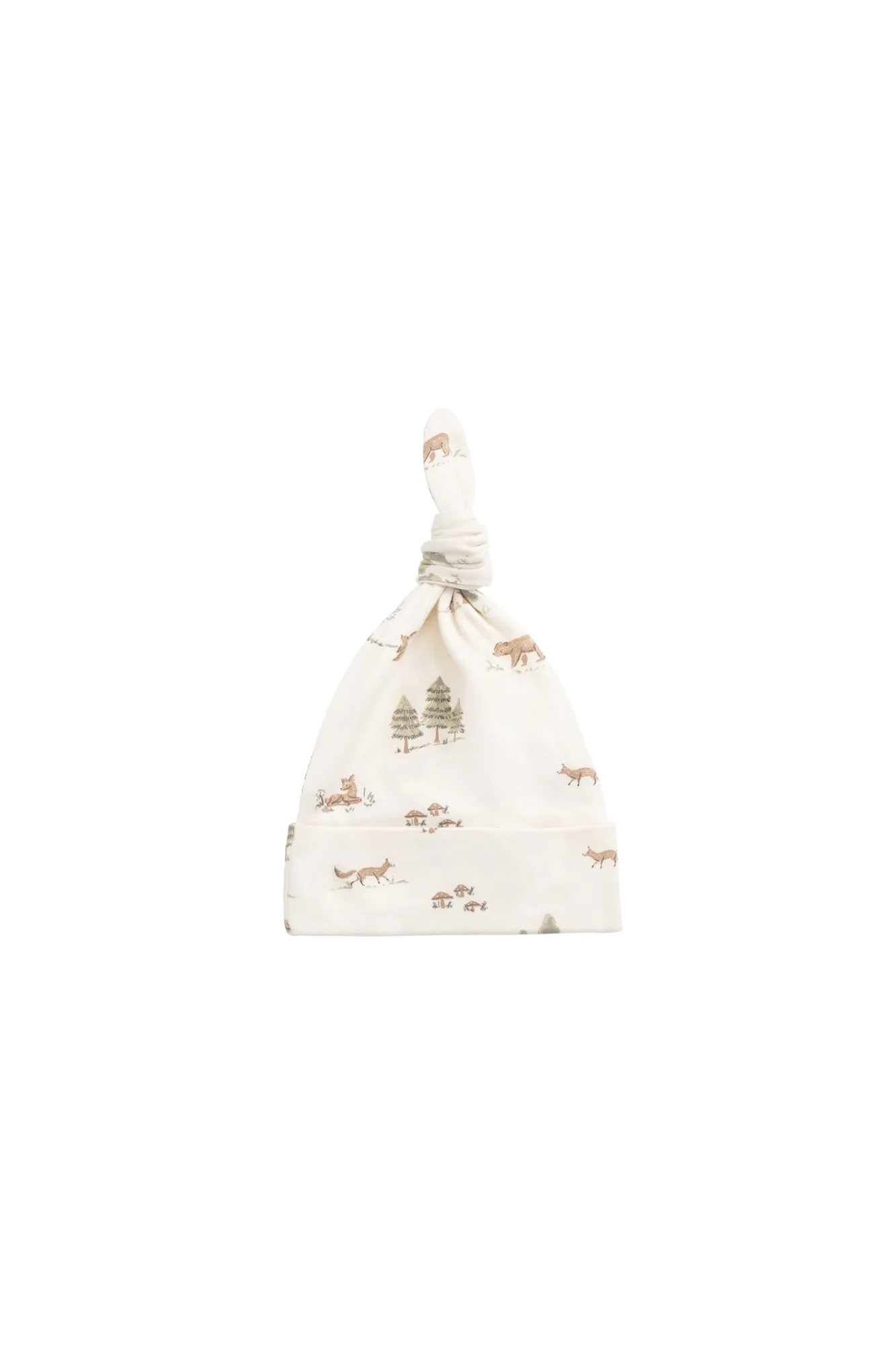
Organic Cotton Knot Beanie - Pine Forest Friends
-
Organic Cotton Knot Beanie - Bumblebees: The Organic Cotton Knot Beanie - Bumblebees also features 95% organic cotton and 5% elastane with a whimsical bumblebee print. The playful print adds personality to any outfit while the stretchy fabric ensures the hat adapts to your child's head size as they grow.
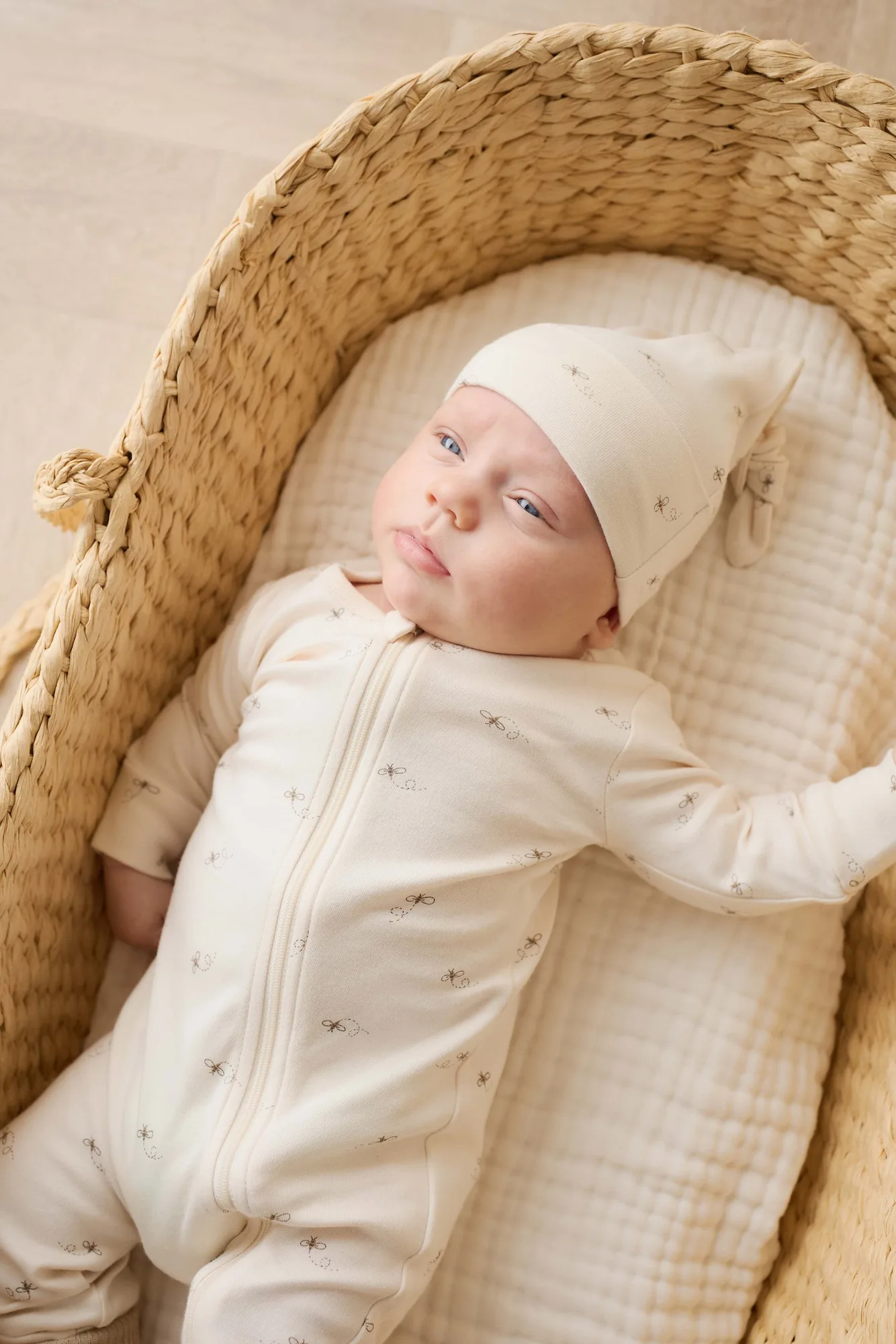
Organic Cotton Knot Beanie - Bumblebees
-
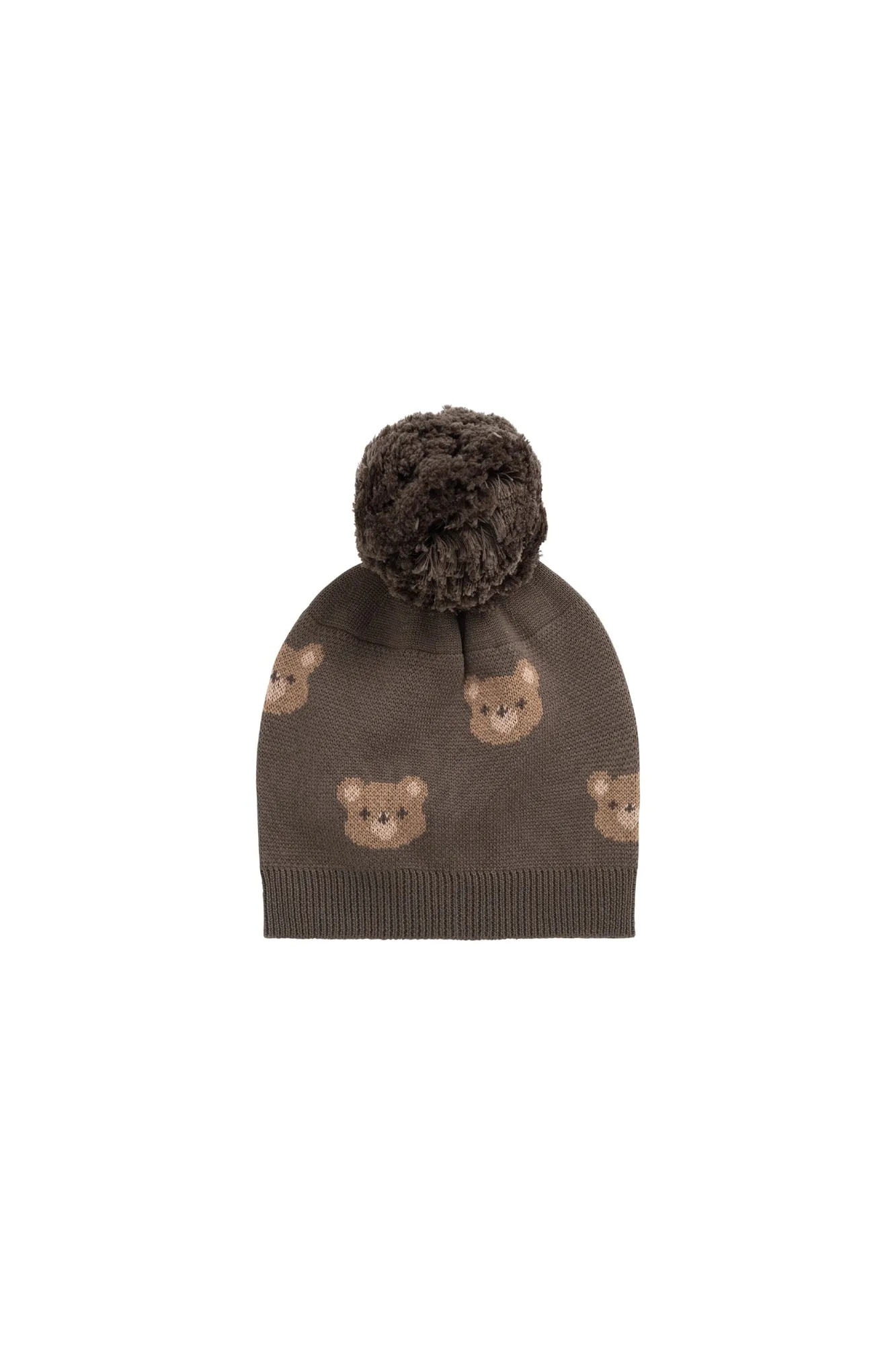
Ethan Hat - Bobbie Bear Canteen: The Ethan Hat - Bobbie Bear Canteen is a 100% cotton knitted beanie with a large pom pom and a pattern of tiny bear faces. Its 100% cotton construction offers breathable warmth, and the pom pom adds a fun, classic touch—but note it lacks the stretch of cotton-elastane blends, so sizing must be more precise.