Quick answer
Start with a square or long scarf in a fabric that suits the season, then choose one focal point: your neck, your hair, your bag, your waist or your shoulders. A simple loop knot works for most outfits, while a bias fold worn as a headband or bag tie keeps the look modern. Match the scarf's weight to the rest of your outfit so it adds polish without bulk.
A scarf is the fastest way to change an outfit without changing your clothes. The same piece can read tailored at the office, relaxed on a weekend walk or romantic over a slip dress, depending on how you tie it and where you place it.
This guide walks through five specific ways to wear a scarf, with a checkpoint for each so you can tell whether the look is working. It also covers fabric and proportion choices, including a silk scarf from Scarlett Gasque, so you can pick a piece that ties well rather than fighting you.
Choose the scarf and the focal point first
Before you tie anything, decide where the scarf should draw the eye. A scarf at the neck frames your face and works with collared shirts, crewneck knits and open jackets. Worn at the waist, it defines a dress or a long shirt. Tied to a bag, it adds color without competing with your neckline. One focal point per outfit is usually enough.
Fabric matters as much as placement. Lightweight silk georgette drapes and knots cleanly, which makes it a good choice for neck ties and bag accents. Heavier or stiffer fabrics hold volume, so they suit loose, draped styles better than tight knots. If you are unsure, pick a lightweight silk and keep the tie simple.
- Lay the scarf flat and check its length against your torso before tying.
- If the print is bold, keep the rest of the outfit in solid, quieter tones.
Match the scarf to the season and the outfit
A scarf should feel like part of the outfit, not an afterthought. In warm weather, a sheer silk scarf over a tank, dress or romper adds coverage without heat. In cooler months, a larger scarf layered over a cardigan or coat adds warmth and texture. The goal is to repeat or gently contrast a color already in your outfit.
Proportion is the other half of the decision. A small scarf can disappear against a voluminous dress, while an oversized scarf can overwhelm a fitted top. If your outfit is already busy with lace, ruffles or a large print, choose a smaller scarf and a clean knot. If your outfit is plain, you have room for a larger scarf and a more dramatic tie.
- Hold the scarf against the outfit in daylight before you commit.
- When in doubt, echo one color from the outfit rather than adding a new one.
Practice the two base folds
Almost every scarf tie starts with one of two folds. The triangle fold: lay a square scarf flat, fold it in half diagonally, then bring the two points together at the front of your neck. The bias fold: fold the scarf in half lengthwise, then keep folding until you have a long, even strip. The bias fold is the base for headbands, bag ties and belt styles.
Keep the folds loose until the scarf is in place, then adjust. Tight folds crease silk and make the knot hard to undo. If the scarf is long, fold it again rather than wrapping it multiple times, which can bunch at the neck and look bulky.
- Press folds with your hands, not an iron, to avoid shine on silk.
- Check the ends hang evenly before you tighten anything.
5 ways to wear a scarf, step by step
- Step 1: The simple loop knot: Fold a long scarf in half lengthwise to create a bias strip, drape it around the back of your neck, then pull the loose ends through the loop at the front. Adjust until the loop sits just below your collarbone. Checkpoint: the loop should lie flat, not twist. If it twists, unfold and refold the strip evenly.
- Step 2: The Parisian neck tie: Use a square scarf folded into a triangle, bring the long ends around the back of your neck, and tie a single knot at the front. Let the triangle point rest over your chest or tuck it under a jacket lapel. Checkpoint: keep the knot slightly off-center for a relaxed look. A tight, centered knot can read formal and dated.
- Step 3: The headband or hair wrap: Fold a square scarf into a long bias strip, place it over your head with the ends at the nape, cross the ends, and tie them at the front or back depending on the look you want. Tuck the tails under the band. Checkpoint: the band should sit flat against your hairline. If it slides, you have folded it too wide.
- Step 4: The bag accent: Fold a small square scarf into a bias strip, thread it through a bag handle, and tie a loose knot or bow. Let the ends hang down one side of the bag rather than both. Checkpoint: remove the scarf before storing the bag, so the knot does not press a crease into the silk.
- Step 5: The waist or shoulder drape: For a waist tie, fold a long scarf into a bias strip and knot it over a dress or long shirt, slightly to one side. For a shoulder drape, fold a square into a triangle and let it sit across your shoulders over a coat or cardigan. Checkpoint: if the scarf slips, choose a smaller size or a smoother knot rather than tying it tighter.
Product facts worth knowing
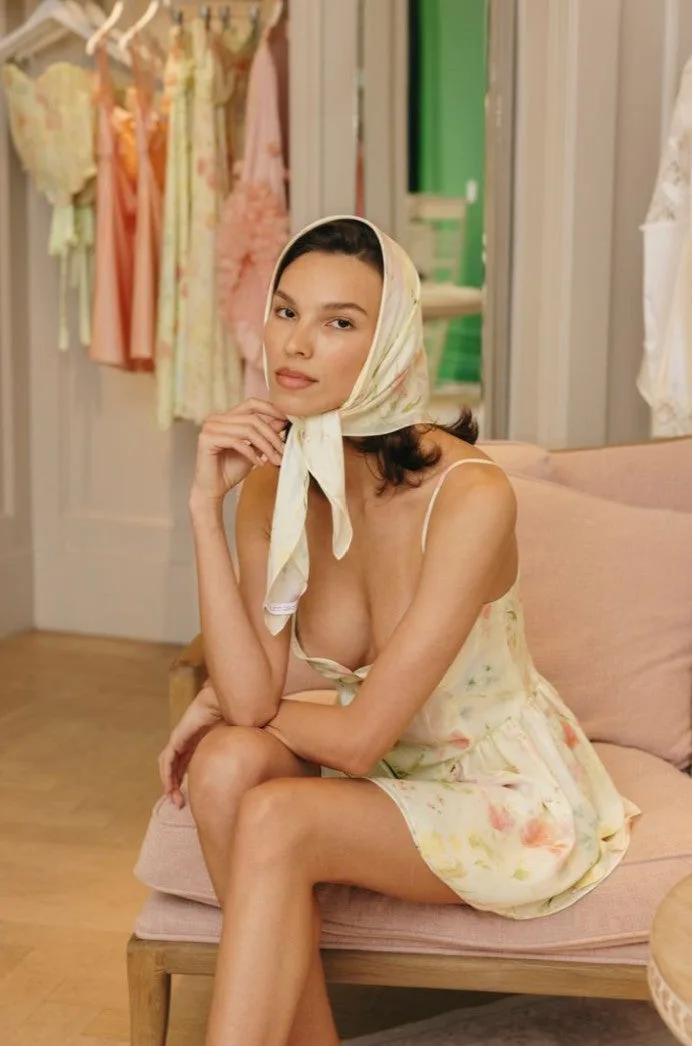
- SONNET SCARF: Crafted from 100% silk georgette, the same fabric as the Sonnet Skirt and Sonnet Robe, and printed with a bespoke watercolor floral developed exclusively for Scarlett Gasque. Each piece was created using remaining silk from the Sonnet collection. The lightweight silk georgette knots and drapes cleanly, so it suits neck ties and bag accents, and the print coordinates with other Sonnet pieces if you want a matched look.
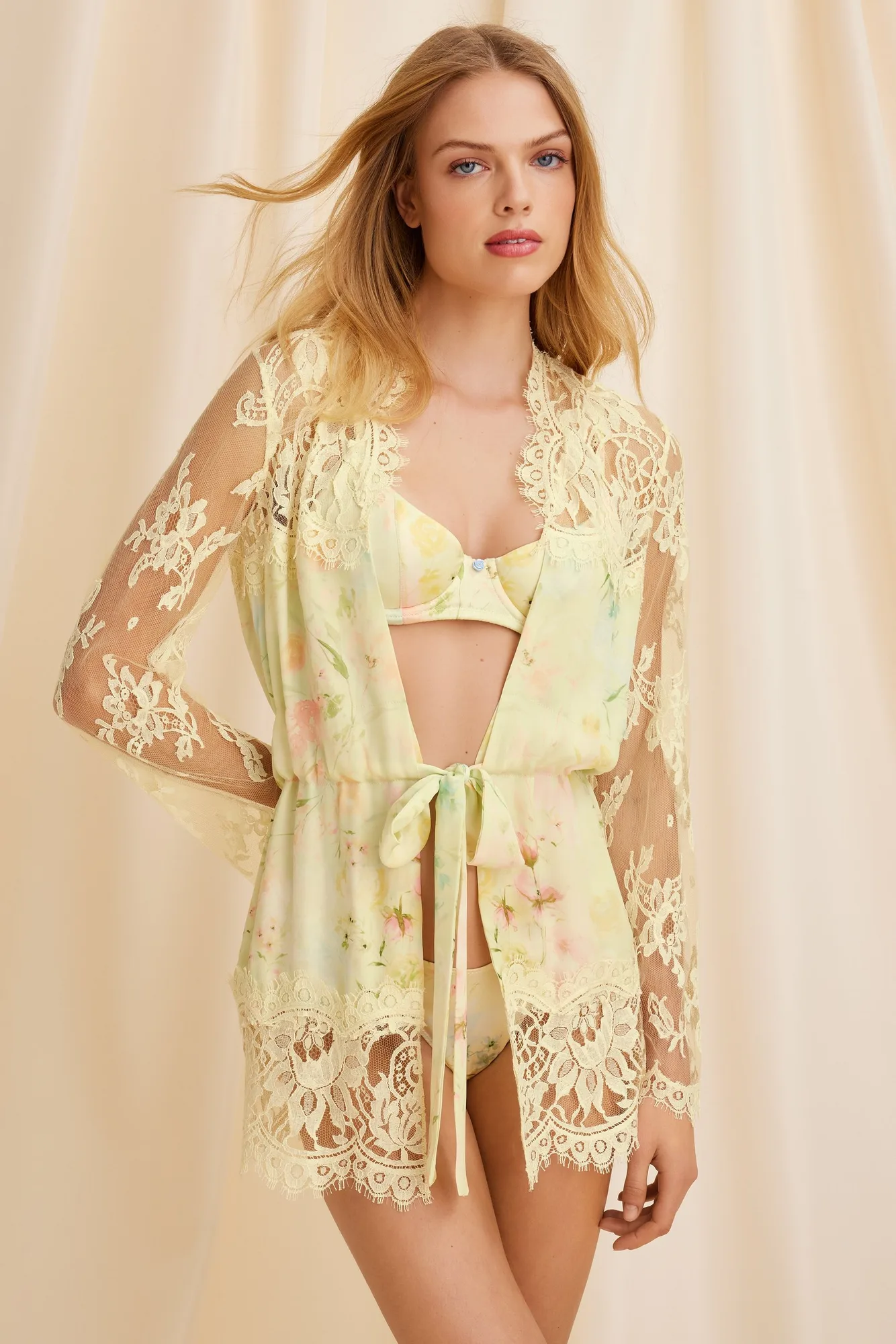
Sonnet Robe
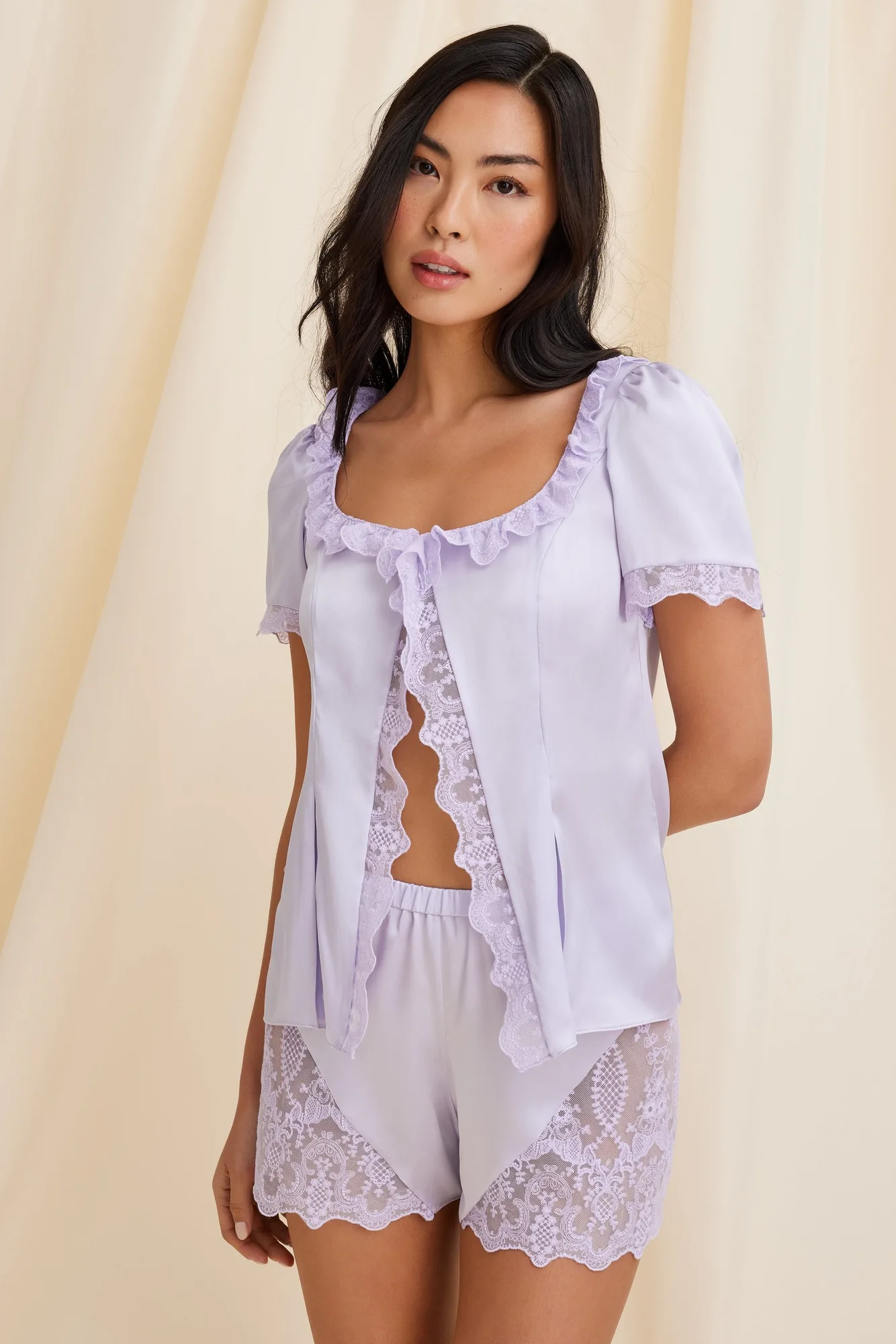
- DELILAH TOP: Made from 100% silk charmeuse with a soft, fluid drape, an embroidered lace-trim neckline and softly gathered short sleeves with lace trim. A fluid silk top gives a scarf a calm background, so a printed or brightly colored scarf reads as the focal point rather than competing with the outfit.
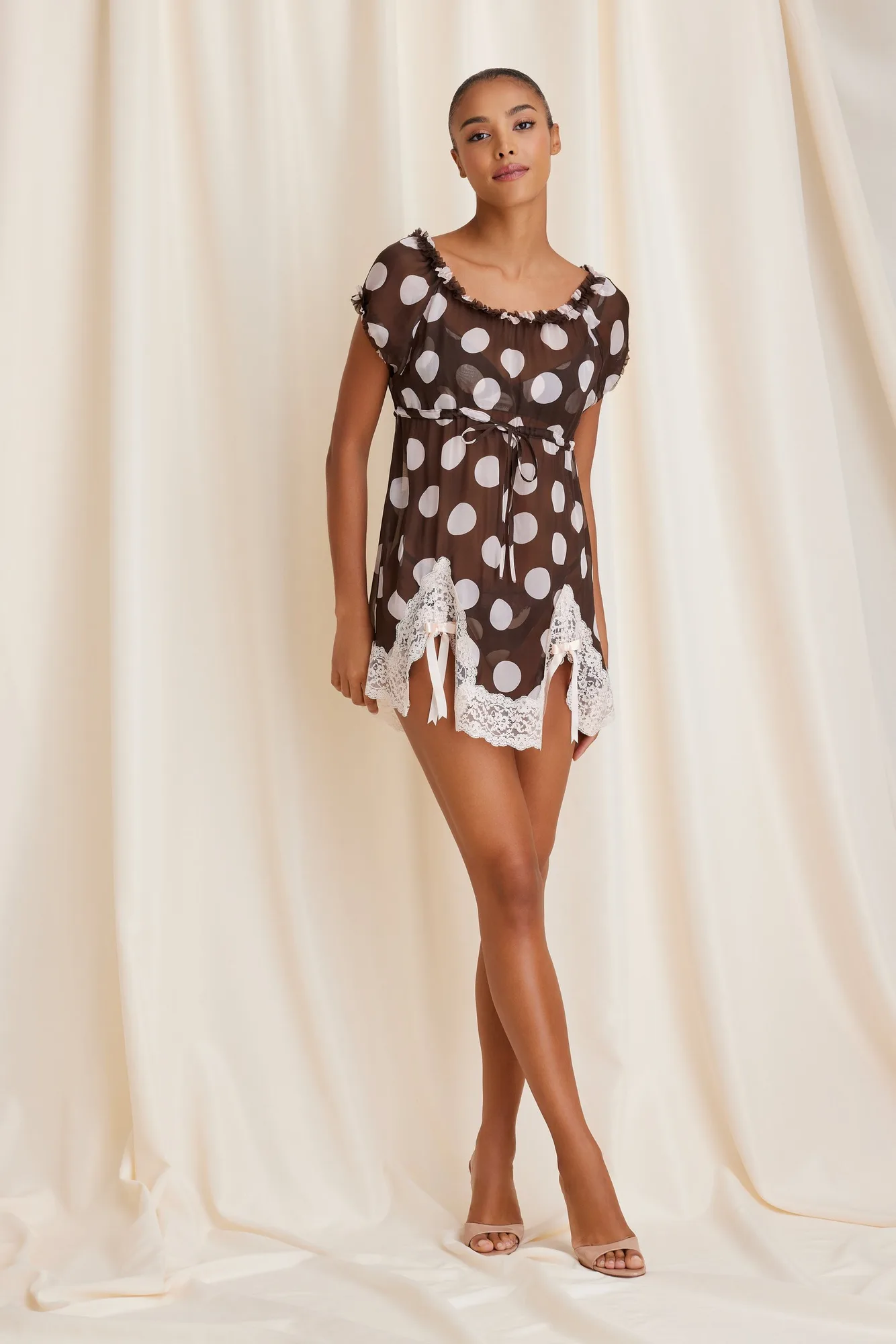
- DOTTIE BABYDOLL: A sheer babydoll in lightweight mesh with an oversized polka dot print, softly gathered through the bodice with ruffled trim and voluminous puff sleeves. Because the print and sleeves already carry volume, this piece works best with a small, simply tied scarf or none at all, so the silhouette stays balanced.
Pick one focal point, practice the loop knot and the bias fold, and the rest of these scarf looks become quick variations. A lightweight silk scarf is the most versatile starting point because it ties cleanly at the neck, in your hair and on a bag, while a printed piece like the Sonnet Scarf can carry a plain outfit on its own.