Quick answer
Use your vintage English bread board as both a functional kitchen tool and a rustic centerpiece. Start with simple daily tasks like slicing bread or cheese, then style it with seasonal decor when not in use.
Why use it daily instead of saving it for special occasions
Vintage-style boards are surprisingly sturdy. The English Bread Board from etúHOME is inspired by late 1800s to early 1900s farmhouse pieces, meaning it was designed for frequent use. Using it every day adds character and patina, making it more beautiful over time.
How to balance function and display
You don't need to choose between using it and showing it off. Keep the board on your counter or table, and rotate its role: use it for breakfast toast or cheese platters in the morning, then wipe it clean and leave it as a rustic bread board display for the rest of the day.
Steps to style your vintage English bread board for daily use
- Start with breakfast or snack prep: Place the board on your counter or table. Use it to slice bread, cheese, or fruit. The sturdy wood handles heavy use without warping. Avoid cutting acidic foods like citrus directly on the board without a barrier, as they can stain the wood.
- Wipe clean and let air dry: After use, rinse with warm water and a mild soap if needed. Pat dry with a towel, then let it air dry completely before storing or displaying. Never soak the board in water or put it in the dishwasher. Prolonged moisture can cause cracking.
- Style it as a rustic centerpiece: When not in use, arrange the board on your kitchen island or dining table. Add a small vase of flowers, a few seasonal fruits, or a stack of napkins for a rustic bread board display. Keep the board away from direct sunlight or heat sources to prevent the wood from drying out unevenly.
- Use it for casual entertaining: For impromptu gatherings, load the board with crackers, cheese, olives, or sliced meats. It doubles as a serving platter and conversation piece. If serving wet items like dips or sliced tomatoes, place a small bowl or parchment liner on the board to protect the wood.
- Oil the board monthly: Apply food-grade mineral oil or beeswax once a month to keep the wood hydrated and prevent drying. Rub it in with a cloth and let it absorb for a few hours. Don't use cooking oils like olive or vegetable oil—they can turn rancid and smell unpleasant over time.
Product fact
-
Vintage English Bread Board: Our Daily Bread, Medium, Natural: This board is rooted in centuries of culinary tradition, inspired by serving pieces from the late 1800s to early 1900s in English cottages and farmhouses. Its heritage design means it works as both a practical slicing surface and a decorative piece that fits modern rustic or farmhouse kitchens.
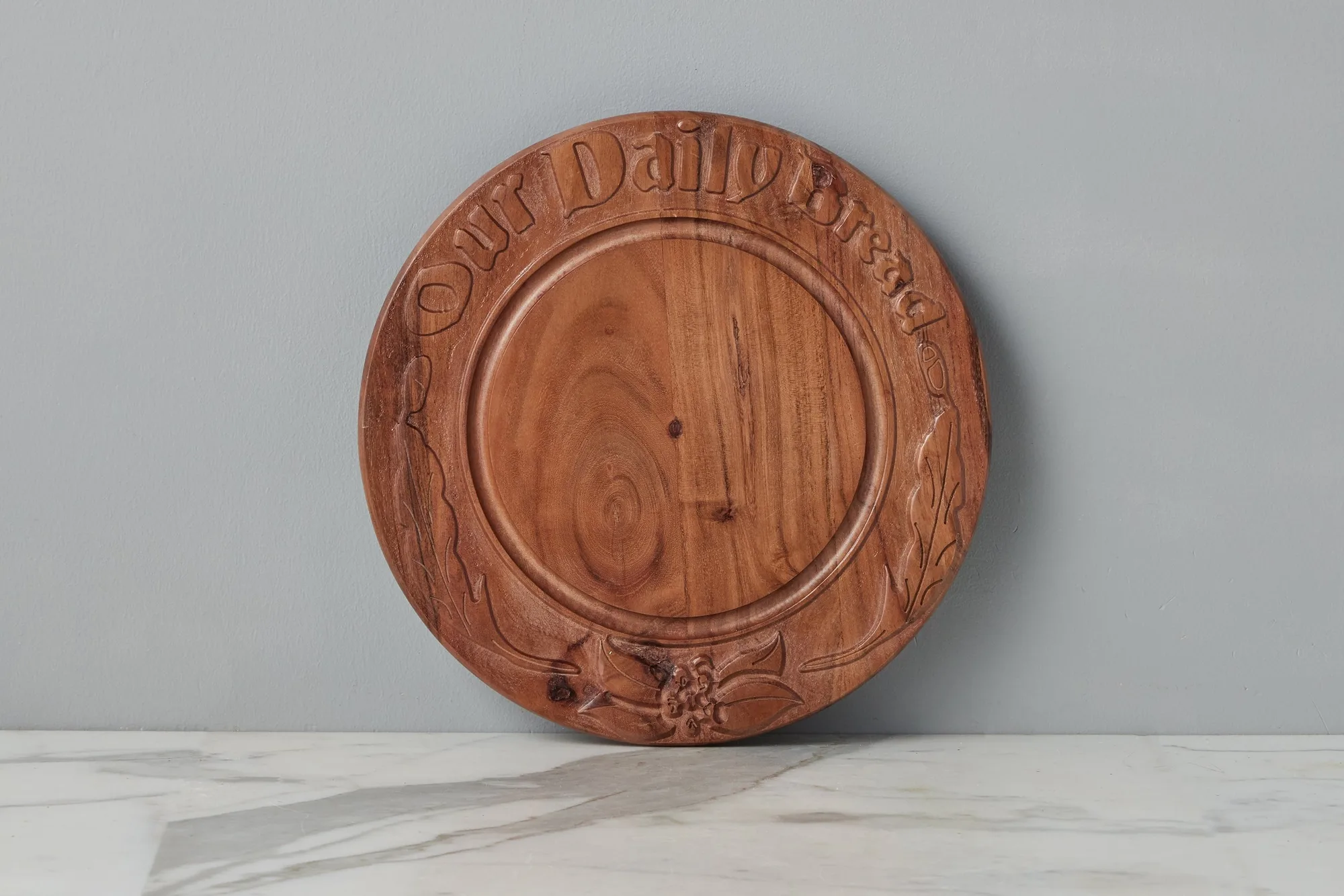
Vintage English Bread Board: Our Daily Bread, Medium, Natural