Quick answer
Use wooden letter magnets in simple, playful activities to help your child recognize uppercase and lowercase letters. Start with matching games and progress to spelling their name.
Why wooden letter magnets work for preschoolers
Wooden letter magnets are a classic teaching tool because they combine tactile, visual, and kinesthetic learning. The bright colors and sturdy pieces make letters feel concrete rather than abstract. Unlike digital apps, magnets allow children to physically arrange and rearrange letters, reinforcing letter shapes and order through hands-on play.
A key advantage of a set like Melissa & Doug's Wooden Letter Alphabet Magnets is that it includes both uppercase and lowercase letters. This lets you teach the difference between capital and small letters naturally, without needing a separate set. The wooden case also keeps pieces organized, which helps build tidy habits.
Step-by-step alphabet activities
- Start with letter sorting: Dump the letters on a flat magnetic surface (like a fridge or cookie sheet). Ask your child to sort them into two piles: uppercase and lowercase. Name each letter as they pick it up. Common mistake: Sorting all 52 letters at once can overwhelm a young child. Start with 6–8 letters and gradually increase.
- Play letter matching: Place a few uppercase letters on the board. Give your child the matching lowercase letters and have them place each one directly below its match. Say the letter name and sound together. Checkpoint: If your child struggles, reduce the number of pairs to three. Success builds confidence.
- Spell their name: Write your child's name on a piece of paper and place it on the magnetic board. Help them find the correct letters and arrange them in order. Start with just the first letter, then add more as they learn. Common mistake: Expecting perfect spelling right away. Let them experiment—even putting letters in the wrong order is a learning step.
- Create a letter hunt: Hide 5–10 magnets around the room. Give your child a simple clue like 'Find the letter that starts your name' or 'Find the letter that makes the /b/ sound.' Have them place each found letter on the board. Checkpoint: Use only letters your child has already seen in sorting or matching. Introducing new letters during a hunt can cause frustration.
- Build simple words: Once your child knows several letters, show them how to build short words like 'cat' or 'dog.' Say the word slowly and help them find each letter. Clap or cheer when they complete the word. Common mistake: Moving to three-letter words too soon. Stick to two-letter words (like 'at' or 'up') until your child is comfortable.
Product spotlight
-
Wooden Letter Alphabet Magnets: This set includes 52 brightly colored magnetic uppercase and lowercase letters in a handy wooden case. Having all letters in both cases means you can teach matching and letter recognition without needing extra materials.
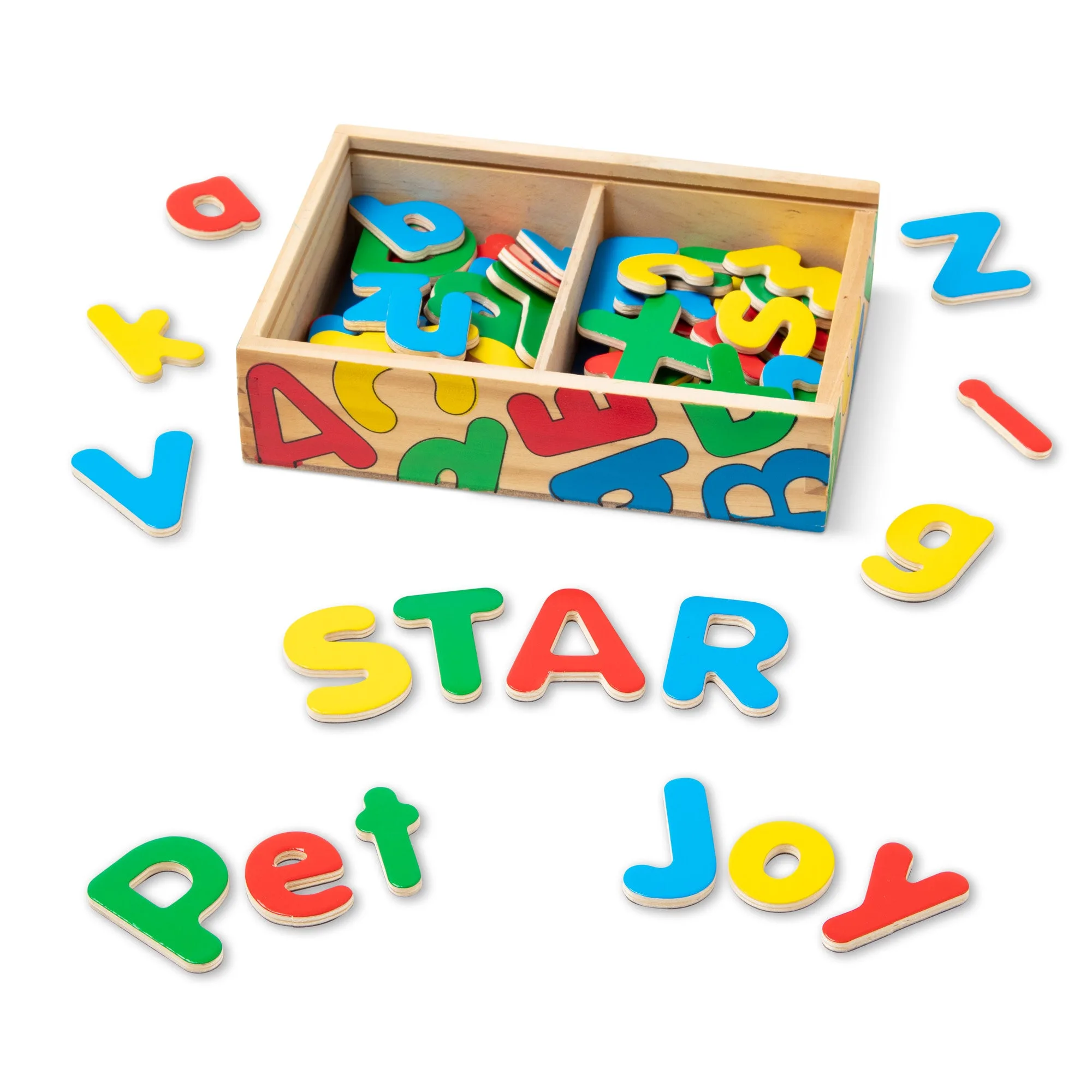
Wooden Letter Alphabet Magnets
