Quick answer
To teach counting effectively, combine the tactile Wooden Abacus for one-to-one correspondence with the active Hop & Count Hopscotch Rug for number recognition and physical play. Start with simple counting games and gradually increase complexity.
Why combine a wooden abacus and a hopscotch rug?
Each toy targets a different learning style. The wooden abacus lets kids see and touch each bead, reinforcing one-to-one correspondence. The hopscotch rug adds movement, helping active learners connect numbers to physical actions. Together, they cover visual, tactile, and kinesthetic learning.
Both toys are built for the preschool years. The abacus suits quiet, focused play, while the rug turns counting into a whole-body game. Alternating between them keeps sessions fresh and prevents boredom.
What to expect from each toy
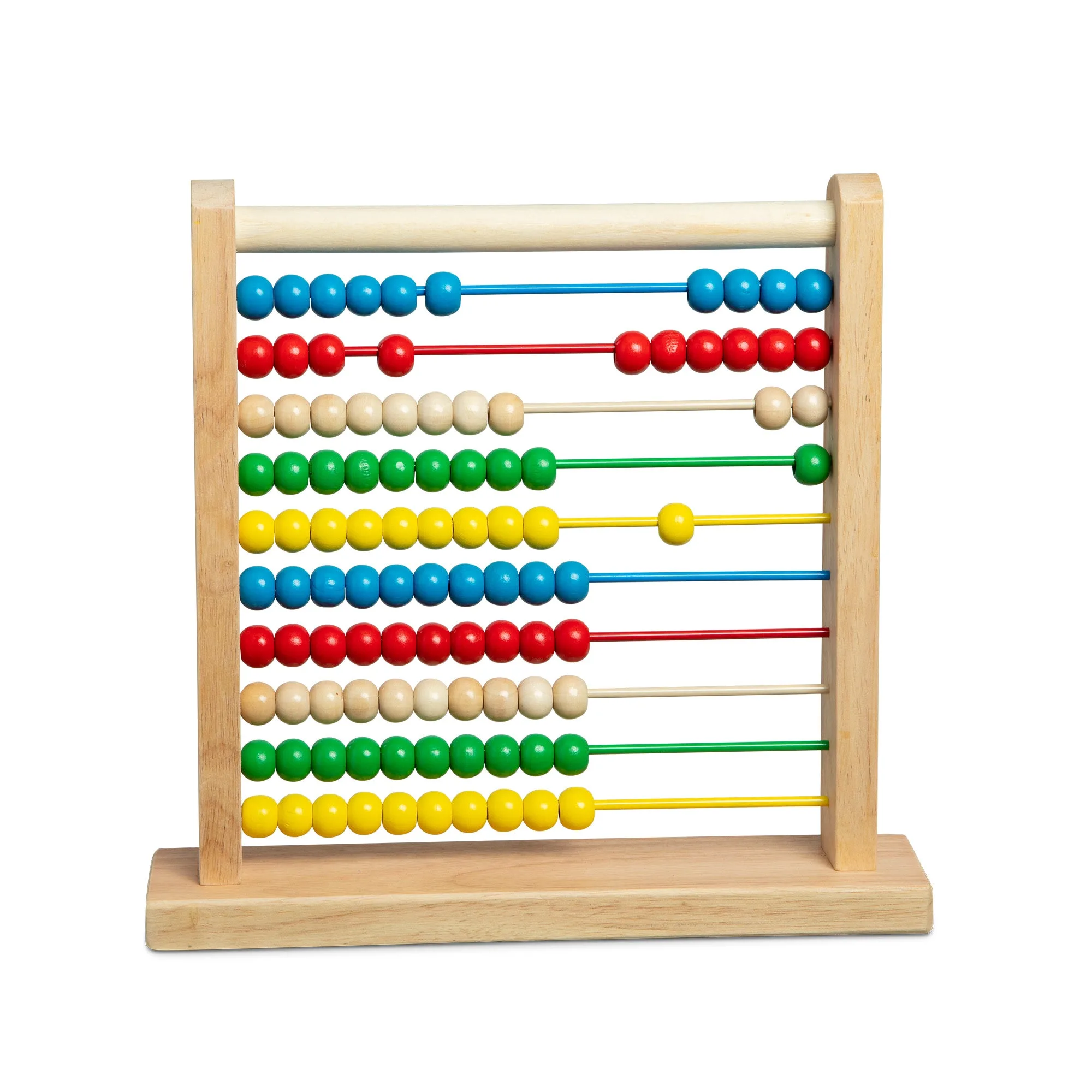
The Wooden Abacus has 100 beads on 10 wires, making it ideal for counting to 10, 20, or even 100. The solid hardwood base and thick-coated wires are durable for years of use. Younger kids can simply slide beads to explore patterns, while older ones can practice addition and subtraction.
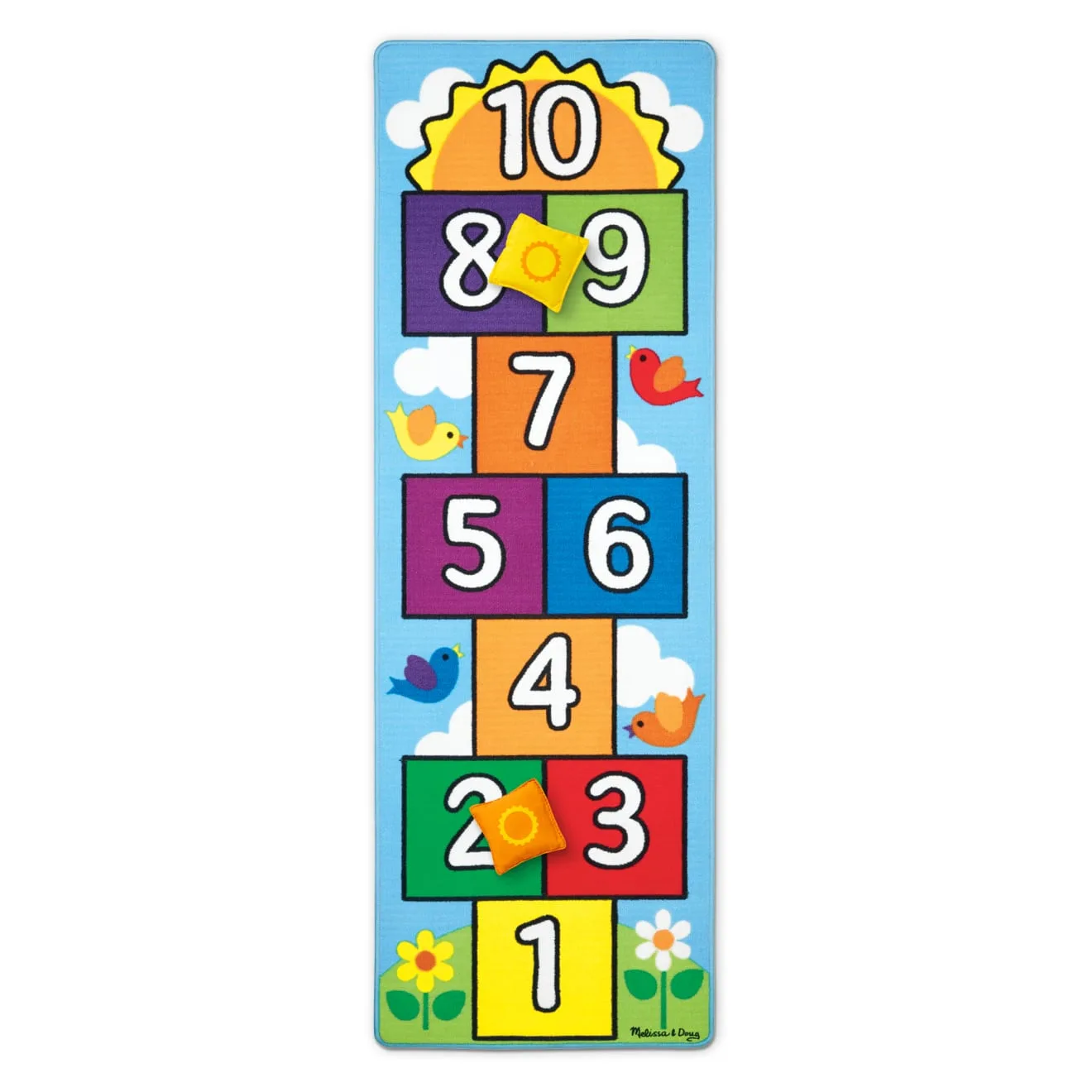
The Hop & Count Hopscotch Rug is a classic game with a colorful design. It comes with two beanbags and a skid-proof backing, so it's safe on any floor. The reinforced border prevents fraying, and it's machine washable—perfect for active play.
Steps to teach counting with an abacus and hopscotch rug
- Start with the abacus: count beads one by one: Have your child slide one bead at a time from left to right while saying the number out loud. Start with 1–5, then progress to 10. This builds one-to-one correspondence. Check that your child touches each bead as they count—skipping beads is a common mistake.
- Introduce the hopscotch rug: call out numbers and jump: Lay the rug flat and have your child jump to the number you call out. Begin with numbers 1–5, then expand to 10. This reinforces number recognition through movement. Watch that your child lands on the correct number—point to it if they hesitate, rather than moving on.
- Combine both: match abacus beads to rug numbers: Count a set of beads on the abacus, then have your child jump to that number on the rug. For example, slide 3 beads, then jump to 3. This connects the abstract count to a physical action. Ensure the number on the rug matches the bead count exactly—this is a key checkpoint for understanding.
- Add beanbag toss: land on a number and count it out: Have your child toss a beanbag onto the rug, then count that many beads on the abacus. This adds a fun, game-like element and reinforces counting in a new context. If the beanbag lands on a number they don't recognize, help them say it and count the beads together.
- Practice counting games for kids: take turns and increase difficulty: Alternate roles—you call a number, they jump and count; then they call a number for you. Gradually use numbers up to 20 or count by tens using the abacus rows. Keep sessions short (5–10 minutes) to maintain focus. A common mistake is rushing to higher numbers before the basics are solid.
Products that support counting practice
-
Hop & Count Hopscotch Rug: The Hop & Count Hopscotch Rug includes two colorful beanbag play pieces and a durable, machine-washable rug with a skid-proof backing. The beanbags add a throwing element that makes number recognition active and fun, while the safe backing means you can use it indoors without worry.
Hop & Count Hopscotch Rug
-
Wooden Abacus: The Wooden Abacus features a solid hardwood base and 100 brightly colored wooden beads on 10 thick-coated wires. The 10-bead rows make it easy to practice counting by tens, and the sturdy construction stands up to repeated sliding and counting.
Wooden Abacus