Quick Answer
To teach Santorini, start by explaining the goal: be the first to reach the top of a three-story building. Then walk through setup, the two actions per turn, and the building rules. Use a demo round to clarify, and keep the god powers for later games.
Santorini
Santorini is an elegant abstract strategy game that takes minutes to learn but offers deep tactical play. If you're introducing it to friends or family, a clear, step-by-step approach prevents confusion and gets everyone building quickly.
This guide breaks down teaching into simple steps, highlights common mistakes, and suggests how to ease new players into the game without overwhelming them.
Why Santorini is Great for New Players
Santorini's rules are simple: each turn you move one of your workers and then build a block next to them. The first player to get a worker onto the third level wins. This straightforward loop makes it accessible, but the optional god powers add variety for experienced players.
The visual appeal of the 3D island board and colorful buildings helps players grasp the spatial logic quickly. Even beginners can enjoy the game from the first round, making it an ideal choice for game nights.
- Start with the base game without god powers for the first teaching session.
Before You Start: Setup and Components
Lay out the board and place the two workers of each color on opposite corners. Ensure each player has their workers and that the building pieces are sorted by size: ground, mid, and top levels. The dome pieces are placed on top of three-story buildings to block them.
Explain that the board is a 5x5 grid, and workers can move one space in any direction, including diagonally, but cannot move onto occupied spaces or over domes. Building happens in the same spaces, but you cannot build where a worker stands.
- Checkpoint: Verify both players have placed their workers on opposite corners before starting.
The Core Rules in Simple Terms
On your turn, you must do two things in order: move one of your workers to an adjacent space, then build a block on any adjacent space (not where your worker is). You can move up only one level, but you can move down any number. You cannot move onto a space occupied by another worker or a dome.
Building means placing a block on an empty space or on top of an existing block to raise its level. The dome is placed only when a building reaches three levels, sealing it. The first player to move a worker onto a three-level building wins immediately.
- Common mistake: Forgetting that you must move before you build. Emphasize the order.
Teaching with a Demo Round
Set up a small example on the board. Show a legal move and build, then demonstrate an illegal move, like moving up two levels. Let the new player make a few moves while you narrate the reasoning. This hands-on practice is more effective than abstract explanation.
During the demo, point out strategic concepts like controlling the center and building toward your opponent's workers to block them. But keep it light—the goal is to get them comfortable, not to overwhelm with tactics.
- Checkpoint: Ask the player to explain the win condition in their own words before starting the real game.
When to Introduce God Powers
Once the new player has finished a base game, they may be ready for god powers. These cards give each player a unique ability, adding asymmetry and replayability. Start with simpler gods like Demeter or Pan, and explain that both players can use their powers every turn.
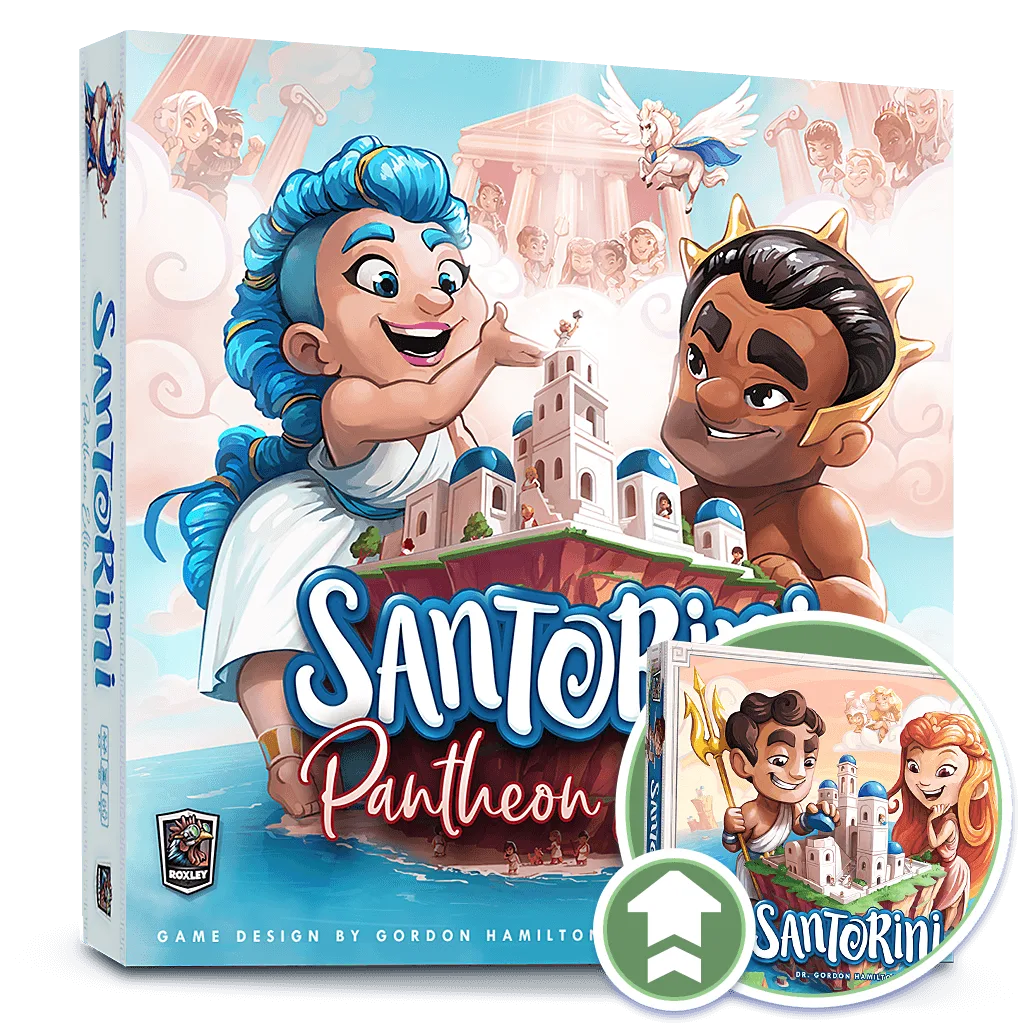
The Santorini Pantheon Upgrade Kit upgrades your existing copy of Santorini to the Deluxe Pantheon Edition, which includes additional god cards and components. This is a great way to expand the game after the basics are mastered.
- Tip: Let the new player choose their god power first, then select one that counters it mildly.
Step-by-Step Teaching Process
- Explain the Goal: Start by saying: 'Be the first to get one of your workers onto the third level of a building.' Show what a three-level building looks like. Checkpoint: Ask them to point to a winning spot on the board.
- Set Up the Board: Place workers on opposite corners. Sort building pieces by size. Explain the grid and adjacency. Common mistake: Workers placed too close together. Ensure they start on opposite corners.
- Teach the Turn Structure: Each turn has two parts: move one worker, then build with that same worker. Emphasize the order. Checkpoint: Have them repeat the order back to you.
- Demonstrate Movement Rules: Show legal moves: one space in any direction, including diagonals. You can move up only one level but down any number. Common mistake: Trying to move up two levels. Emphasize the one-level limit.
- Demonstrate Building Rules: After moving, place a block on an adjacent empty space or on top of an existing block. Explain when to place domes. Checkpoint: Ask where they would build to block an opponent.
- Play a Demo Round: Play a few turns together, narrating your decisions. Let them try moves and correct gently. Checkpoint: Ensure they understand the win condition before starting a real game.
- Start with a Base Game: Play without god powers first. Keep the game short and focus on fundamentals. Common mistake: Introducing god powers too early. Wait until they've won once.
Enhance Your Teaching Experience with These Products
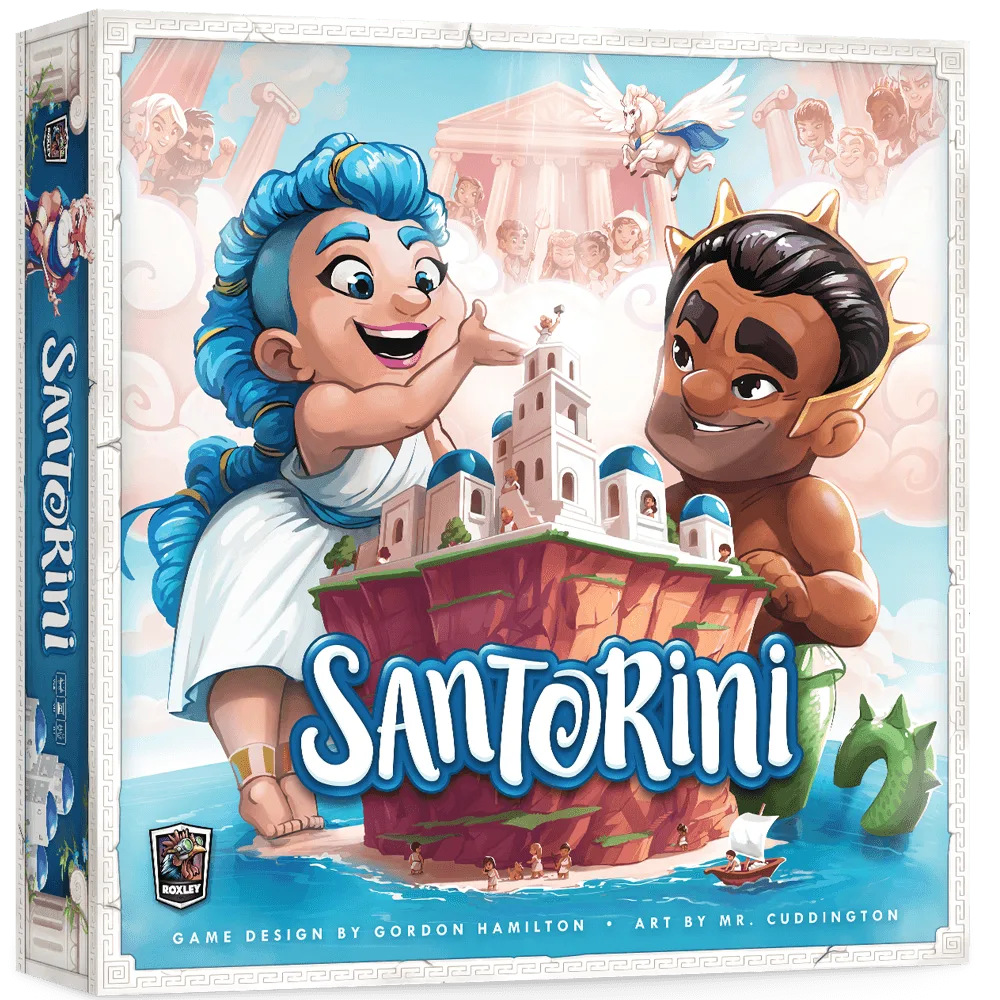
- Santorini: The base game includes the board, workers, and building pieces needed to play. Having a complete base game is essential for teaching. This is the standard edition with all components.
- Santorini Pantheon Upgrade Kit:: Upgrade your existing copy of Santorini to the Deluxe Pantheon Edition Once players understand the basics, this kit adds more god powers and components, enriching the experience.
Teaching Santorini is all about clarity and patience. By following these steps, you'll have new players building and competing in no time. Once they've mastered the basics, consider expanding with the Santorini Pantheon Upgrade Kit for endless replayability.