Quick Answer
Start teaching your toddler chopsticks around age 3, using training chopsticks with finger holders and a gentle, play-based approach.
Why Start with Training Chopsticks
Regular chopsticks require precise finger coordination that most toddlers haven't developed yet. Training chopsticks, like the PAW Patrol™ Chopsticks, come with holders that guide little fingers into the correct position, making the learning process more natural and less frustrating.
The familiar PAW Patrol™ characters can also make the activity feel like play rather than a chore, which encourages your toddler to practice more willingly.
When to Introduce Chopsticks
Most toddlers show readiness between ages 3 and 4, when they can handle a spoon or fork with confidence and show interest in using grown-up utensils. Starting too early can lead to frustration, while waiting until they're older may make them less interested in learning.
Look for signs like your toddler trying to use your chopsticks or asking to eat with them. These are good indicators that they're ready to start.
Step-by-Step Guide to Teaching Chopsticks
- 1. Choose the Right Tools: Select training chopsticks with finger holders, like the PAW Patrol™ Chopsticks, which are sized for little hands and include a character your toddler loves. Check that the chopsticks are silicone or have a non-slip grip to prevent slipping.
- 2. Start with Easy Foods: Begin with large, soft foods like banana slices, avocado chunks, or cooked pasta that are easy to pick up. Avoid slippery or tiny items like peas or rice initially. Cut foods into bite-sized pieces to make grasping easier and reduce frustration.
- 3. Demonstrate the Grip: Show your toddler how to place their fingers in the holders. The top stick rests between the index and middle finger, and the bottom stick is held by the thumb and ring finger. Practice the grip yourself first, so you can model it clearly.
- 4. Practice with Play: Turn chopstick practice into a game by picking up cotton balls, pom-poms, or soft toys. This builds the same motor skills without the pressure of mealtime. Keep practice sessions short—5 to 10 minutes—to maintain interest.
- 5. Be Patient and Positive: Expect spills and dropped food. Celebrate small successes and avoid criticism. Learning chopsticks takes time and practice. If your toddler gets frustrated, take a break and try again later.
Product Spotlight
-
PAW Patrol™ Chopsticks: This set includes two sticks and holders designed for chopstick mastery, featuring food-gripping strength and a PAW Patrol™ character. The holders guide your toddler's fingers into the correct position, making it easier for them to practice the proper grip from the start.
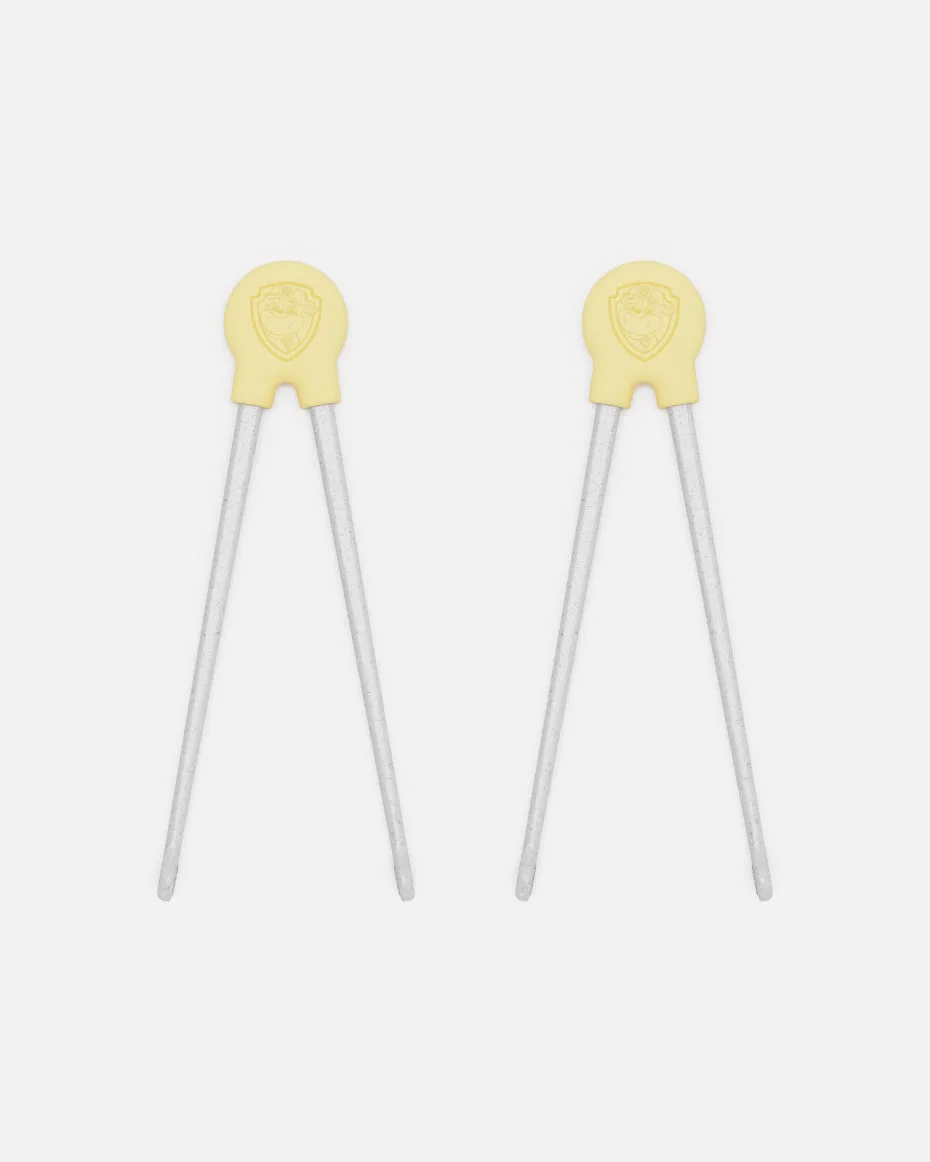
PAW Patrol™ Chopsticks