Quick answer
Start with balance and foot placement on a flat surface, then introduce pedalling in short sessions. The SmarTrike Wonder Trike's lightweight frame and parent handle make it easier to guide your toddler through each step.
Why a lightweight trike helps early pedalling
A heavy trike can frustrate a toddler whose legs are still building strength. The SmarTrike Wonder Trike weighs less than many models, so your child doesn't have to push against unnecessary resistance. Its compact size also means smaller turning circles, which reduces the steering effort needed at low speeds.
When to expect pedalling readiness
Most toddlers develop the leg coordination for pedalling between 18 months and 2.5 years. If your child is still walking unsteadily, focus on balance and scooting first. The trike's stroller-style safety features, like the three-point harness and parent push handle, let you offer support without rushing the process.
Step-by-step pedalling guide
- Step 1: Build balance on flat ground: Place the trike on a level, paved surface. Let your toddler sit with feet flat on the ground and practice pushing the trike forward using their feet, like a balance bike. Keep the parent handle attached so you can steady the trike if they lean. Common mistake: holding the handlebars too tightly. Let your child steer freely while you control speed from the parent handle.
- Step 2: Introduce foot placement on the pedals: With your toddler seated, place their feet gently onto the pedals while the trike is stationary. Show them how the pedal moves in a circle by rotating it slowly with your hand. Let them feel the motion without pressure to push. Checkpoint: If your child lifts their feet off, go back to scooting for a few more sessions. Forcing foot placement too early can cause frustration.
- Step 3: Practice half-pedal pushes: Position the trike so one pedal is at the top of its stroke. Encourage your toddler to push that pedal down with one foot. Let the trike roll a short distance, then stop. Repeat with the other foot. This builds the muscle memory for a full rotation. Common mistake: expecting both feet to work together immediately. Toddlers often push with one foot first; that's normal.
- Step 4: Combine steering with pedalling: Once your toddler can complete a few full pedal rotations, practice on a gentle, straight path. Introduce steering by pointing the trike toward a visible target, like a tree or a toy. Let them steer while you maintain light contact with the parent handle. Checkpoint: If steering makes them stop pedalling, return to straight-line practice. Multitasking comes later.
- Step 5: Increase distance and independence: Gradually extend the pedalling distance from a few metres to the length of a driveway or footpath. Use the parent handle less and less, but keep it attached for sudden stops or turns. Celebrate each small success to build confidence. Common mistake: moving to uneven terrain too soon. Stick to smooth, flat surfaces until your toddler can start and stop pedalling without help.
Product that supports this guide
-
SmarTrike Wonder Trike - Light Olive: The SmarTrike Wonder Trike is ultra-compact and lightweight, suitable from 9 months to approximately 3 years. Its light frame and parent handle let you guide early pedalling attempts without the trike tipping or feeling too heavy for your toddler to move.
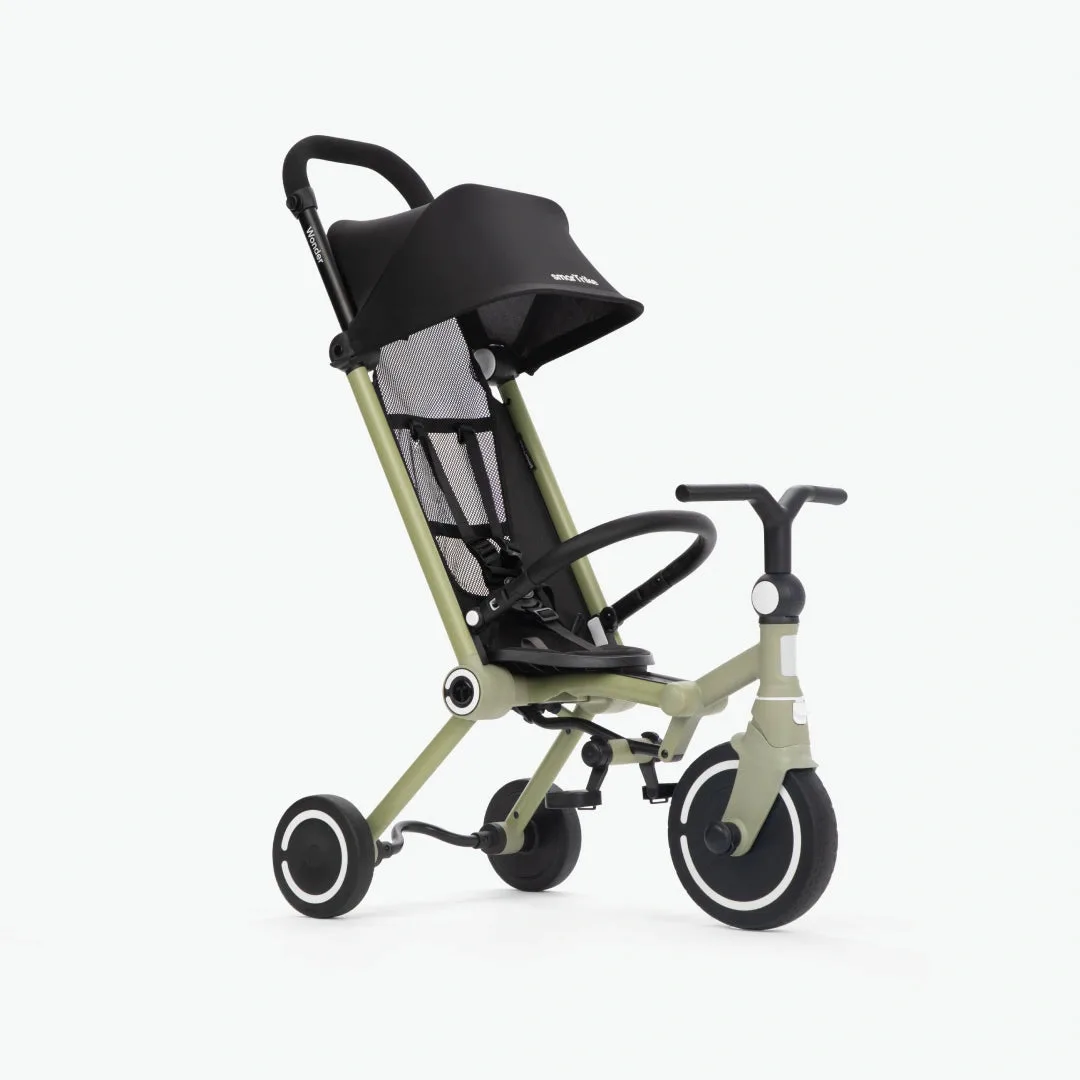
SmarTrike Wonder Trike - Light Olive