Quick answer
A Montessori toy is age appropriate when your child can use it with little or no help, and when the challenge matches a skill they are already practicing. The printed age is a safety and developmental starting point, not a verdict. Check three things before buying: the smallest parts, the material and care needs, and whether the toy asks for a skill your child is ready to try.
Montessori
Age labels on Montessori toys are useful, but they are not the whole story. Two children the same age can be in very different places with fine motor control, focus, and patience. The label tells you when a toy is safe and roughly suitable, not whether it will actually click for your child this month.
This guide gives you a practical way to judge age appropriateness using the details that are actually printed on the product page: age rating, dimensions, materials, and care instructions. You will also see how real toys from this catalog fit different stages, so you can choose with confidence instead of guessing.
Start with the age rating, then look past it
The age rating is the first filter because it usually reflects small-part safety and choking risk. A toy rated 0+ has no small pieces and is designed for mouthing and grasping. A toy rated 3+ may contain small parts or require a pincer grasp and enough self-control to keep pieces out of the mouth. Treat the rating as a safety floor, not a finish line.
Once safety is covered, ask whether the toy matches a skill your child is practicing right now. A 2-year-old who is learning to twist, pull, and open will get more from a busy board than from a toy that mostly asks for counting. A 3-year-old who loves pretend play may be ready for a dollhouse even if a simpler toy is also rated for their age.
- If your child needs you to do most of the action, the toy is probably too advanced for now.
- If your child finishes it in seconds and walks away, it is probably too easy.
- A good fit keeps a child engaged for several minutes without adult help.
Match the toy to the stage, not the birthday
Montessori toy stages are usually described by what a child can do, not by a number. Around 0 to 12 months, the focus is grasping, mouthing, tracking, and simple cause and effect. From about 1 to 2 years, children practice pulling, opening, stacking, and carrying. From about 2 to 3 years, they refine hand control, begin sorting, and enjoy simple pretend play. After 3, toys can add rules, sequences, and more open-ended storytelling.
Use these stages as a rough map. If your child is between stages, choose the toy that matches the skill they are currently repeating. A toy that is slightly too easy can still be useful for independent play, while a toy that is too hard often ends up ignored on the shelf.
- Watch what your child does spontaneously with similar toys before you buy.
- A toy that fits the current stage gets used daily; a toy for the next stage often waits.
Check size, weight, and material against your child
Dimensions matter more than most parents expect. A toy that is too heavy for your child to lift will not be carried around, and a toy that is too small may be frustrating for unsteady hands. Weight also affects how safely a child can hold and move the toy without dropping it on themselves or a sibling.
Material and care instructions tell you how the toy will survive real life. Felt and fabric toys are soft and quiet but usually need spot cleaning. Wooden toys are sturdy and wipe clean but should not sit in water. Silicone toys can be hand washed and are built for mouthing. Choose a material that fits your routine, not just your child's age.
- If a toy needs care you will not realistically do, it will not last.
- For mouthing babies, check that the material is described as safe for that use.
Use the toy's own details as a checklist
A product page gives you four useful signals: age rating, dimensions, weight, and care. Read them together. A toy rated 2+ that weighs under 5 ounces and has strong bindings is easy for a toddler to carry and hard to destroy. A toy rated 3+ with small wooden pieces and a dry-cloth-only care note tells you it is for a child who no longer mouths everything and can play at a table.
When a specification is missing, treat that as a decision limitation. Do not assume a toy is dishwasher safe, chew-proof, or suitable for a younger sibling just because it looks simple. If the information is not supplied, ask the seller or choose a toy whose details are clear.
- Write down your child's current weight limit for carrying toys comfortably.
- If two toys fit the age, pick the one whose care routine you can keep up with.
When to size up and when to wait
Size up when your child consistently finishes the current toy without help and starts inventing new ways to use it. That is a sign they have mastered the skill and are ready for the next challenge. Waiting too long can lead to boredom and less independent play.
Wait when your child still needs hand-over-hand help, gets frustrated quickly, or puts small parts in their mouth. A toy that is too advanced is not a learning opportunity; it is a source of friction. In that case, keep the toy stored and bring it out again in a few weeks or months.
- Mastery looks like independent, repeated play, not one successful attempt.
- Frustration that ends play within a minute is a clear signal to wait.
Decision rules for choosing a Montessori toy by age
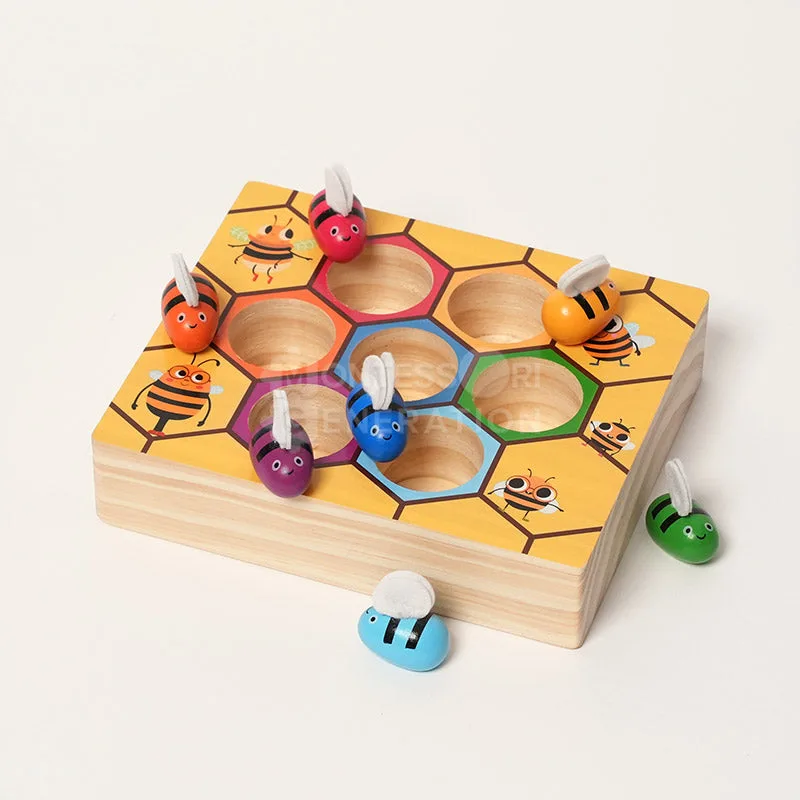
- Rule 1: Safety first: If your child still mouths toys, only choose products rated 0+ or 1+ with no small parts. A 3+ toy with small pieces like the Montessori Bee Box should wait, even if your child seems advanced. Check the age rating and the smallest part before anything else.
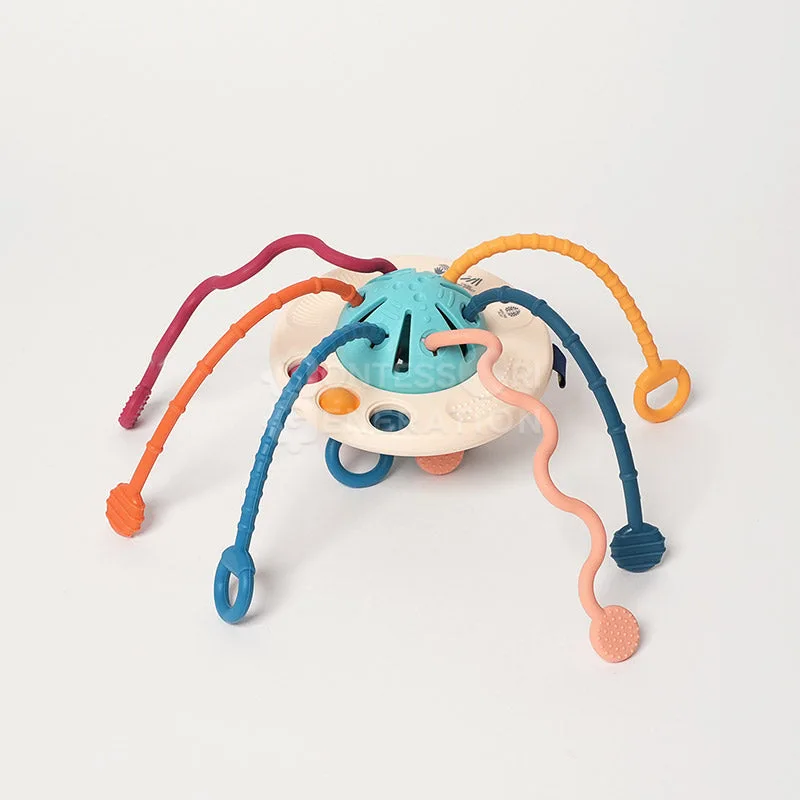
- Rule 2: Match the current skill: Pick a toy that asks for a skill your child is already practicing, such as pulling, twisting, or placing. The Montessori Silicone Pulling Toy fits a baby working on grasp and cause and effect, while the Montessori Busy Board fits a toddler working on opening and fastening. If your child needs you to do the main action, choose a simpler toy.
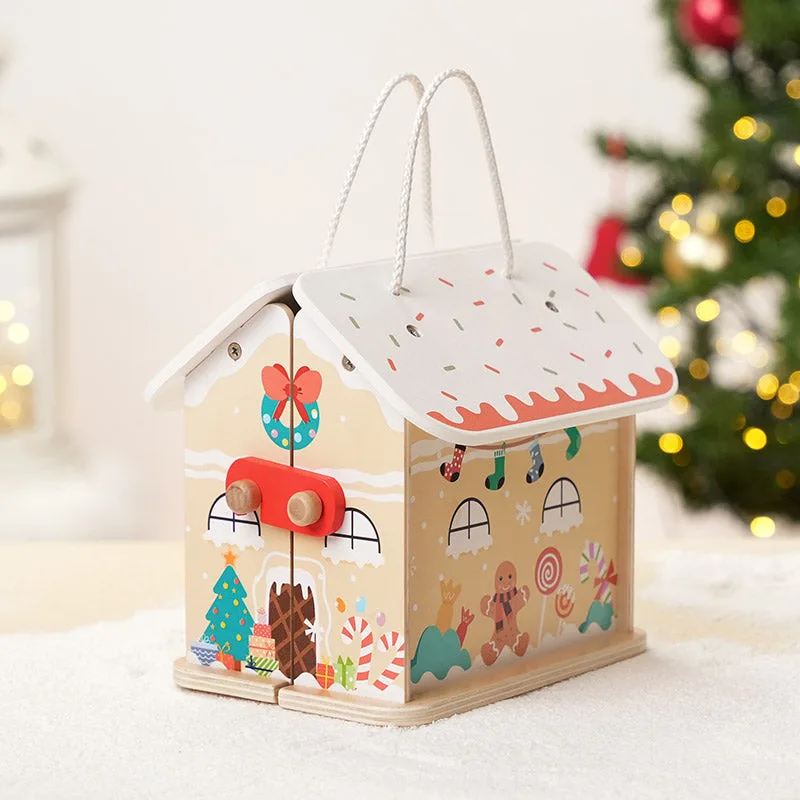
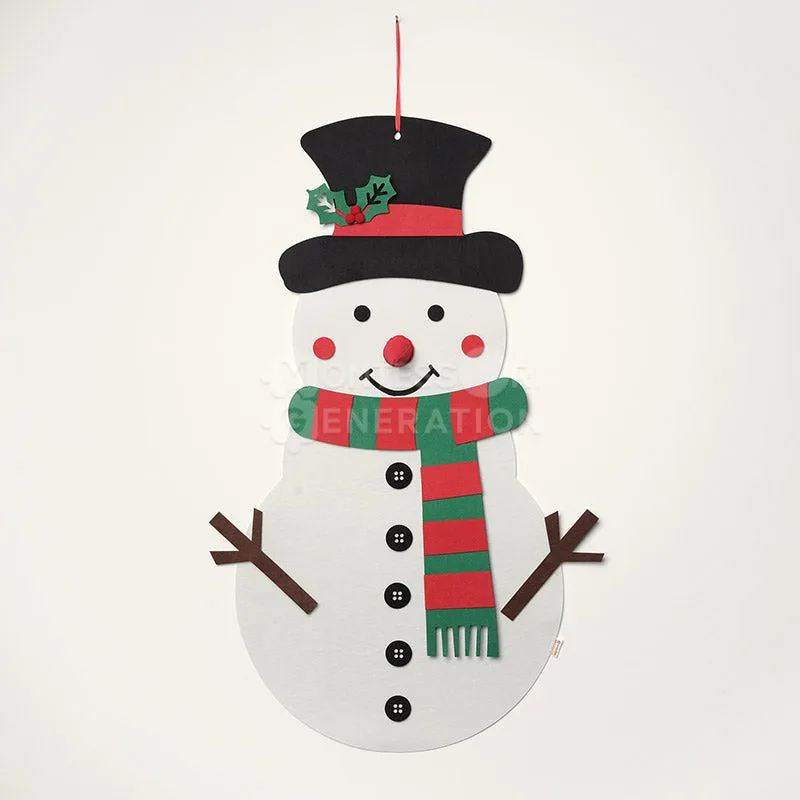
- Rule 3: Respect the care routine: Choose a material you can realistically maintain. Felt and fabric need spot cleaning, wood should not sit in water, and silicone can be hand washed. The Montessori Xmas Dollhouse is dry-cloth only, so it is a poor fit for a child who still puts toys in their mouth or plays with water. A toy that is hard to clean will not stay in rotation.
- Rule 4: Size up only after mastery: Move to the next stage when your child uses the current toy independently and starts inventing new ways to play. If they still need help or lose interest in under a minute, keep the toy stored and try again later. Independent, repeated play is the clearest sign a toy is the right age.
How real toys fit different stages
- Montessori Busy Board: Age 2+, 17.7" x 11.2" x 0.8", 4.4oz, soft felt with strong bindings, spot clean only. The light weight and soft felt make it easy for a 2-year-old to carry and use quietly, while the 2+ rating means it is not intended for mouthing babies.
- Montessori Silicone Pulling Toy: Age 0+, 4.9" x 4.9" x 7.1", 5.6oz, BPA-free and phthalate-free food-grade silicone, handwash with warm water and mild detergent. The 0+ rating and food-grade silicone make it a realistic first toy for a baby who mouths everything, and the simple care routine fits daily use.
- Montessori Bee Box: Age 3+, contains one board, seven bees, and one tweezers, 6.5" x 5.2" x 1.4", 10.9oz, high-quality wood, clean with a damp cloth and mild soap. The small bees and tweezers require a pincer grasp and enough self-control to keep pieces out of the mouth, which is why the rating starts at 3+.
- Montessori Learning Rocket: Age 1+, 5.4" x 4.9" x 8.7", 1lb 8.7oz, high-quality eco-friendly wood with non-toxic paint, clean with a damp cloth and mild soap. At just over 1.5 pounds, it is heavy enough to feel substantial but still manageable for a 1-year-old who is pulling up and carrying objects.
Is this approach right for you?
Best for
- Parents choosing a first toy for a specific age or stage
- Caregivers who want a simple checklist before buying
- Families building a small toy rotation without wasting money
Not for
- Parents looking for a single toy that will last from birth to age five
- Shoppers who only want a quick gift and do not want to check details
- Anyone who needs a toy that can be washed in a dishwasher or left in water
Age appropriateness comes down to safety, skill match, and care routine. Use the age rating as your first filter, then check the size, weight, and material against what your child can actually do today. When a toy fits the stage your child is in, it gets used, and that is the only test that really matters.