Quick answer
Worth-buying jewelry usually shows three things at once: a metal and finish that match how you'll wear it, clean construction at the clasp and joins, and a fit that feels right within the first minute. If a piece hides its materials, has rough edges, or only works for one outfit, it's usually a skip. Use the decision rules below to judge any piece in under two minutes.
Most jewelry disappointments aren't about taste. They're about a clasp that fails in month three, a finish that dulls after a week, or a pendant that never sits right on the chain. The good news: you can spot those risks before you buy by checking a short list of physical details.
This guide gives you a practical jewelry buying checklist built around metal, construction, finish, and fit. It also covers the honest trade-offs, like paying more for solid sterling silver versus choosing stainless steel for daily wear, so you can decide what's actually worth it for your habits.
Start With the Metal, Because It Sets the Ceiling
Metal is the first jewelry quality sign to verify because it determines how the piece ages. Solid sterling silver and 14k gold vermeil sit at the higher end for durability and finish, while 18k gold stainless steel is a strong everyday option that resists water and sweat. If a listing doesn't name the metal clearly, treat that as a real limitation rather than a small omission.
Match the metal to your routine instead of chasing the most expensive option. If you never remove your jewelry, prioritize water-resistant and sweat-proof materials. If you rotate pieces and store them properly, a finer finish stays beautiful longer. The right metal is the one that survives your actual week.
- Look for a named metal, not vague words like 'gold-tone' or 'premium alloy'.
- Check whether the clasp and chain are described as part of the same quality level.
Inspect Construction and Craftsmanship Signs
Construction is where jewelry craftsmanship signs are easiest to judge. Run a fingertip along edges and joins: quality pieces feel smooth, not sharp or unfinished. Check that the clasp closes with a firm click and that the chain links are uniform. On pendants, look at how the bail attaches, since a thin or poorly soldered bail is a common failure point.
Handmade pieces deserve a fair read. A handmade silver pendant may show slight differences from one unit to the next, and that's a normal part of the process rather than a defect. What you're screening for is structural weakness, not tiny cosmetic variation. If a piece is handmade, ask whether the chain and clasp come from a reputable source, since those parts take the daily wear.
- Test the clasp three times before buying; it should feel consistent every time.
- Gently flex a chain link between two fingers; it should resist, not bend easily.
Judge the Finish and Surface Details
Finish tells you how the piece will look in six months. A polished surface should reflect light evenly without cloudy patches, and a matte or brushed finish should be consistent across the whole piece. Uneven plating, visible seams, or a pendant that looks different from the photo are reasons to pause. For gold vermeil, the thickness of the gold layer matters more than the karat number shown in marketing.
Also consider how the finish fits your habits. Water-resistant and tarnish-resistant pieces hold up better if you wear them constantly. Delicate finishes reward a little care: store pieces separately, keep them dry, and they'll keep their look far longer.
- Hold the piece under different light; quality finish looks consistent from every angle.
- Ask how the finish is protected if you plan to wear it daily.
Check Fit and Wearability Before You Commit
Fit is the most skipped step in a jewelry buying checklist, and it causes the most returns. For necklaces, confirm the length plus any extension so it lands where you want on your neckline. For earrings, check total height and width against your comfort limit, since a bold statement piece can feel heavy by hour three. For rings and anklets, verify sizing options exist before you fall in love with a design.
Comfort is a legitimate quality signal. If a piece pinches, pulls hair, or spins constantly in the first minute, it will bother you more over time, not less. Buy for the version of your day that actually happens, not the one where you stand still for photos.
- Write down your preferred necklace length before browsing so you can filter quickly.
- For statement earrings, weigh total height and width against how long you'll wear them.
Decision Rules: Buy, Negotiate, or Walk Away
- Metal is named and matches your routine: If the listing states sterling silver, 14k gold vermeil, or 18k gold stainless steel and that metal fits how often you remove your jewelry, move forward. If the metal is vague, treat it as a walk-away unless the price is genuinely disposable. Named metal plus matched routine equals a green light.
- Clasp and joins pass the two-minute test: Close and open the clasp three times and run a finger along every edge and bail. Consistent clicks and smooth edges are quality signs. A sticky clasp or sharp edge is a repair waiting to happen. Any rough edge or inconsistent clasp is a hard stop.
- Fit is confirmed before checkout: Check length plus extension for necklaces, total height and width for earrings, and available sizing for rings and anklets. If the piece only fits one outfit or one hour of wear, it's not worth the price. If you can't confirm fit, don't buy yet.
- Finish survives daily life: Choose water-resistant, sweat-proof, tarnish-resistant finishes if you wear jewelry constantly. Choose finer finishes only if you'll store pieces separately and keep them dry. Paying more for a delicate finish you'll abuse is the most common waste. Match the finish to your habits, not your aspirations.
What Quality Looks Like in Practice
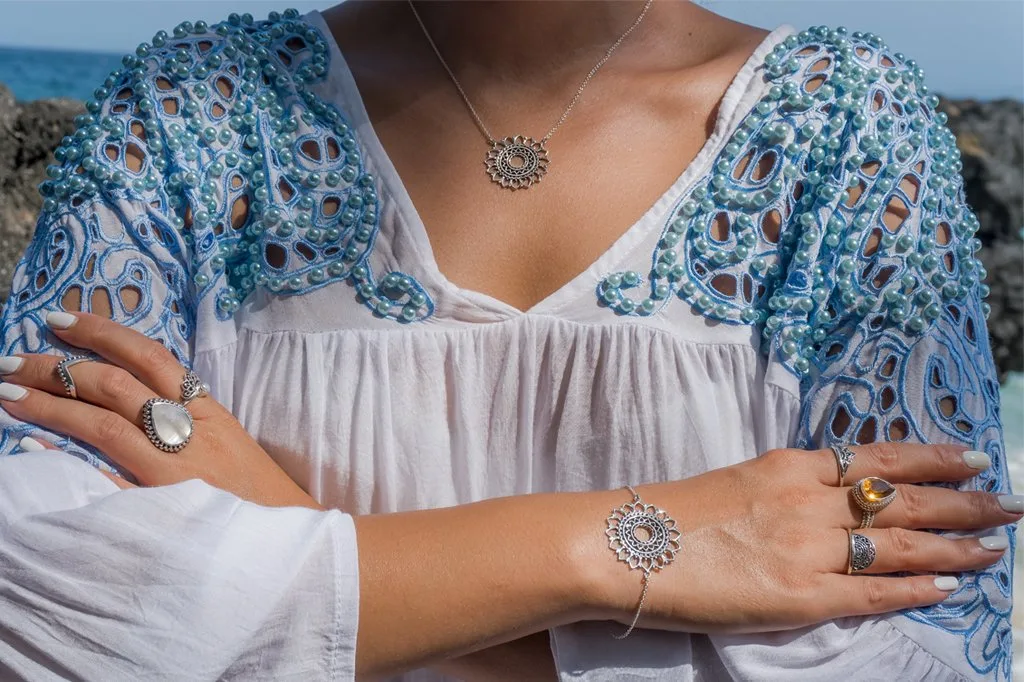
- Silver Sun Mandala Necklace: Solid sterling silver with a 16''-18'' adjustable length, a 30mm pendant diameter, and a chain and lobster clasp made in Italy; handmade by master silversmiths, so slight differences may appear. The adjustable length solves neckline fit, and the named clasp origin is a concrete craftsmanship sign. The handmade caveat is normal variation, not a defect.
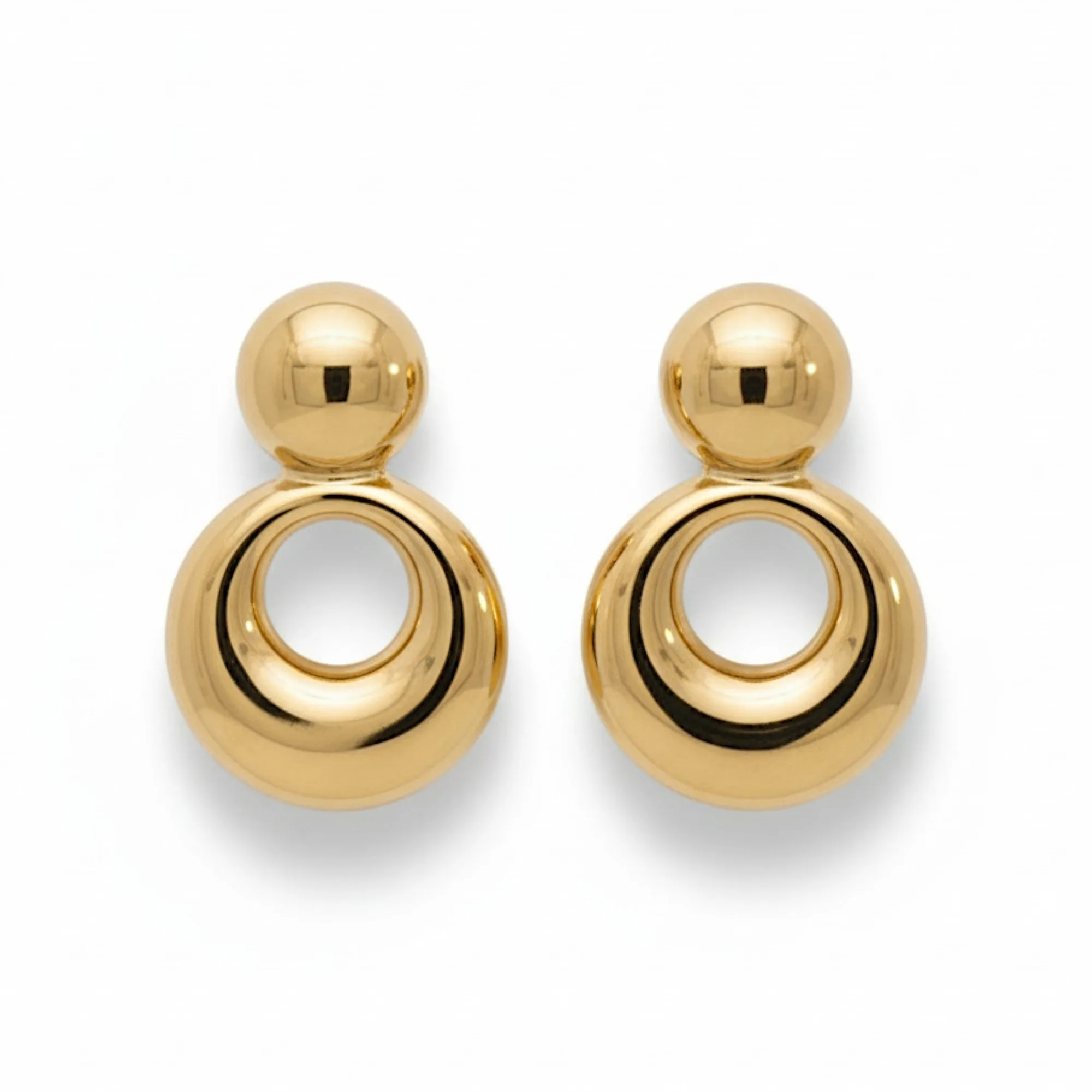
- Orbit Gold Earrings: 18k gold stainless steel, hypoallergenic and safe for sensitive skin, water-resistant and sweat-proof, won't tarnish, with a total height of 43mm and width of 15mm to 28mm. This is the low-maintenance end of the spectrum: you can wear it daily without a care routine. The 43mm height is a real fit consideration if you prefer lighter earrings.
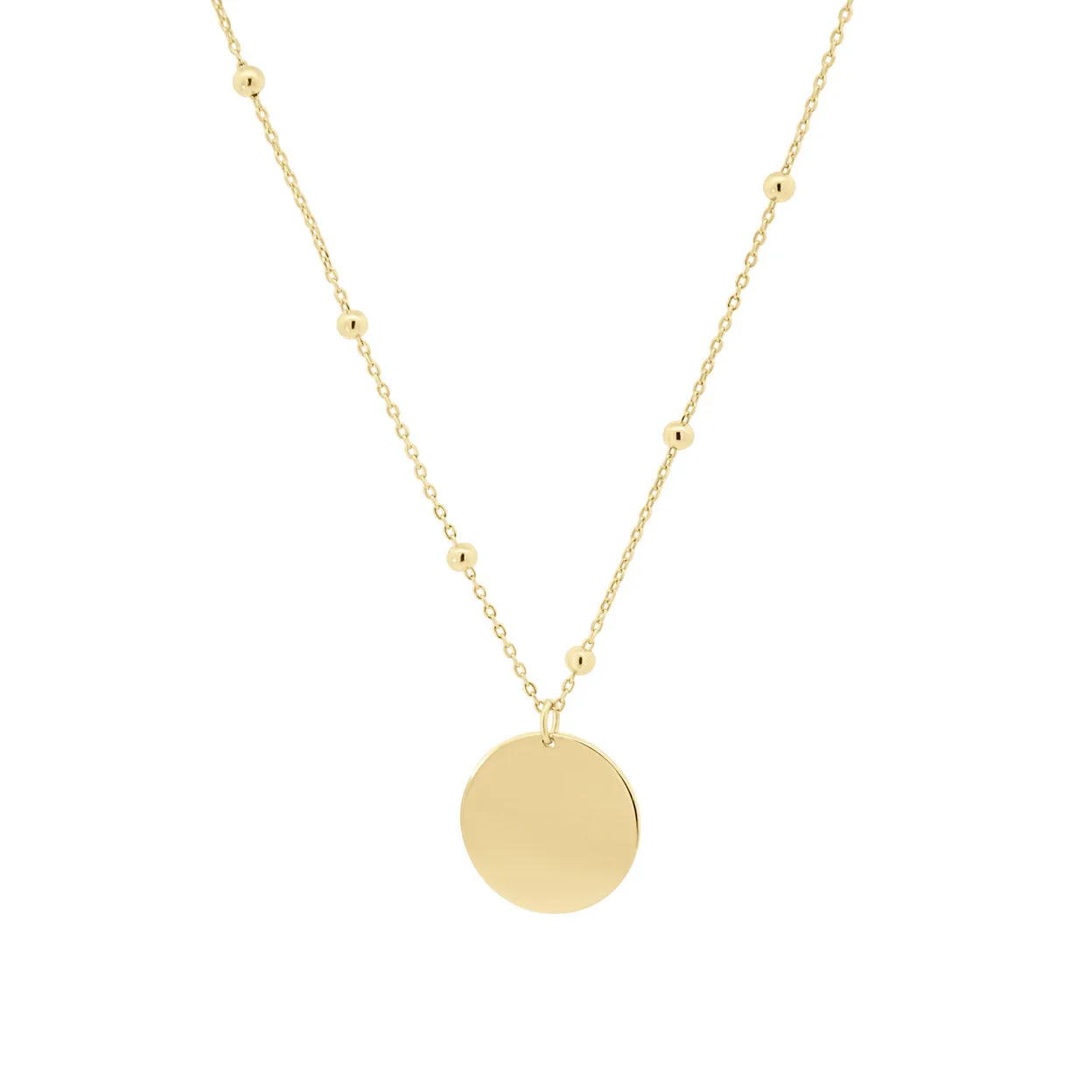
- Ball Station Coin Necklace: Available in sterling silver or 14k gold vermeil, with delicate ball stations, a polished coin pendant, and a length of 45cm plus a 5cm extension. Choosing the material at checkout lets you match the piece to your wear habits, and the 5cm extension gives you layering flexibility without a second purchase.
- Men's Silver Wheel Pendant: A silver handmade pendant whose wheel symbol represents power, strength, and peace, guided by a captain who chooses his own direction. A meaningful symbol adds staying power to a purchase, and the handmade construction means you should check the bail and edges for smooth finishing.
Who This Approach Fits
Best for
- Shoppers who want a repeatable checklist instead of relying on brand names or price alone
- Anyone building a small, hard-working jewelry rotation for daily wear
- Gift buyers who need to judge quality quickly without the recipient present
Not for
- Collectors seeking investment-grade or certified fine jewelry, where appraisal and documentation matter more than wearability
- Shoppers who want the lowest possible price and accept fast tarnishing or short lifespan as the trade-off
Quality jewelry isn't about the highest price tag. It's about a named metal, clean construction, a finish that matches your routine, and a fit you've actually verified. Run any piece through these decision rules before you buy, and you'll keep the pieces that earn their place in your rotation.