Quick answer
Check for a thumb's width of space at the longest toe, a snug heel that doesn't slip, and a width that leaves no red marks after wear. Sandals that fit well support natural foot motion and prevent blisters.
Why sandal fit differs from closed-toe shoes
Sandals expose more of the foot, so fit issues like heel slip or overhang are easier to see—but also easier to ignore. Because straps hold the foot differently than a closed upper, a sandal that seems roomy can still cause rubbing or instability. The goal is a secure fit that still allows the foot to spread naturally during walking.
The trade-off between growing room and safety
It's tempting to buy sandals a size up so they last longer, but too much extra space increases the risk of tripping, blisters, and poor foot support. A thumb's width (about half an inch) at the toe is the safe maximum. Any more than that and the foot can slide forward, causing toes to jam against the front edge.
Step-by-step sandal fit check
- Check toe room while standing: Have your child stand with weight on both feet. Press gently on the front of the sandal. There should be about a thumb's width (half an inch) between the longest toe and the edge of the sandal. For open-toe styles, the toes should not hang over the front edge. If there is less than a thumb's width, the sandal is too short and can cause toe jamming. If more, the foot may slide forward.
- Test the heel hold: Slide your finger between the heel and the back strap. It should fit snugly without being tight. Have your child walk a few steps. The heel should not lift more than a quarter inch off the sole. A loose heel causes blisters and instability. If the heel lifts more than a quarter inch, the sandal is too long or the back strap is too loose.
- Check width and strap pressure: Look at the sides of the foot. The widest part should align with the widest part of the sandal. Run your finger under each strap—there should be a little slack but not enough to pinch skin. After taking the sandals off, check for red marks that don't fade within a few minutes. Deep, lasting red marks mean the straps are too tight. No contact at all means the straps are too loose and won't hold the foot securely.
Sandals that make fit easier
-
Kai / Kiki - Flex® | Black: Designed with grippy soles and approved by the American Podiatric Medical Association for promoting healthy foot development. The grippy soles help keep little feet secure even when the sandal is slightly loose, and the APMA seal means the design supports natural foot motion—a good sign for fit-conscious parents.
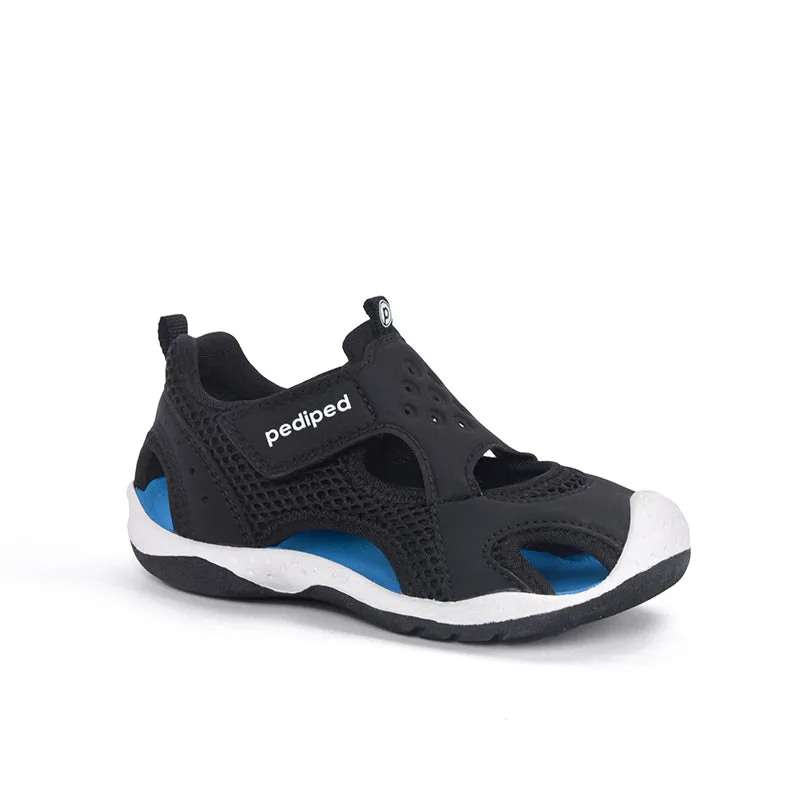
Kai / Kiki - Flex® | Black
-
Nikki - Grip ‘n’ Go™ | Silver: Features memory foam cushioning and breathable materials, approved by the American Podiatric Medical Association for promoting healthy foot development. Memory foam conforms to the child's foot shape, which can reduce pressure points and help the sandal feel more custom-fitted without being too tight.
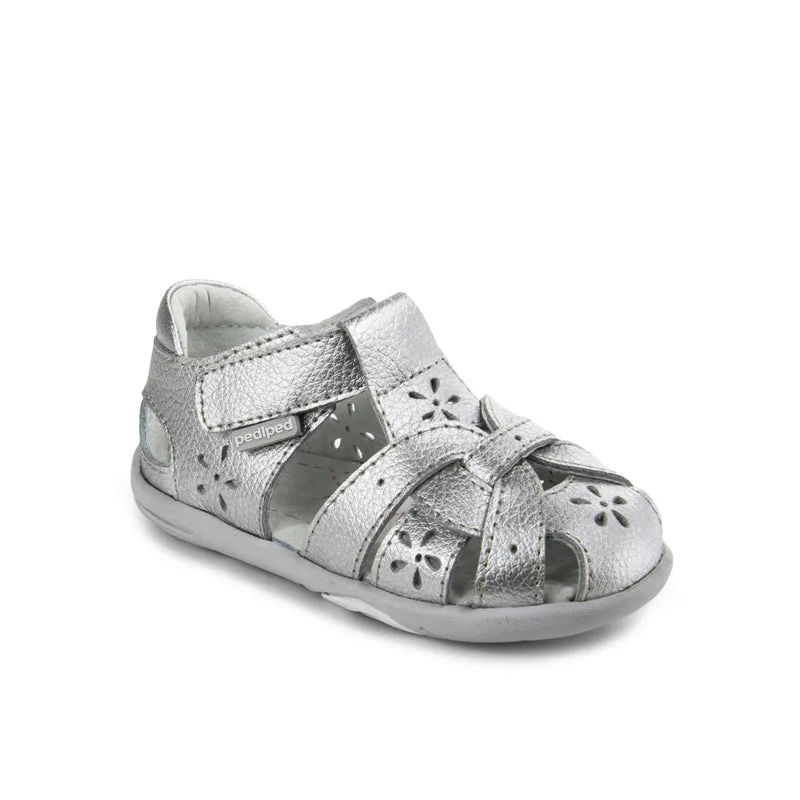
Nikki - Grip ‘n’ Go™ | Silver