Quick answer
Do a bra fit check in front of a mirror: the band should sit level and snug on the loosest hook, the center panel should touch your sternum, and the cups should hold all your breast tissue without gaping or spilling. If the band rides up, the cups overflow, or straps dig in even when adjusted, the size is wrong. Fix the band first, then the cup — and if two sizes still fail, change the style, not the number.
Most bra discomfort isn't a mystery — it's a size or shape mismatch you can spot in under a minute. The tricky part is that the signs of a bra that's too small and a bra that's too big can look almost identical, so people often size up when they should size down, or tighten straps when the real problem is the band.
Use the seven signs below as a diagnostic checklist. Each one pairs a symptom with its likely cause and a corrective action, so you can tell whether to swap the size, adjust the fit, or move to a different construction entirely.
Start with the band, not the cup
Roughly 80% of a bra's support comes from the band, so diagnose it first. Fasten on the loosest hook and check the back: it should sit level with the front, not climb toward your shoulder blades. If it rides up, the band is too loose — go down a band size. If it leaves deep red marks or you can't slide two fingers underneath, it's too tight.
Once the band is level and snug, look at the cups. A band that's too loose lets the cups tip forward, which creates gaping at the top even when the cup volume is correct. That's why fixing the band often fixes what looks like a cup problem.
- Always evaluate a new bra on the loosest hook — the tighter hooks are for later, as the elastic relaxes.
- If you're between band sizes, size down and add a band extender rather than sizing up.
Sign 1: The band rides up in back
Symptom: by mid-day the back of the band has crept up your spine, and you keep tugging it down. Likely cause: the band is too large, or it has stretched out. Corrective action: move down one band size while going up one cup size to keep the cup volume the same — this is called sister sizing.
If you're already on the tightest hook and the band still climbs, the bra is worn out, not mis-sized. Elastic loses recovery over time, and no adjustment will bring it back.
- Sister size example: if a 34C rides up, try a 32D before assuming you need a different cup.
Sign 2: Breast tissue spills over the top or sides
Symptom: a visible bulge above the cup edge or under the armpit, sometimes called a double boob. Likely cause: the cup is too small, or the cup is the right volume but too shallow for your shape. Corrective action: go up one cup size first. If the spillage persists in the larger cup, the issue is shape — you need a deeper cup or a different neckline.
Spillage at the sides often means the underwire is sitting on breast tissue rather than behind it. Scoop your tissue forward and up after fastening; if it still spills, the cup is genuinely too small.
- A balconette or full-coverage cut contains fuller shapes better than a plunge with the same cup size.
Sign 3: The cups gape or wrinkle
Symptom: empty space at the top of the cup, or fabric that wrinkles instead of lying smooth. Likely cause: the cup is too big, the band is too loose, or the cup is too shallow for a fuller shape. Corrective action: check the band first. If the band is level and snug and the cups still gap, go down one cup size.
Gaping at the top of a molded cup is also common when your breast shape is fuller at the bottom than the top. In that case, an unlined or seamed cup follows your shape better than a rigid molded one.
- Don't fix gaping by tightening the straps — that pulls the band up and makes the problem worse.
Sign 4: The center panel floats away from your chest
Symptom: the small piece of fabric between the cups doesn't touch your sternum. Likely cause: the cups are too small, so they can't sit flat against your ribcage. Corrective action: go up one cup size. A floating center panel is one of the most reliable signs of a cup that's too small.
One exception: if your breasts are naturally close-set or very full in the center, some panels will never lie completely flat. If the band is level, the wires sit behind your tissue, and you're comfortable, a slight gap is a shape preference, not a fit failure.
- Check the center panel after scooping your tissue into the cups, not before.
Sign 5: Straps dig in or slide off
Symptom: deep grooves in your shoulders, or straps that fall down every time you move. Likely cause: digging straps usually mean the band isn't doing its share of the support, so the straps are carrying the weight. Slipping straps usually mean the band is too loose or the straps are set too wide for your frame.
Corrective action: tighten the band by moving to a smaller size, then adjust straps so you can slide one finger underneath. If straps still slip on a correctly sized bra, look for a style with closer-set or convertible straps.
- Straps should never leave marks that last more than a few minutes after you take the bra off.
Sign 6: The underwire pokes or sits on tissue
Symptom: the wire digs into your ribcage under the bust, or presses into breast tissue at the sides. Likely cause: the cup is too small or too shallow, so the wire can't wrap around your ribcage properly. Corrective action: go up a cup size and make sure the wire sits flat against your ribcage, not on top of breast tissue.
If the wire still digs in after sizing up, the cup depth is wrong for your shape. A style with a wider, deeper wire — or a wire-free construction — will be more comfortable than continuing to adjust the size.
- After fastening, run a finger along the wire to confirm it's resting on ribcage, not breast.
Sign 7: You're constantly adjusting
Symptom: you tug the band, hike up the cups, or re-scoop tissue several times a day. Likely cause: a combination of band and cup mismatch, or a bra that has lost its elasticity. Corrective action: do a full bra fit check — band level on the loosest hook, center panel flat, wires behind tissue, no gaping or spillage.
If a bra passes every check when you put it on but needs adjusting within an hour, the elastic is tired. Rotate it out and replace it rather than trying to fix the fit.
- A well-fitting bra should need no adjustment between morning and evening.
Bra fit diagnosis: symptom, cause, fix, and when to stop
- Band rides up in back: Cause: band too large or stretched out. Fix: go down one band size and up one cup size (sister size). Stop if you're already on the tightest hook — replace the bra instead.
- Spillage over the top or sides: Cause: cup too small or too shallow. Fix: go up one cup size, then scoop tissue forward and up. If spillage continues in the larger cup, switch to a deeper cut like a balconette.
- Cups gape or wrinkle: Cause: cup too big, band too loose, or cup too shallow. Fix: verify the band is level and snug, then go down one cup size. Stop tightening straps — if gaping persists, try an unlined or seamed cup.
- Center panel floats off the chest: Cause: cups too small. Fix: go up one cup size and re-check after scooping. A slight gap is acceptable only if the band is level and the wires sit behind tissue.
- Straps dig in or slide off: Cause: band not carrying its share of support, or straps set too wide. Fix: size down in the band, then adjust straps to one-finger tension. If slipping continues on a correct band size, choose closer-set or convertible straps.
- Underwire pokes or sits on tissue: Cause: cup too small or too shallow. Fix: go up one cup size and confirm the wire rests on ribcage. If it still digs in, change construction — wider wire or wire-free — rather than sizing again.
- Constant all-day adjusting: Cause: band and cup mismatch, or lost elasticity. Fix: run the full fit check; if it passes but needs adjusting within an hour, the bra is worn out. Stop adjusting and replace — elastic doesn't recover.
Fit-friendly pieces worth knowing
- KILO BRAVA LACE COLLECTION- BLACK- UNDERWIRE BODYSUIT: Crafted from stretch eyelash lace and mesh with supportive underwire cups and adjustable straps, plus a thong back and retro high-leg silhouette. The adjustable straps and structured underwire let you fine-tune the fit, which makes it a useful test piece when you're narrowing down your size.
- KILO BRAVA LACE COLLECTION- BLACK- BUSTIER: Made from stretch eyelash lace and stretch mesh with underwire cups, strategic boning, a hook and eye back closure, and adjustable straps. The hook and eye closure and boning give more structure than a standard bra, so it can work well if you want support without relying on strap tension.
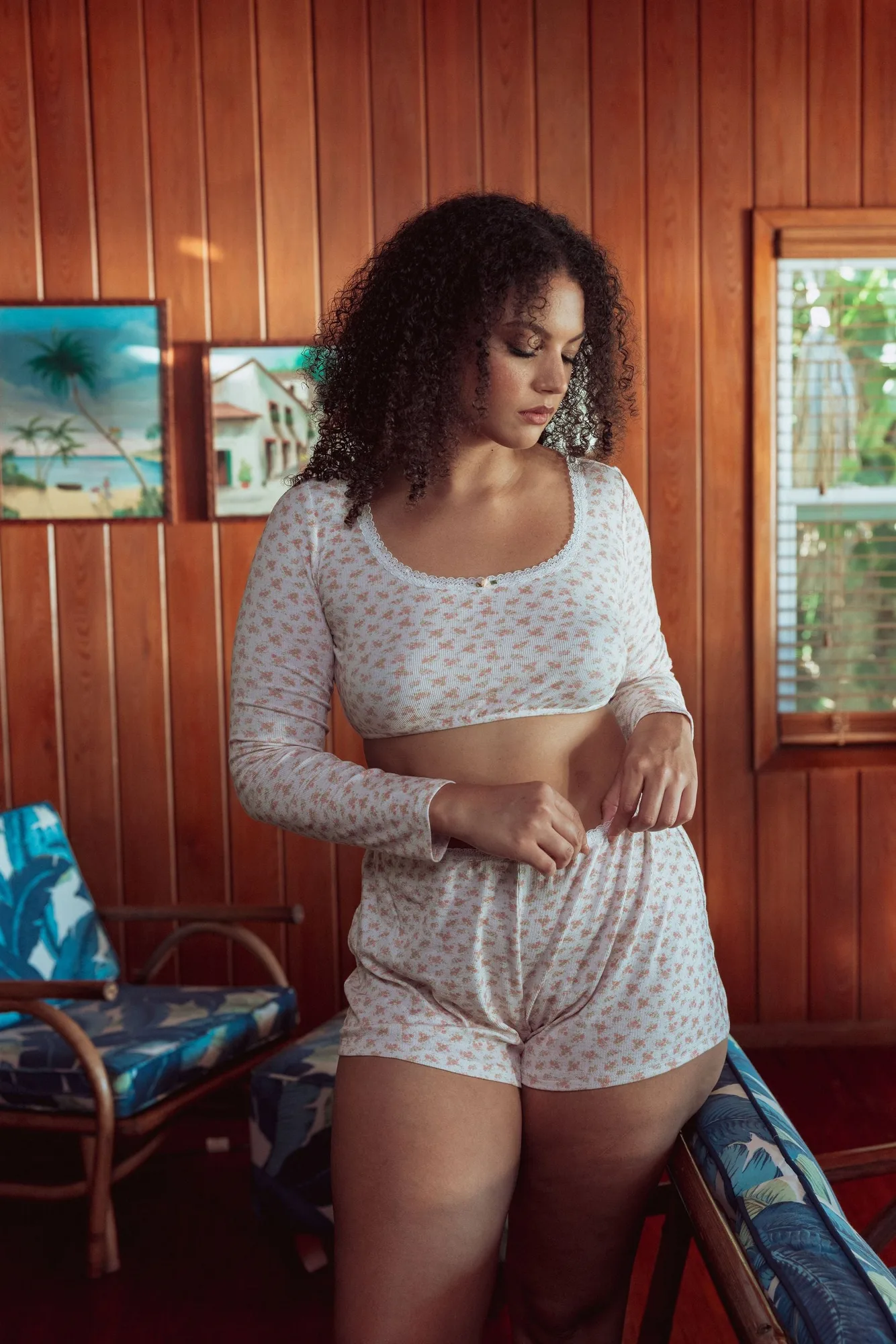
- KILO BRAVA DITSY PINK FLORAL - HIGH WAISTED SHORT: High waisted shorts with a relaxed fit in Modal/Spandex rib fabric, with lace detail at the waist and a rosette bow at center. A soft, non-compressive bottom layer won't fight with your bra band, so it's easier to tell whether discomfort is coming from the bra or the waistband.
Work through the signs in order — band first, then cup, then construction — and you'll usually land on the right size in one or two tries. If two sizes both fail the same check, the problem is the style, not your measurements, so switch cuts rather than continuing to adjust.