Quick Answer
Check the box label, stitching, size tag, and insole glue pattern. If any detail looks rushed or inconsistent with authentic pairs, treat the sneakers as suspicious.
Why Authentication Matters for All-Over Print Sneakers
All-over print sneakers like the Nike AF1 x Cactus Jack are popular targets for counterfeiters because the print pattern is easy to copy but hard to get exactly right. Authentic pairs have a precise print alignment that fakes often miss.
The condition of a used pair can also affect how easy it is to spot a fake. Worn sneakers may have faded prints or creased leather, so focus on details that don't wear down, like the size tag and stitching density.
Trade-Off: Used Pairs vs. Deadstock
Buying used can save you money, but it also means some authentication clues are less reliable. For example, a worn sole or scuffed toe box doesn't automatically mean fake. Instead, prioritize structural details like the heel tab shape and the size tag font.
If the seller only provides photos of one side of the shoe, ask for close-ups of the size tag and box label. A legitimate seller will usually accommodate that request.
Step-by-Step Authentication Checklist
- Inspect the Box Label: Authentic Nike boxes have a crisp, evenly spaced label with a barcode that matches the style code on the size tag. A common mistake is ignoring the font—fake labels often use a slightly bolder or thinner font. Check that the style code on the box matches the one on the size tag.
- Examine the All-Over Print Alignment: On authentic pairs, the print pattern flows continuously across the panels without awkward cuts or misaligned edges. Compare the print placement on the toe box and heel; fakes often have noticeable gaps or overlaps. If the print doesn't line up at the panel seams, it's a red flag.
- Check the Size Tag: The size tag on the inside of the tongue should have a clear, evenly printed font with no smudges. Verify the style code, color code, and size match the box. Fakes often have incorrect spacing or a slightly off-white tag. Take a photo of the size tag and compare it to authentic examples online.
- Inspect the Stitching: Authentic Nike stitching is tight, even, and matches the thread color of the surrounding material. Loose threads, skipped stitches, or uneven spacing are common on fakes. Pay special attention to the Swoosh stitching and the heel counter. Run your finger along the stitching; it should feel smooth, not bumpy.
- Check the Insole Glue Pattern: Remove the insole and look at the glue that holds it to the midsole. Authentic pairs have a neat, consistent glue pattern, while fakes often have excess glue or uneven application. Also check the insole print—it should be sharp and centered. If the glue looks messy or the insole print is off-center, be cautious.
- Verify the Heel Tab and Pull Loop: The heel tab on authentic AF1s has a specific shape and rigidity. Compare it to known authentic photos. The pull loop (if present) should be stitched securely and not feel flimsy. A flimsy heel tab or loose pull loop is a strong indicator of a fake.
- Review the Seller's Photos and Condition: Ask for additional photos if any angle is missing. For used pairs, check that the wear is consistent with the stated condition. If the seller claims 'used-good' but the soles look brand new, that's a mismatch. Always request a photo of the size tag and box label before purchasing.
Product Facts
-
NIKE/Low-Sneakers/US 11/All Over Print/MLT/AF1xCACTUS JACK: This Nike AF1 x Cactus Jack pair is size US 11, has an all-over print, and is listed in used-good condition. When buying a used pair, you can compare the size tag numbers and print alignment against known authentic references for that specific size.
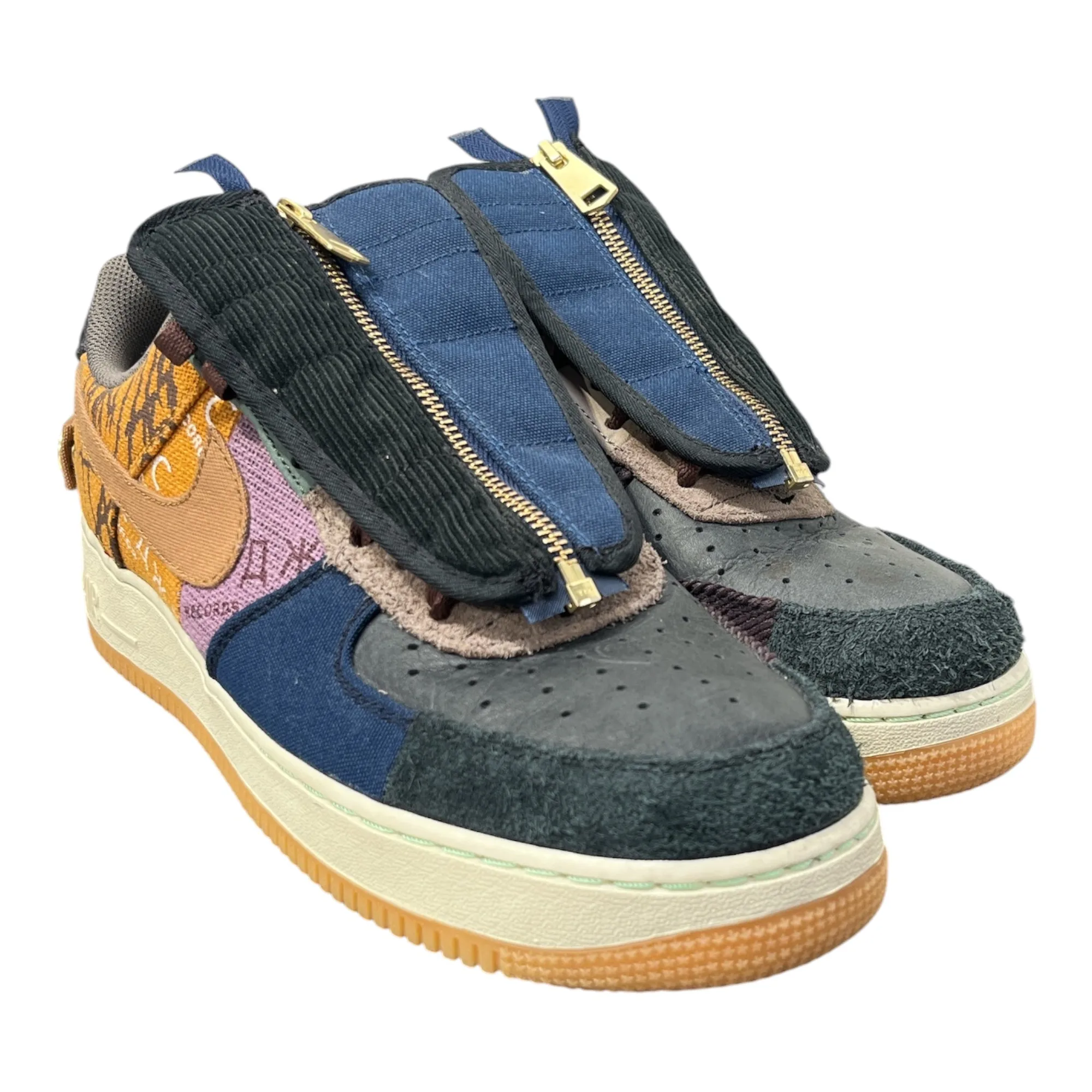
NIKE/Low-Sneakers/US 11/All Over Print/MLT/AF1xCACTUS JACK