Start with the bottle, not the page
The Coravin Wine Journal is built around a simple idea: every bottle you open by the glass deserves a record that follows it from first pour to last. Before you write a single tasting note, decide how you will identify each bottle. The journal includes custom bottle stickers designed to log pour dates and cross-reference your notes, so the sticker becomes the bridge between the bottle in your rack and the page in your journal.
Put a sticker on the bottle before you pour. Write the date of the first pour on it. That date is the anchor for everything else you record, and it makes the journal useful months later when you cannot remember whether a bottle was opened last week or last season.
A repeatable setup for each new bottle
- Apply a bottle sticker and note the opening date: Use one of the supplied stickers to mark the bottle. Record the date of the first pour so the journal entry and the bottle stay linked.
- Create the wine's journal entry: The journal provides space to record up to five experiences per wine. Start a fresh entry for the wine and leave room for later pours.
- Capture the first tasting while it is fresh: Note aroma, taste, colour, occasion and pairing for that first glass. The journal's guides on assessing wine structure, color and aroma give you a consistent way to describe what you notice.
- Add a pour date for every subsequent glass: Each time you return to the bottle, log the date and a short note. The sticker and the journal entry together create a running record of how the wine changes.
- Cross-reference before you pour again: Check the sticker and the journal entry before opening a new bottle or returning to an old one. This habit keeps your notes accurate and helps you avoid duplicating entries.
What to write in a tasting note that you will actually reuse
A tasting note is only useful if you can compare it later. The journal's structure prompts you to cover aroma, taste, colour, occasion and pairing, which is enough to jog your memory without turning every glass into homework. Write the occasion plainly, such as a weeknight dinner or a friend's visit, because context often explains why a wine showed well or poorly.
Use the journal's guides on wine structure, color and aroma to keep your vocabulary consistent from bottle to bottle. If you describe one wine as having bright acidity, use the same kind of language the next time so your notes form a comparable record rather than a series of unrelated impressions.
What the Coravin Wine Journal gives you for bottle tracking
-
Wine Journal: Designed for wine lovers who explore by-the-glass with Coravin, the Coravin Wine Journal lets you record every tasting experience – capturing notes on aroma, taste, colour, occasion and pairing – with space to record up to five experiences per wine. Five experiences per wine is enough to follow a bottle across several pours, which is exactly what tracking an opened bottle requires.
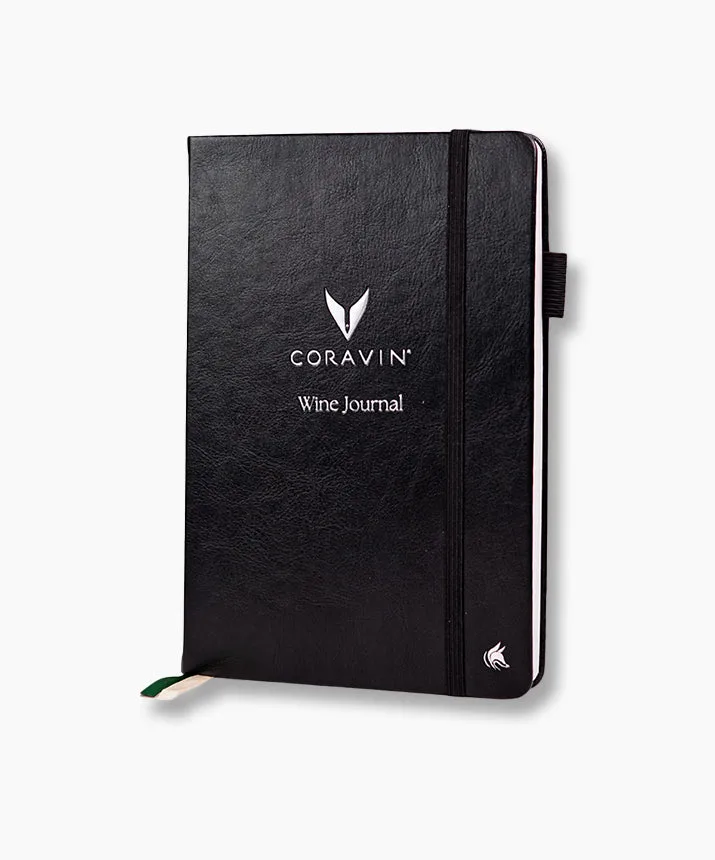
Wine Journal
-
Wine Journal: Complete with custom bottle stickers to log pour dates and cross-reference your notes, this is the only journal of its kind. The stickers are the physical link between the bottle and the journal page, so you can identify a bottle at a glance without relying on memory.
-
Wine Journal: Inside, you’ll find intuitive guides on how to assess wine structure, color and aroma, along with expert tips on food pairing and best practices for using your Coravin wine by-the-glass systems. The built-in guides support consistent tasting notes and remind you of Coravin best practices, so the journal doubles as a reference while you pour.
Keeping the log organized as bottles accumulate
A wine journal becomes hard to use when entries are scattered. Group your notes in a way that matches how you actually drink: by region, by grape, or simply in the order you opened each bottle. The important thing is that the bottle sticker and the journal entry agree, so you can move from the bottle in your hand to the right page without flipping through the whole book.
If you open several bottles in one evening, write the sticker dates before the first pour and fill in the tasting notes afterward. The journal's five-experience format gives you room to return to each wine later, so a busy evening does not force you to choose between enjoying the company and keeping a record.
Habits that keep a wine record trustworthy
- Date every pour, not just the first: The opening date tells you how long a bottle has been open, but the pour dates show how your impression changed. Both belong in the journal.
- Match the sticker to the entry before you write: A quick check that the bottle sticker and the journal page refer to the same wine prevents mixed-up notes later.
- Use the pairing tips as a record, not a rule: The journal includes expert tips on food pairing; note what you actually served so you can repeat or avoid the combination next time.
- Leave the journal where you pour: A journal that lives near your Coravin system is more likely to be filled in while the glass is still in front of you.
When the journal is the right tool, and when it is not
The Coravin Wine Journal suits anyone who opens wine by the glass and wants a written record that connects bottles, dates and tasting impressions. It is not a cellar-inventory database, and the supplied information does not describe digital features or app integration. If you need a searchable inventory across hundreds of bottles, a spreadsheet may serve you better; if you want a physical record that travels from bottle to page, the journal is designed for exactly that.
The journal's value comes from repeated use. Set it up once with stickers and a consistent entry habit, and the record builds itself glass by glass.