Quick answer
Start the transition when your baby outgrows the bassinet or shows signs of rolling, usually around 4-6 months. Maintain a consistent bedtime routine and use gradual exposure to the crib during naps before full nights.
Why timing matters for a smooth transition
Moving too early can cause resistance, while waiting too long may pose safety risks if your baby becomes more mobile. Most bedside bassinets have weight and height limits—check yours to know when it's time. A gradual shift, starting with daytime naps, often works better than an abrupt change.
Common sleep disruptions and how to address them
Babies often wake more frequently after the switch because the new environment feels different. Keep the crib in your room for the first few nights or use a bedside bassinet like the Halo BassiNest Essential to maintain closeness while your baby adjusts. A familiar sleep sack or white noise machine can also help ease the change.
Diagnosing and solving the transition
- Symptom: Your baby refuses to sleep in the crib after being comfortable in the bassinet.
- Likely cause: The crib feels unfamiliar—different smell, mattress firmness, or lack of the cozy bassinet walls. Your baby may also miss your proximity if moving from a bedside bassinet.
- Corrective action: Start with one nap per day in the crib for 3-5 days. Use a familiar sleep sack and white noise. Place the crib next to your bed initially, then gradually move it away over a week. If using the Halo BassiNest, its portability lets you keep it in the same room as the crib for a gradual shift. If your baby still refuses after 2 weeks, consider a longer adjustment period or consult your pediatrician.
- Stop or choose another option: If your baby shows extreme distress (crying for over 30 minutes, vomiting, or not sleeping at all), pause the transition and try again in 1-2 weeks. Some babies need a slower approach or a different sleep setup.
Product spotlight
-
Halo BassiNest Essential Sleeper - Free-Standing: The Halo BassiNest Essential Sleeper features mesh walls for full airflow and visibility, plus a lightweight frame for easy portability between rooms. This design helps you keep your baby close during the transition period, making nighttime check-ins easier without fully waking either of you.
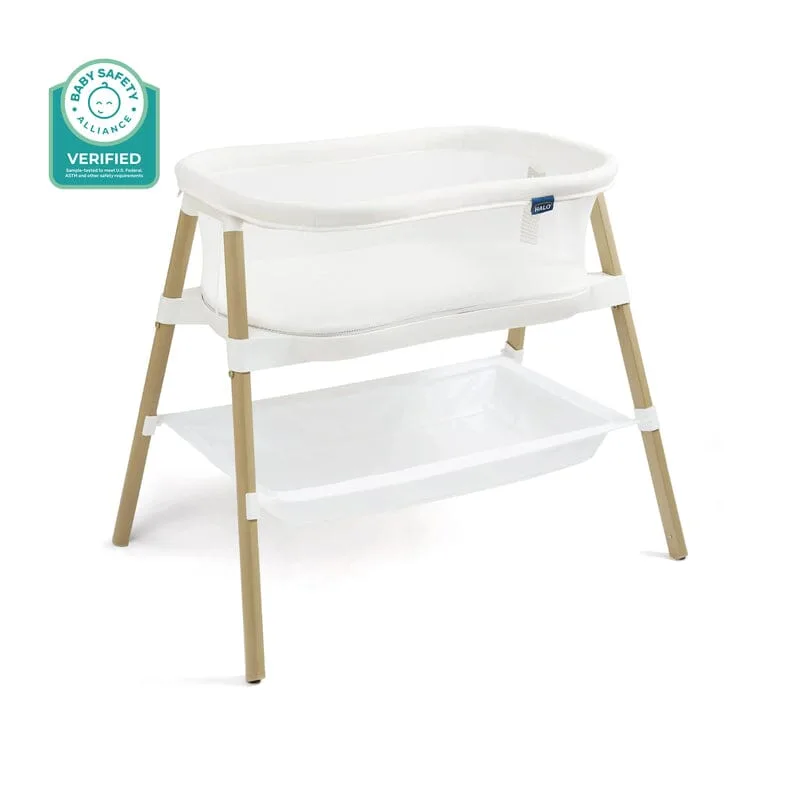
Halo BassiNest Essential Sleeper - Free-Standing