Quick answer
Start the transition when your baby shows signs of rolling, usually around 2–4 months. Replace the swaddle with the Flying Squirrel Pajama, an AAP-friendly wearable blanket that allows freedom of movement while keeping your baby cozy.
Why the Flying Squirrel Pajama works for this transition
The Flying Squirrel Pajama is designed as a wearable blanket, not a tight swaddle. Its loose fit and gentle stretch give your baby room to move arms and legs freely, which is essential once they start rolling. The ribbed cuffs at wrists and ankles prevent the fabric from riding up, so the pajama stays in place all night.
Because it’s based on safe sleep recommendations from the American Academy of Pediatrics (AAP), you can use it with confidence when your baby outgrows the swaddle. It’s suitable from 12 months up to 5 years, making it a long-term sleep solution.
When to stop swaddling
The AAP advises stopping swaddling as soon as your baby shows signs of attempting to roll over. This usually happens between 2 and 4 months, but every baby is different. Continuing to swaddle a rolling baby increases the risk of suffocation.
If your baby is consistently breaking out of the swaddle or seems frustrated by the restriction, those are also signs they’re ready for more freedom.
What not to do
Don’t use a weighted swaddle or transition sack that restricts arm movement after your baby starts rolling. The Flying Squirrel Pajama is a safe alternative because it doesn’t confine the arms.
Also avoid putting your baby in a loose blanket or a sleep sack that is too large. The Flying Squirrel Pajama’s stretchy fabric and ribbed cuffs provide a secure fit without being tight.
Step-by-step transition guide
- 1. Watch for rolling signs: Stop swaddling as soon as your baby attempts to roll over, even if it’s just on their side. This is the most important safety signal. Once you see any rolling, it’s time to move on.
- 2. Try one arm out first (optional): If your baby is used to a tight swaddle, you can leave one arm out for a few nights before switching fully. This gradual approach can ease the transition. Some babies do better with a gradual release; others are ready to go cold turkey.
- 3. Switch to the Flying Squirrel Pajama: Once your baby is comfortable with both arms free, put them in the Flying Squirrel Pajama. The loose fit and gentle stretch allow natural movement while keeping them warm. Make sure the pajama fits snugly at the neck and chest but leaves room for hips and legs.
- 4. Establish a consistent bedtime routine: Use the same steps every night: bath, book, pajama, then bed. Consistency helps your baby associate the new sleep sack with sleep. A predictable routine reduces fussiness during the transition.
- 5. Monitor and adjust: Watch for signs of discomfort or overheating. The Flying Squirrel Pajama is breathable, but you may need to adjust the room temperature or your baby’s under-layer. If your baby wakes more than usual, check that the room isn’t too warm or the pajama too thick for the season.
Product facts
-
Sleeping Baby Baseball Flying Squirrel Pajama: The Flying Squirrel pajamas double as a wearable blanket, keeping your little one cozy no matter how they toss and turn. Designed based on safe sleep recommendations from the American Academy of Pediatrics (AAP). This means you can transition from a swaddle without worrying about loose bedding or restricted movement, and the AAP backing gives peace of mind for safe sleep.
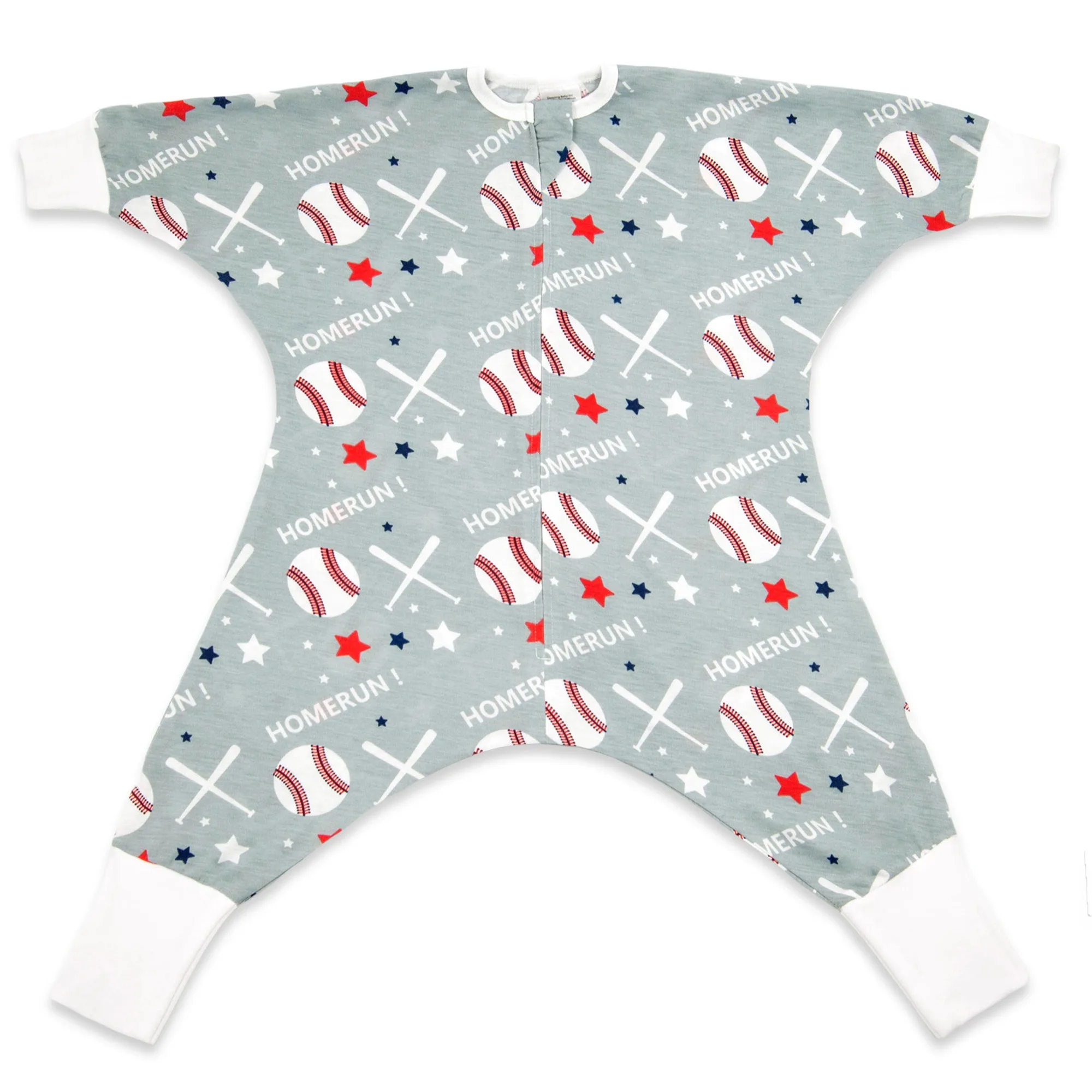
Sleeping Baby Baseball Flying Squirrel Pajama