Quick answer
Start offering a straw bottle around 9 to 12 months, once your baby can sit upright and handle soft finger foods, and keep the sippy cup available for a few weeks so the change feels gradual. Practice straw drinking with a short, soft straw first, then move to a Pura Kiki straw bottle once your toddler drinks reliably without help.
Why straws are worth the extra practice
A straw asks your child to use lips, tongue, and jaw together, which is closer to mature swallowing than tipping a sippy cup back. That coordination is why many feeding specialists suggest introducing a straw before a hard-spout cup becomes a long-term habit. Straws also let a toddler drink while sitting upright, so the bottle does not have to be raised overhead. If your child is still using a bottle at naps, keep that routine separate and change only the daytime cup first.
Set up the switch before you remove the sippy cup
Pick a calm week without travel, illness, or a new daycare room. Offer the straw bottle at one familiar drink time, such as afternoon snack, and leave the sippy cup for the other times. Expect some spilled water and a few refused sips; that is normal practice, not failure. If your toddler is teething or congested, pause for a few days and try again rather than pushing through.
Choose the right straw bottle for your child's stage
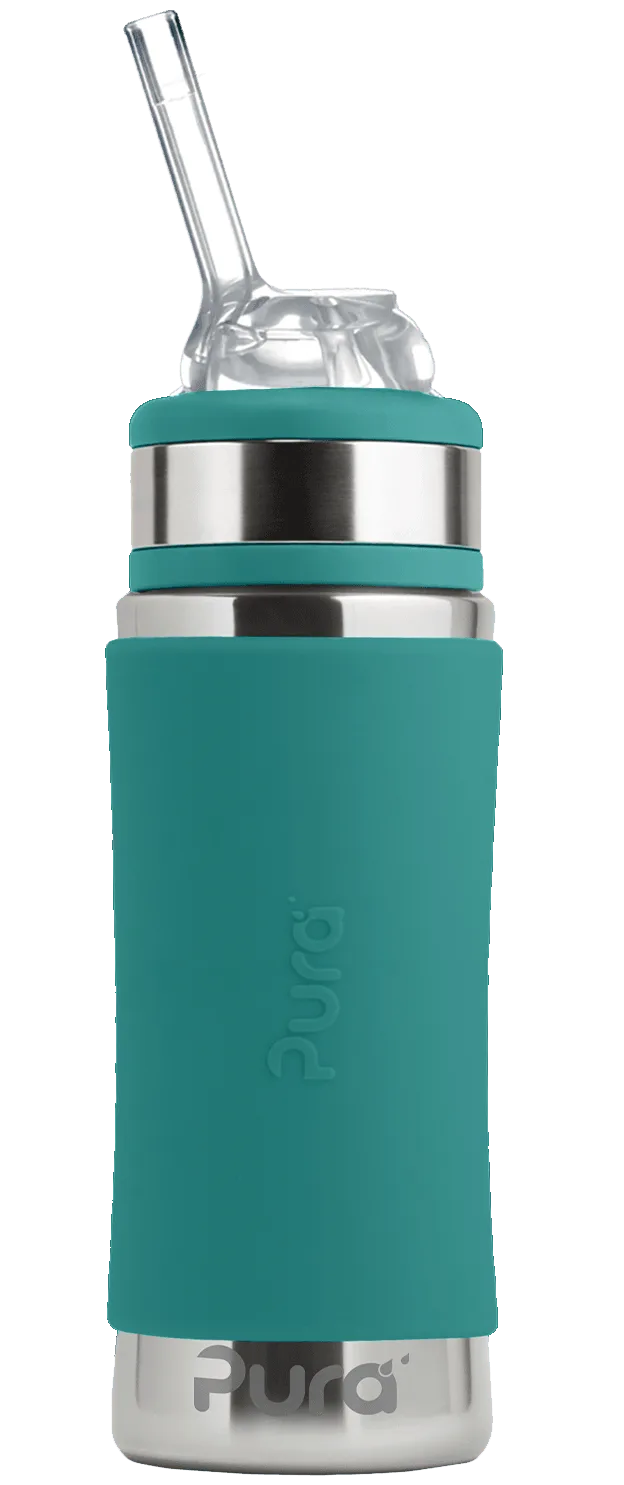
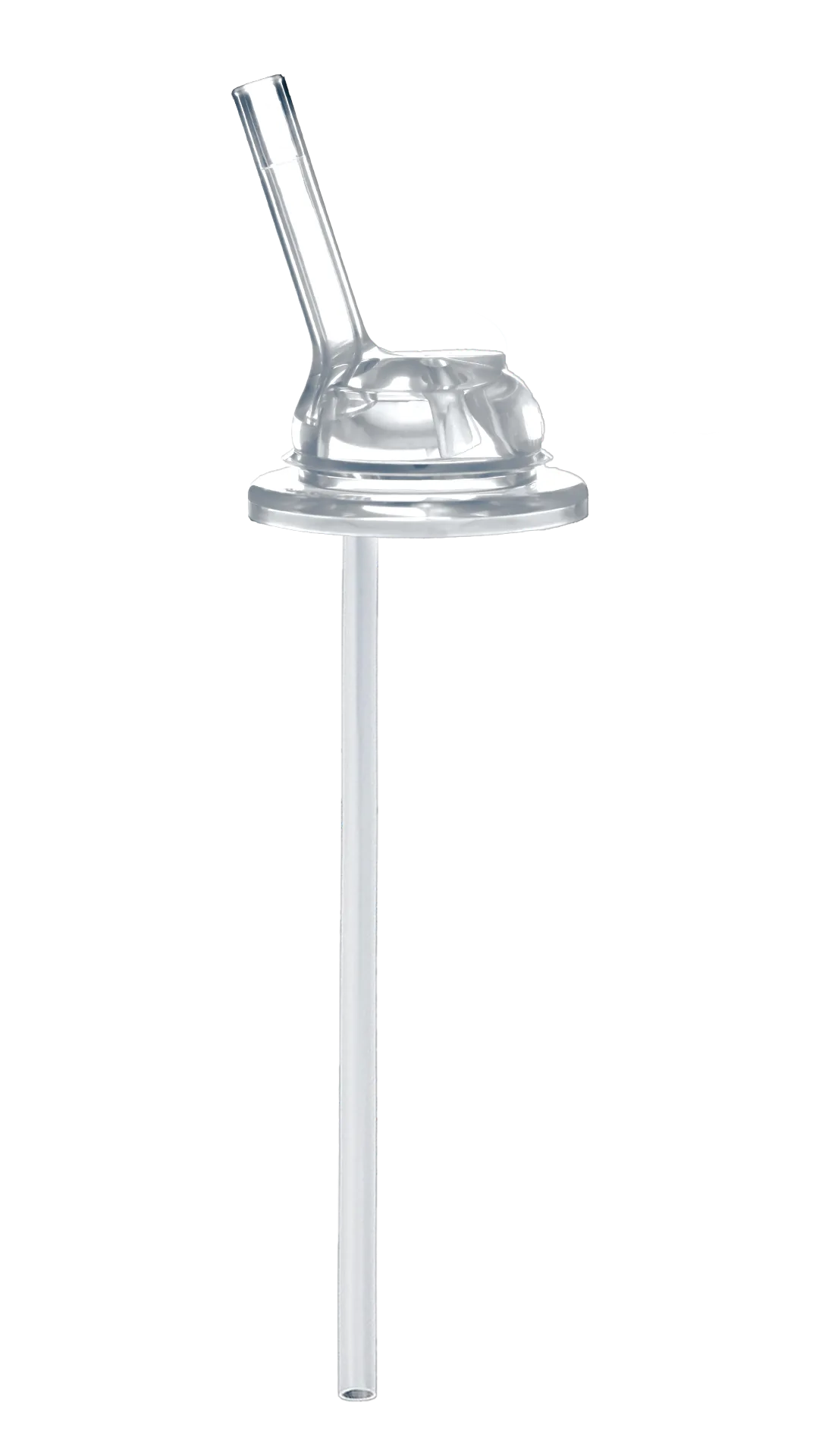
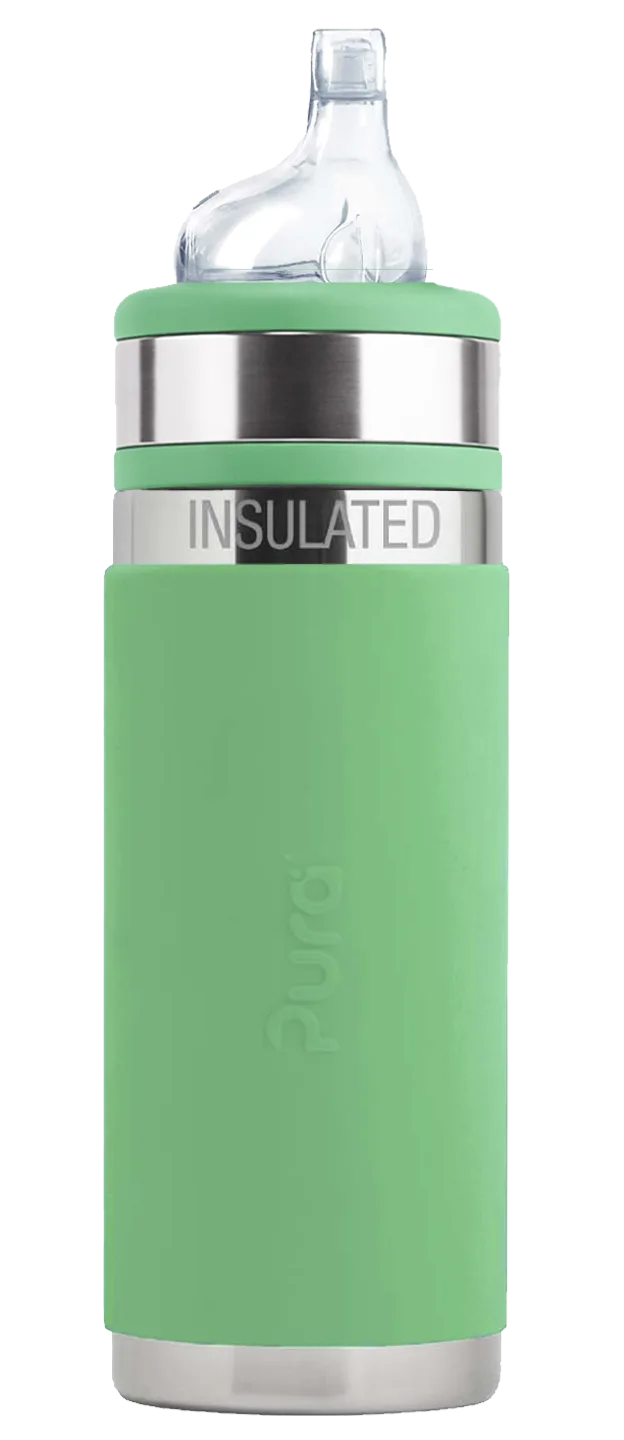
A first straw bottle should be small enough to hold with two hands and light enough to lift when full. The Pura Kiki 9oz Insulated Kiddo Straw Bottle is 100% plastic-free, including the bottle, sleeve, collar, two-piece straw, and travel cover, and it carries MadeSafe® certification. Its 18/8 food service-grade stainless steel body is double-wall, lightweight, shatter-proof, lead-free, and top-rack dishwasher safe. The unique collar design is worth noting if your toddler tends to unscrew lids, though you should still check the collar is seated before handing it over.
Teach the straw without a fight
Put a little water in the bottle, dip the straw tip, and let your child mouth it while you hold the bottle steady. Some parents use a quick straw pulse by covering the top hole with a finger, releasing a few drops, then letting the child suck. Keep sessions under two minutes and stop before your toddler gets frustrated. Once a few sips happen, hand over the bottle and let them try alone, even if the angle is messy.
Keep the bottle clean and the transition on track
Straws and valves trap milk and juice, so rinse the straw parts right after each use and wash the bottle top-rack in the dishwasher when possible. Check the straw for cracks or bite marks every week and replace worn parts. If your child refuses the straw for more than a week, go back to offering it once a day alongside the sippy cup instead of removing the familiar cup entirely.
Your 6-step sippy-to-straw plan
- Check readiness signs: Look for sitting upright without support, interest in your cup, and ability to eat soft finger foods. Most children are ready between 9 and 12 months, but every child is different. Checkpoint: if your baby still tips backward or cannot sit steady, wait a few weeks.
- Offer the straw at one drink time: Choose a low-pressure moment like afternoon snack and offer a small amount of water in a straw bottle. Keep the sippy cup available for other drinks. Common mistake: swapping every cup at once, which usually leads to refusal.
- Practice straw drinking: Hold the bottle steady, let your child mouth the straw, and use a finger pulse to release a few drops if needed. Keep it short and playful. Checkpoint: a few successful sips in one session is enough progress for the day.
- Let your toddler hold the bottle: Once sips happen, hand over the bottle and let your child try alone. Expect spills and awkward angles while coordination builds. Common mistake: taking the bottle back too quickly, which can stop the practice.
- Shift more drink times to the straw: After a week of successful practice, move breakfast and lunch drinks to the straw bottle and keep the sippy cup for the least predictable time of day. Checkpoint: if your child refuses for several days, return to one straw practice per day.
- Retire the sippy cup gradually: Once the straw bottle is used for most daytime drinks, stop offering the sippy cup at home. Keep one available for travel or daycare if that helps your routine. Next step: check straws and valves weekly for wear and replace parts as needed.
Pura bottles that fit this transition
- Kiki™ 9oz Insulated Kiddo Straw Bottle: The Kiki 9oz Insulated Kiddo Straw Bottle is 100% plastic-free, including the bottle, sleeve, collar, two-piece straw, and travel cover, and is MadeSafe® certified. If you want to avoid plastic parts in a straw cup, every piece your toddler touches is covered, not just the bottle body.
- Kiki™ 9oz Insulated Sippy Bottle: The Kiki 9oz Insulated Sippy Bottle is 100% plastic-free and MadeSafe® certified, with a sippy spout and travel cover. It gives you a familiar sippy option from the same bottle system, so you can keep one cup style while your child learns the straw.
- Kiki™ 7oz Insulated Baby Bottle: The Kiki 7oz Insulated Baby Bottle is 100% plastic-free and MadeSafe® certified, with an insulated design that keeps liquids cold for up to 12 hours. A smaller 7oz size is easier for younger babies to hold during early straw practice before moving to the 9oz straw bottle.